


Private Jet Flights From Amsterdam to Dublin
Amsterdam to Dublin

Route Briefing
IATA: AMSIATA: DUB
- Block Time
- 1h 30m
- Region
- Europe
- Distance
- 385 NM
- Charter From
- Amsterdam Schiphol Airport
Private flights between Amsterdam and Dublin typically take around 1 hour 30 minutes, linking Amsterdam Schiphol with Dublin Airport in Ireland. A frequent route connecting the Netherlands with Ireland’s capital for business travel, technology sector links and regional access.
Route Snapshot
- Departure
- Amsterdam Schiphol Airport
- Alternate
- Slot Requirement
- Arrival
- Dublin Airport
- Aircraft Categories
- LightMidSuper-MidHeavy
- Status
- Customs
- Curfew ·AMS
- FBO / handling
- Restrictions
- Curfew·DUB
- Check-in lead time
Airport Information
Amsterdam Heliport
Amsterdam Heliport is a dedicated helicopter facility located at the World Trade Center Amsterdam in the city’s Zuidas business district. The heliport serves as a specialised arrival and departure point for helicopter operations connecting Amsterdam with destinations across the Netherlands and neighbouring countries. Positioned close to the city’s financial district, it provides a practical option for passengers transferring by helicopter between Amsterdam Airport Schiphol and central Amsterdam or continuing onward to regional destinations.
Operating under ICAO code EHHA, Amsterdam Heliport consists of a single elevated landing pad designed for light and medium helicopter operations. The facility primarily supports corporate transfers, charter helicopter services and aerial transport linked to business travel within the Netherlands. Due to its urban location and limited infrastructure, the heliport is not designed for fixed-wing aircraft and helicopter movements are subject to local operational regulations and airspace coordination.
The heliport’s location in the Zuidas district places it within one of Amsterdam’s main commercial areas, surrounded by international law firms, financial institutions and corporate headquarters. This makes it particularly useful for executive transfers and business travel requiring quick access to the city’s financial centre. From the heliport, ground transfers to central Amsterdam and the Canal Ring typically take 10 to 15 minutes by car, depending on traffic conditions.
Amsterdam Heliport is most commonly used as a connecting point for helicopter transfers rather than as a primary arrival location for international travellers. Passengers arriving by private jet at Amsterdam Airport Schiphol can transfer by road to the heliport before continuing onward by helicopter to other parts of the Netherlands or nearby regions in Belgium and Germany. This arrangement allows for efficient onward travel when schedules require direct access to city centres or regional destinations.
Handling Information
Amsterdam Heliport Services
World Trade Center Amsterdam, Strawinskylaan 1, 1077 XW Amsterdam, Netherlands
- Runway Length
- -
- Operating Hours
- Upon Request
- Helicopter Transfers
- Available
- Ground Transfers
- Available
Amsterdam Schiphol Airport
Amsterdam Airport Schiphol is the principal aviation gateway to the Netherlands and one of the most important air transport hubs in Europe. Located approximately 15 kilometres southwest of central Amsterdam, the airport supports a high volume of commercial and private aviation traffic and serves as the primary arrival point for travellers chartering a private jet to Amsterdam. Its scale, infrastructure and global connectivity make it one of the most capable airports in Europe for both regional and intercontinental private jet operations.
Operating under ICAO code EHAM and IATA code AMS, Schiphol Airport features six runways, with the longest measuring approximately 3,800 metres. This extensive runway system allows the airport to accommodate the full spectrum of private aircraft, from light business jets operating short European sectors through to ultra long range aircraft such as the Gulfstream G700, Bombardier Global 7500 and Dassault Falcon 10X arriving on intercontinental flights from North America, the Middle East and Asia.
Private aviation traffic at Schiphol is handled through dedicated general aviation facilities located separate from the main airline terminals. These facilities allow private jet passengers to arrive and depart discreetly, with streamlined customs and immigration procedures designed for business aviation. Experienced ground handling teams coordinate aircraft parking, passenger processing, ground transport and flight support services, ensuring efficient operations even during periods of heavy airport traffic.
The airport’s proximity to the Dutch capital allows private jet passengers to reach central Amsterdam quickly. Transfer time from Schiphol Airport to the Canal Ring and historic city centre is typically 20 to 25 minutes by car, depending on traffic conditions. This short distance makes Schiphol one of the most practical arrival points for business travellers attending meetings in the city’s commercial districts as well as visitors heading to Amsterdam’s museums, hotels and cultural landmarks.
Schiphol also functions as a strategic gateway for private aviation across the Netherlands and the wider Benelux region. Many passengers arriving by private jet to Amsterdam continue onward to destinations such as The Hague, Rotterdam, Utrecht or Antwerp, which are all within convenient reach by road or helicopter transfer. The airport’s strong operational infrastructure, experienced handling services and central European location ensure it remains one of the most frequently used private jet airports in Northern Europe.
Handling Information
Jet Aviation
General Aviation Terminal, Schiphol-Oost, Singaporestraat 3, 1175 RA Schiphol, Netherlands
- Runway Length
- 12,400 ft
- Operating Hours
- 24/7
- FBO Lounge
- Available
- Ground Transfers
- Available
Lelystad Airport
Lelystad Airport is one of the Netherlands’ main general aviation airports and an important alternative airport for private aviation serving Amsterdam and the wider Randstad region. Located approximately 55 kilometres northeast of central Amsterdam, the airport supports a range of general aviation activity including private jet movements, training operations and business aviation traffic. Its less congested airspace and flexible operating environment make it an occasional alternative for private aircraft when capacity or slot availability at Amsterdam Airport Schiphol is limited.
Operating under ICAO code EHLE, Lelystad Airport features a single runway measuring approximately 2,700 metres, allowing it to accommodate many categories of business aircraft including light jets, midsize jets and several super midsize models operating regional European sectors. The runway length and infrastructure make it suitable for a wide range of private aviation operations, particularly short to medium range flights within Europe.
Private aviation at Lelystad Airport is supported by dedicated general aviation facilities and experienced ground handling services. Aircraft movements are typically processed quickly, and passengers can transfer directly from aircraft to ground transport without the congestion associated with larger commercial airports. This makes Lelystad a practical option for operators seeking efficient turnaround times or more flexible scheduling.
Ground transfers from Lelystad Airport to central Amsterdam typically take 40 to 50 minutes by car, depending on traffic conditions. While it is further from the city centre than Schiphol Airport, the airport’s quieter operational environment can make it an attractive option for certain private aviation missions, particularly when aircraft parking or slot availability at Schiphol is restricted.
Lelystad Airport continues to play an important role in the Netherlands’ general aviation network, supporting private jet operations, flight training and regional aviation activity. For private jet travellers heading to Amsterdam, it provides a secondary gateway that can offer operational flexibility alongside the larger international hub at Schiphol.
Handling Information
AIS Aircraft Maintenance & Handling
Airport Lelystad, Arendweg 7, 8218 PE Lelystad, Netherlands
- Runway Length
- 8,800 ft
- Operating Hours
- 07:00 - 22:00
- Helicopter Transfers
- Available
- Ground Transfers
- Available
Amsterdam Heliport
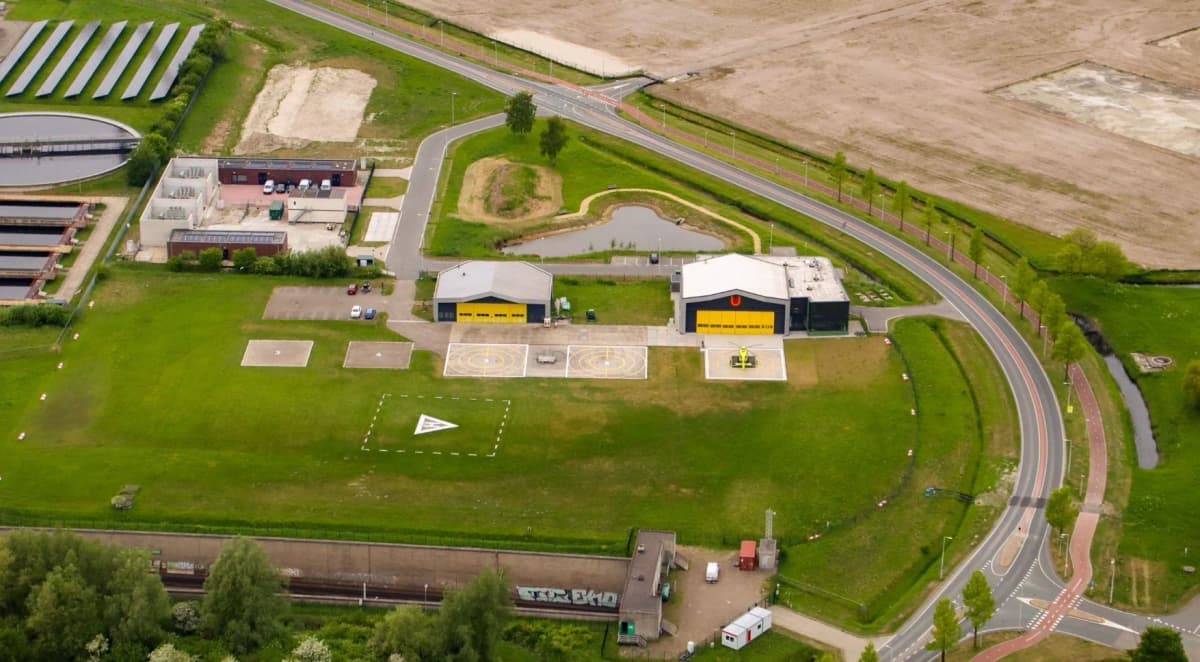
Amsterdam Heliport is a dedicated helicopter facility located at the World Trade Center Amsterdam in the city’s Zuidas business district. The heliport serves as a specialised arrival and departure point for helicopter operations connecting Amsterdam with destinations across the Netherlands and neighbouring countries. Positioned close to the city’s financial district, it provides a practical option for passengers transferring by helicopter between Amsterdam Airport Schiphol and central Amsterdam or continuing onward to regional destinations.
Operating under ICAO code EHHA, Amsterdam Heliport consists of a single elevated landing pad designed for light and medium helicopter operations. The facility primarily supports corporate transfers, charter helicopter services and aerial transport linked to business travel within the Netherlands. Due to its urban location and limited infrastructure, the heliport is not designed for fixed-wing aircraft and helicopter movements are subject to local operational regulations and airspace coordination.
The heliport’s location in the Zuidas district places it within one of Amsterdam’s main commercial areas, surrounded by international law firms, financial institutions and corporate headquarters. This makes it particularly useful for executive transfers and business travel requiring quick access to the city’s financial centre. From the heliport, ground transfers to central Amsterdam and the Canal Ring typically take 10 to 15 minutes by car, depending on traffic conditions.
Amsterdam Heliport is most commonly used as a connecting point for helicopter transfers rather than as a primary arrival location for international travellers. Passengers arriving by private jet at Amsterdam Airport Schiphol can transfer by road to the heliport before continuing onward by helicopter to other parts of the Netherlands or nearby regions in Belgium and Germany. This arrangement allows for efficient onward travel when schedules require direct access to city centres or regional destinations.
Handling Information
Amsterdam Heliport Services
World Trade Center Amsterdam, Strawinskylaan 1, 1077 XW Amsterdam, Netherlands
- Runway Length
- -
- Operating Hours
- Upon Request
- Helicopter Transfers
- Available
- Ground Transfers
- Available
Amsterdam Schiphol Airport
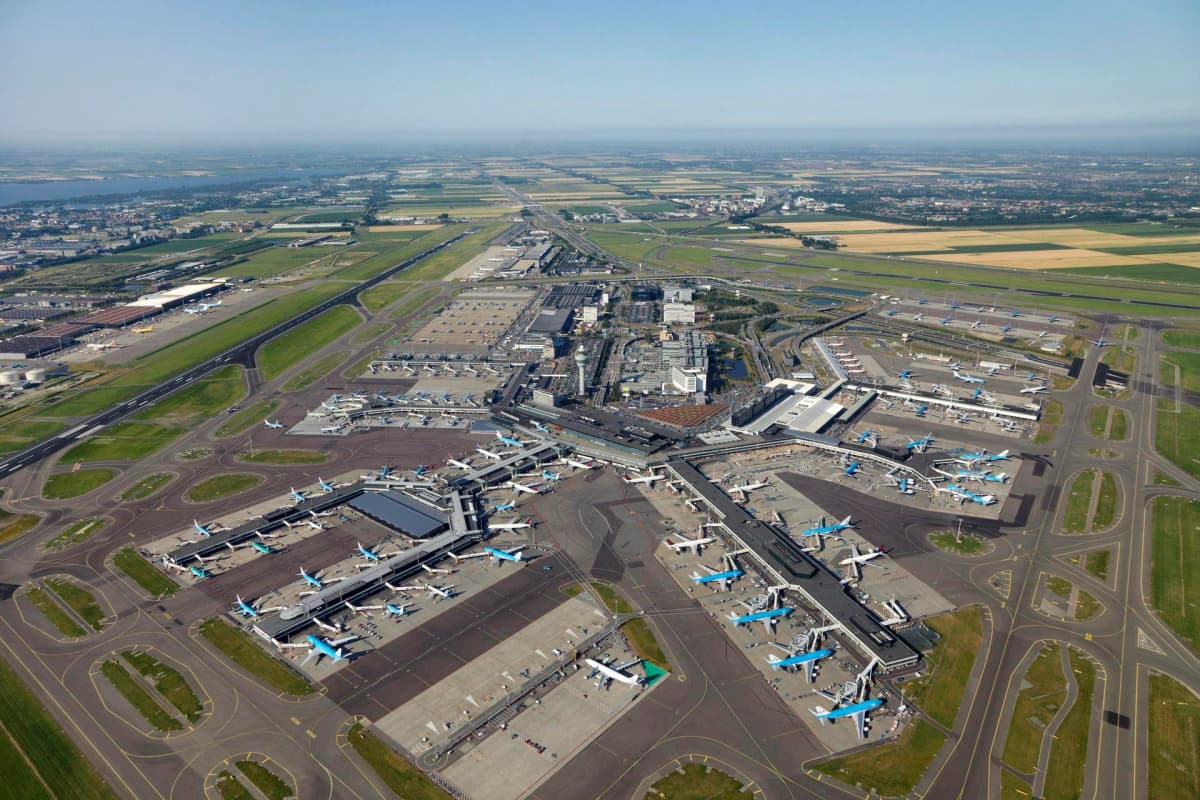
Amsterdam Airport Schiphol is the principal aviation gateway to the Netherlands and one of the most important air transport hubs in Europe. Located approximately 15 kilometres southwest of central Amsterdam, the airport supports a high volume of commercial and private aviation traffic and serves as the primary arrival point for travellers chartering a private jet to Amsterdam. Its scale, infrastructure and global connectivity make it one of the most capable airports in Europe for both regional and intercontinental private jet operations.
Operating under ICAO code EHAM and IATA code AMS, Schiphol Airport features six runways, with the longest measuring approximately 3,800 metres. This extensive runway system allows the airport to accommodate the full spectrum of private aircraft, from light business jets operating short European sectors through to ultra long range aircraft such as the Gulfstream G700, Bombardier Global 7500 and Dassault Falcon 10X arriving on intercontinental flights from North America, the Middle East and Asia.
Private aviation traffic at Schiphol is handled through dedicated general aviation facilities located separate from the main airline terminals. These facilities allow private jet passengers to arrive and depart discreetly, with streamlined customs and immigration procedures designed for business aviation. Experienced ground handling teams coordinate aircraft parking, passenger processing, ground transport and flight support services, ensuring efficient operations even during periods of heavy airport traffic.
The airport’s proximity to the Dutch capital allows private jet passengers to reach central Amsterdam quickly. Transfer time from Schiphol Airport to the Canal Ring and historic city centre is typically 20 to 25 minutes by car, depending on traffic conditions. This short distance makes Schiphol one of the most practical arrival points for business travellers attending meetings in the city’s commercial districts as well as visitors heading to Amsterdam’s museums, hotels and cultural landmarks.
Schiphol also functions as a strategic gateway for private aviation across the Netherlands and the wider Benelux region. Many passengers arriving by private jet to Amsterdam continue onward to destinations such as The Hague, Rotterdam, Utrecht or Antwerp, which are all within convenient reach by road or helicopter transfer. The airport’s strong operational infrastructure, experienced handling services and central European location ensure it remains one of the most frequently used private jet airports in Northern Europe.
Handling Information
Jet Aviation
General Aviation Terminal, Schiphol-Oost, Singaporestraat 3, 1175 RA Schiphol, Netherlands
- Runway Length
- 12,400 ft
- Operating Hours
- 24/7
- FBO Lounge
- Available
- Ground Transfers
- Available
Lelystad Airport
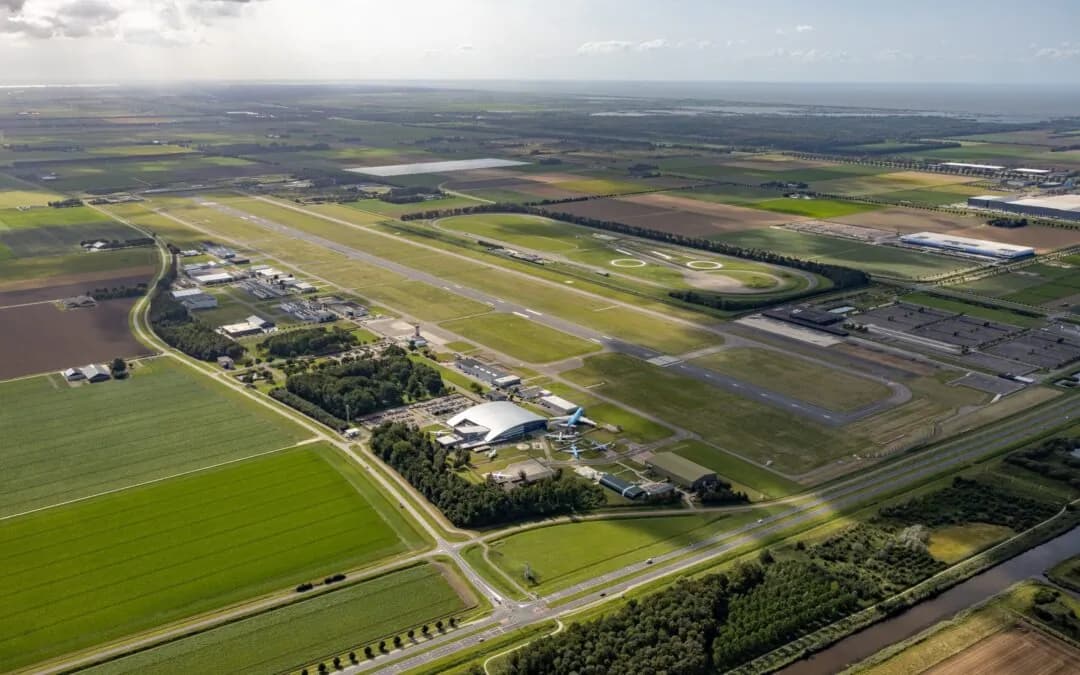
Lelystad Airport is one of the Netherlands’ main general aviation airports and an important alternative airport for private aviation serving Amsterdam and the wider Randstad region. Located approximately 55 kilometres northeast of central Amsterdam, the airport supports a range of general aviation activity including private jet movements, training operations and business aviation traffic. Its less congested airspace and flexible operating environment make it an occasional alternative for private aircraft when capacity or slot availability at Amsterdam Airport Schiphol is limited.
Operating under ICAO code EHLE, Lelystad Airport features a single runway measuring approximately 2,700 metres, allowing it to accommodate many categories of business aircraft including light jets, midsize jets and several super midsize models operating regional European sectors. The runway length and infrastructure make it suitable for a wide range of private aviation operations, particularly short to medium range flights within Europe.
Private aviation at Lelystad Airport is supported by dedicated general aviation facilities and experienced ground handling services. Aircraft movements are typically processed quickly, and passengers can transfer directly from aircraft to ground transport without the congestion associated with larger commercial airports. This makes Lelystad a practical option for operators seeking efficient turnaround times or more flexible scheduling.
Ground transfers from Lelystad Airport to central Amsterdam typically take 40 to 50 minutes by car, depending on traffic conditions. While it is further from the city centre than Schiphol Airport, the airport’s quieter operational environment can make it an attractive option for certain private aviation missions, particularly when aircraft parking or slot availability at Schiphol is restricted.
Lelystad Airport continues to play an important role in the Netherlands’ general aviation network, supporting private jet operations, flight training and regional aviation activity. For private jet travellers heading to Amsterdam, it provides a secondary gateway that can offer operational flexibility alongside the larger international hub at Schiphol.
Handling Information
AIS Aircraft Maintenance & Handling
Airport Lelystad, Arendweg 7, 8218 PE Lelystad, Netherlands
- Runway Length
- 8,800 ft
- Operating Hours
- 07:00 - 22:00
- Helicopter Transfers
- Available
- Ground Transfers
- Available
Dublin Airport
Dublin Airport serves as Ireland’s primary aviation gateway and is the main airport handling private jet charter flights to and from Dublin. Located approximately 10 kilometres north of the city centre, the airport provides quick access to the Irish capital, with private transfers typically reaching central districts along the River Liffey in around 20 minutes depending on traffic.
Handling more than 30 million passengers annually, Dublin Airport is one of Europe’s key transatlantic aviation hubs. The airport operates two runways and offers modern infrastructure capable of accommodating the full range of business aircraft, from light jets through to long-range private jets arriving from North America, the Middle East and across Europe.
Private jet travellers benefit from dedicated general aviation facilities and fixed base operators (FBOs) that provide discreet and efficient handling services. These facilities typically include VIP lounges, private customs and immigration processing, crew services and direct ground transportation from the aircraft to the city.
Dublin’s position on the western edge of Europe also makes it an important entry point for transatlantic private aviation routes. Private jet flights frequently connect Dublin with cities such as London, Paris, Geneva and Zurich, while long-range aircraft regularly operate between Dublin and destinations in North America and the Middle East.
Beyond the capital, Dublin Airport also provides convenient access to the wider island of Ireland. From the airport, travellers can reach the Wicklow Mountains, Ireland’s dramatic eastern coastline or the cultural centres of cities such as Galway and Cork within a few hours by road or short regional flight.
For private aviation travellers arriving in Ireland, Dublin Airport (DUB / EIDW) remains the country’s most important and best-equipped airport, offering efficient operations, strong international connectivity and rapid access to the historic heart of the Irish capital.
Handling Information
Signature Flight Support
T1X, Terminal 1, Dublin Airport, Dublin, Ireland
- Runway Length
- 10,200 ft
- Operating Hours
- 24/7
- FBO Lounge
- Available
- Ground Transfers
- Available
Dublin Weston Airport
Weston Airport serves as Dublin’s primary general aviation airport and is located approximately 15 kilometres west of the city centre near the town of Lucan. Established in the early 1930s, the airport has long played an important role in Irish aviation and today operates as one of the country’s busiest centres for general aviation activity.
The airport primarily supports smaller aircraft operations, including turboprops, helicopters and some light business jets. Because of runway length and infrastructure limitations, larger private jets operating long-range or heavy business aircraft typically use Dublin Airport (DUB / EIDW) instead. However, Weston remains a useful alternative for certain private aviation flights where aircraft size and operational requirements allow.
Weston Airport’s location provides relatively quick access to central Dublin, with private transfers typically reaching the city centre in around 30 minutes depending on traffic. The airport is also conveniently positioned for access to western Dublin’s technology and business districts.
As a dedicated general aviation facility, Weston offers specialised services for private aviation movements including aircraft handling, passenger lounges and crew facilities. Its focus on smaller aircraft operations allows for efficient movements and a quieter environment compared with larger commercial airports.
While most private jet charter flights to Dublin operate through Dublin Airport, Weston Airport (EIWT) remains an important part of the region’s aviation infrastructure and continues to support business aviation activity within the greater Dublin area.
Handling Information
Executive Business Jet Terminal
Dublin Weston Airport, Backweston, Leixlip, Co. Kildare, W23XHF8, Ireland
- Runway Length
- 3,000 ft
- Operating Hours
- Upon Request
- Helicopter Transfers
- Available
- Ground Transfers
- Available
Dublin Airport
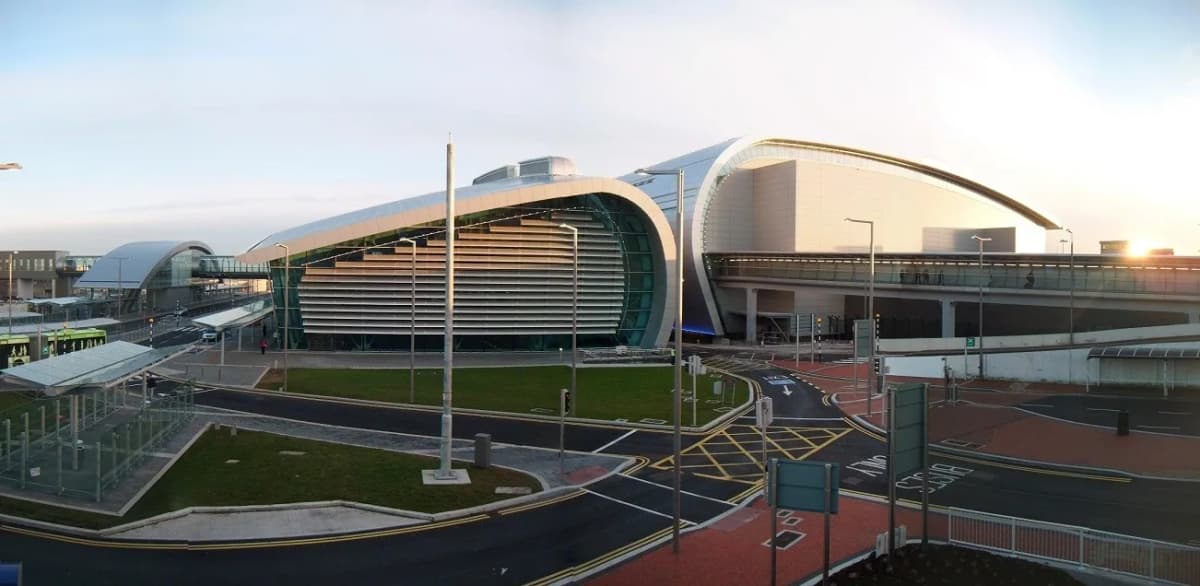
Dublin Airport serves as Ireland’s primary aviation gateway and is the main airport handling private jet charter flights to and from Dublin. Located approximately 10 kilometres north of the city centre, the airport provides quick access to the Irish capital, with private transfers typically reaching central districts along the River Liffey in around 20 minutes depending on traffic.
Handling more than 30 million passengers annually, Dublin Airport is one of Europe’s key transatlantic aviation hubs. The airport operates two runways and offers modern infrastructure capable of accommodating the full range of business aircraft, from light jets through to long-range private jets arriving from North America, the Middle East and across Europe.
Private jet travellers benefit from dedicated general aviation facilities and fixed base operators (FBOs) that provide discreet and efficient handling services. These facilities typically include VIP lounges, private customs and immigration processing, crew services and direct ground transportation from the aircraft to the city.
Dublin’s position on the western edge of Europe also makes it an important entry point for transatlantic private aviation routes. Private jet flights frequently connect Dublin with cities such as London, Paris, Geneva and Zurich, while long-range aircraft regularly operate between Dublin and destinations in North America and the Middle East.
Beyond the capital, Dublin Airport also provides convenient access to the wider island of Ireland. From the airport, travellers can reach the Wicklow Mountains, Ireland’s dramatic eastern coastline or the cultural centres of cities such as Galway and Cork within a few hours by road or short regional flight.
For private aviation travellers arriving in Ireland, Dublin Airport (DUB / EIDW) remains the country’s most important and best-equipped airport, offering efficient operations, strong international connectivity and rapid access to the historic heart of the Irish capital.
Handling Information
Signature Flight Support
T1X, Terminal 1, Dublin Airport, Dublin, Ireland
- Runway Length
- 10,200 ft
- Operating Hours
- 24/7
- FBO Lounge
- Available
- Ground Transfers
- Available
Dublin Weston Airport
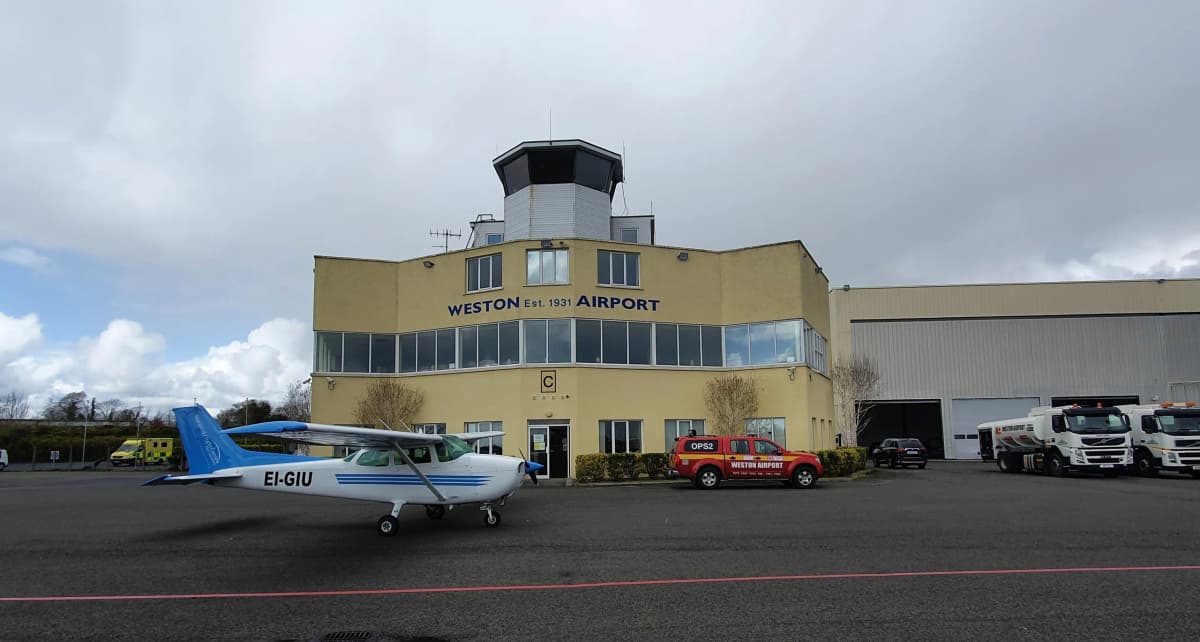
Weston Airport serves as Dublin’s primary general aviation airport and is located approximately 15 kilometres west of the city centre near the town of Lucan. Established in the early 1930s, the airport has long played an important role in Irish aviation and today operates as one of the country’s busiest centres for general aviation activity.
The airport primarily supports smaller aircraft operations, including turboprops, helicopters and some light business jets. Because of runway length and infrastructure limitations, larger private jets operating long-range or heavy business aircraft typically use Dublin Airport (DUB / EIDW) instead. However, Weston remains a useful alternative for certain private aviation flights where aircraft size and operational requirements allow.
Weston Airport’s location provides relatively quick access to central Dublin, with private transfers typically reaching the city centre in around 30 minutes depending on traffic. The airport is also conveniently positioned for access to western Dublin’s technology and business districts.
As a dedicated general aviation facility, Weston offers specialised services for private aviation movements including aircraft handling, passenger lounges and crew facilities. Its focus on smaller aircraft operations allows for efficient movements and a quieter environment compared with larger commercial airports.
While most private jet charter flights to Dublin operate through Dublin Airport, Weston Airport (EIWT) remains an important part of the region’s aviation infrastructure and continues to support business aviation activity within the greater Dublin area.
Handling Information
Executive Business Jet Terminal
Dublin Weston Airport, Backweston, Leixlip, Co. Kildare, W23XHF8, Ireland
- Runway Length
- 3,000 ft
- Operating Hours
- Upon Request
- Helicopter Transfers
- Available
- Ground Transfers
- Available
Frequently Asked Questions
The BLAK team answers the most common questions and covers the essentials for those thinking about flying to and from Dublin.
Can private jets fly direct between Dublin and the United States?
Yes. Dublin is one of Europe’s most common departure points for transatlantic private jet flights. Long-range aircraft such as the Gulfstream G650, Bombardier Global 6000 or Falcon 7X frequently operate nonstop routes between Dublin and cities including New York, Boston, Chicago and Miami. The relatively short Atlantic crossing from Ireland means many private jets can complete the journey in around 6 to 7 hours depending on winds and routing.
Is Dublin Airport open 24 hours for private jets?
Yes. Dublin Airport (DUB / EIDW) operates 24 hours a day, allowing private jet arrivals and departures at any time. This flexibility is particularly valuable for long-haul business aviation flights, which often depart Europe in the evening to arrive in North America early the following morning. The airport’s infrastructure supports continuous operations throughout the day and night.
What types of private jets can operate into Dublin?
Dublin Airport can accommodate the full spectrum of business aviation aircraft, from smaller light jets such as the Citation CJ3+ or Phenom 300 through to large long-range aircraft including the Gulfstream G700, Falcon 8X and Bombardier Global 7500. The airport’s runways and handling facilities allow it to support both short European sectors and intercontinental private jet flights.
Do private jets ever use Dublin as a technical stop for transatlantic flights?
Yes. Dublin is occasionally used as a technical fuel stop for private jets crossing the Atlantic, particularly for aircraft operating between continental Europe and North America. Ireland’s position on the western edge of Europe makes it a logical final departure point before entering North Atlantic tracks. However, some private jet operators instead choose Shannon Airport, located on Ireland’s west coast, because it offers U.S. Customs and Border Protection preclearance. This allows passengers to complete U.S. immigration in Ireland before departure, meaning the aircraft can arrive in the United States as a domestic flight and avoid customs processing on arrival.