


Private Jet Flights From Geneva to Lisbon
Geneva to Lisbon

Route Briefing
IATA: GVAIATA: LIS
- Block Time
- 2h 30m
- Region
- Europe
- Distance
- 820 NM
- Charter From
- Geneva Airport
Private flights between Geneva and Lisbon typically take around 2 hours 30 minutes, linking Geneva Airport with Lisbon Humberto Delgado Airport. A popular route for direct access to Portugal’s capital and nearby coastal destinations including Cascais and Estoril.
Route Snapshot
- Departure
- Geneva Airport
- Alternate
- Slot Requirement
- Arrival
- Lisbon Humberto Delgado Airport
- Aircraft Categories
- LightMidSuper-MidHeavy
- Status
- Customs
- Curfew ·GVA
- FBO / handling
- Restrictions
- Curfew·LIS
- Check-in lead time
Airport Information
Geneva International Airport
Geneva Airport (LSGG / GVA) is one of Europe’s most important hubs for private jet charter flights, serving as the primary gateway to both the city of Geneva and the world-renowned resorts of the Swiss and French Alps. Located just 4 kilometres from central Geneva, the airport offers exceptionally fast access to the city, with typical transfer times of around 10 to 15 minutes in light traffic.
Geneva Airport is widely recognised as one of the busiest airports in Europe for business aviation and private jet travel, particularly during the winter ski season. The airport features dedicated executive aviation infrastructure, including specialised terminals and handling areas designed specifically for private aircraft operations. These facilities allow private jet passengers to arrive and depart quickly, with streamlined security procedures, discreet passenger handling and efficient ground services.
Its strategic position near the Alpine region makes Geneva Airport a key arrival point for travellers heading to prestigious mountain destinations such as Megève, Chamonix, Verbier, Courchevel and Les Gets. From the airport, private transfers and helicopter connections allow passengers to reach many of these resorts within a few hours of landing.
Beyond leisure travel, Geneva Airport is also heavily used by international organisations, diplomats and global business leaders travelling to the city’s financial institutions and international headquarters. Geneva hosts major global events and institutions including the United Nations Office at Geneva, the World Trade Organization, the World Health Organization, and leading international conferences such as EBACE (European Business Aviation Convention & Exhibition).
For private jet travellers, Geneva Airport offers a full range of executive aviation services including ground handling, aircraft parking, fuelling, hangarage, VIP passenger lounges and coordinated customs and immigration clearance for international flights.
With its proximity to the city centre and its role as a gateway to the Alps, Geneva Airport is one of the most important airports in Europe for private jet charter travel, providing seamless access to both global business institutions and some of the world’s most exclusive mountain resorts.
Handling Information
Jet Aviation
Geneva Airport, Route de l'Aéroport 21, 1215 Genève, Switzerland
- Runway Length
- 12,700 ft
- Operating Hours
- 24/7
- FBO Lounge
- Available
- Ground Transfers
- Available
Geneva International Airport
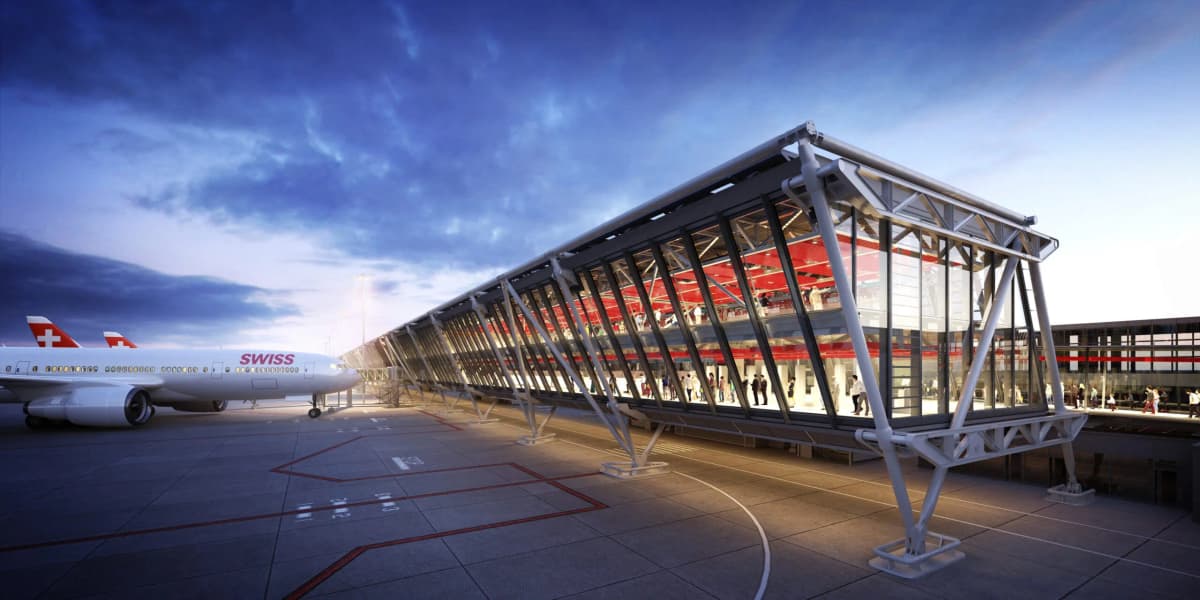
Geneva Airport (LSGG / GVA) is one of Europe’s most important hubs for private jet charter flights, serving as the primary gateway to both the city of Geneva and the world-renowned resorts of the Swiss and French Alps. Located just 4 kilometres from central Geneva, the airport offers exceptionally fast access to the city, with typical transfer times of around 10 to 15 minutes in light traffic.
Geneva Airport is widely recognised as one of the busiest airports in Europe for business aviation and private jet travel, particularly during the winter ski season. The airport features dedicated executive aviation infrastructure, including specialised terminals and handling areas designed specifically for private aircraft operations. These facilities allow private jet passengers to arrive and depart quickly, with streamlined security procedures, discreet passenger handling and efficient ground services.
Its strategic position near the Alpine region makes Geneva Airport a key arrival point for travellers heading to prestigious mountain destinations such as Megève, Chamonix, Verbier, Courchevel and Les Gets. From the airport, private transfers and helicopter connections allow passengers to reach many of these resorts within a few hours of landing.
Beyond leisure travel, Geneva Airport is also heavily used by international organisations, diplomats and global business leaders travelling to the city’s financial institutions and international headquarters. Geneva hosts major global events and institutions including the United Nations Office at Geneva, the World Trade Organization, the World Health Organization, and leading international conferences such as EBACE (European Business Aviation Convention & Exhibition).
For private jet travellers, Geneva Airport offers a full range of executive aviation services including ground handling, aircraft parking, fuelling, hangarage, VIP passenger lounges and coordinated customs and immigration clearance for international flights.
With its proximity to the city centre and its role as a gateway to the Alps, Geneva Airport is one of the most important airports in Europe for private jet charter travel, providing seamless access to both global business institutions and some of the world’s most exclusive mountain resorts.
Handling Information
Jet Aviation
Geneva Airport, Route de l'Aéroport 21, 1215 Genève, Switzerland
- Runway Length
- 12,700 ft
- Operating Hours
- 24/7
- FBO Lounge
- Available
- Ground Transfers
- Available
Lisbon Airport
Lisbon Airport, officially known as Humberto Delgado Airport, is the principal aviation gateway to Lisbon and the busiest airport in the country. Located approximately 7–8 kilometres north of the city centre, the airport sits unusually close to the heart of the capital, allowing private jet passengers to reach central Lisbon within 15 to 20 minutes by road under normal traffic conditions.
The airport operates two runways, the longest measuring approximately 3,805 metres (12,400 feet), which enables operations by the full range of business aviation aircraft including large-cabin and ultra-long-range jets. Lisbon’s position on the western edge of Europe also makes it an important staging point for transatlantic flights, particularly routes linking Europe with North America, South America and West Africa.
Because Lisbon Airport sits within dense urban surroundings, aircraft operations involve carefully managed approach and departure procedures, particularly for flights arriving over the Tagus River before descending into the airport. Despite these constraints, Lisbon remains one of the most efficient European capital airports for reaching the city centre due to its proximity to downtown districts.
The airport handles more than 30 million passengers annually and serves as the primary hub for Portugal’s national airline network as well as international routes across Europe and the Atlantic. For private aviation operators, Lisbon provides modern ground handling infrastructure and the ability to connect quickly to Portugal’s business districts, government institutions and cultural landmarks.
Its strategic geographic position also makes Lisbon an important gateway for travellers continuing onward to destinations across Portugal, including the historic towns of central Portugal, the Atlantic surf coastline west of the city and the resorts of southern Portugal. As a result, Lisbon Airport functions as both the principal entry point to the Portuguese capital and a major aviation hub connecting Europe with the wider Atlantic world.
Handling Information
Sky Valet Portugal
Lisbon Airport (Aeroporto Humberto Delgado), Alameda das Comunidades Portuguesas, 1700-111 Lisbon, Portugal
- Runway Length
- 12,400 ft
- Operating Hours
- 24/7
- FBO Lounge
- Available
- Ground Transfers
- Available
Lisbon Cascais-Tejo Airport
Cascais Municipal Aerodrome, also known as Lisbon Cascais-Tejo Regional Airport, is a dedicated business aviation airport located along Portugal’s Estoril coastline approximately 25 kilometres west of central Lisbon. Positioned between the seaside towns of Cascais and Estoril, the airport provides a convenient alternative to the busier Lisbon Airport for certain categories of private aviation operations.
The aerodrome operates a single runway measuring approximately 1,700 metres (5,577 feet), which supports turboprops, light jets and many midsize business jets depending on aircraft type and payload. Because of the runway length, operations by larger long-range aircraft are generally limited, meaning the airport is primarily used by smaller executive aircraft and regional private flights within Europe.
Cascais Aerodrome has developed into an important hub for business aviation, training operations and helicopter traffic along Portugal’s Atlantic coast. Its location near the coastline allows straightforward access to many of the region’s most popular destinations including Cascais, Estoril, Sintra and the western Lisbon coastline.
For private jet passengers travelling to the coastal resorts west of Lisbon, Cascais can offer shorter ground transfer times than Lisbon’s main international airport. The drive to the resort town of Cascais takes only 10 minutes, while central Lisbon can typically be reached in 30 to 40 minutes by road depending on traffic conditions.
The airport’s smaller scale, combined with its focus on executive aviation, makes Cascais a practical arrival point for travellers visiting Lisbon’s western suburbs, Atlantic surf beaches and the historic palaces of Sintra.
Handling Information
Omni Handling
Cascais Municipal Aerodrome, Avenida de Brasília, 2785-632 Tires, Cascais, Portugal
- Runway Length
- 5,500 ft
- Operating Hours
- 07:00 - 21:00
- FBO Lounge
- Available
- Ground Transfers
- Available
Lisbon Airport
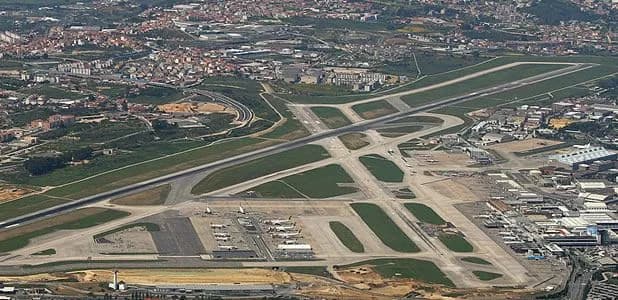
Lisbon Airport, officially known as Humberto Delgado Airport, is the principal aviation gateway to Lisbon and the busiest airport in the country. Located approximately 7–8 kilometres north of the city centre, the airport sits unusually close to the heart of the capital, allowing private jet passengers to reach central Lisbon within 15 to 20 minutes by road under normal traffic conditions.
The airport operates two runways, the longest measuring approximately 3,805 metres (12,400 feet), which enables operations by the full range of business aviation aircraft including large-cabin and ultra-long-range jets. Lisbon’s position on the western edge of Europe also makes it an important staging point for transatlantic flights, particularly routes linking Europe with North America, South America and West Africa.
Because Lisbon Airport sits within dense urban surroundings, aircraft operations involve carefully managed approach and departure procedures, particularly for flights arriving over the Tagus River before descending into the airport. Despite these constraints, Lisbon remains one of the most efficient European capital airports for reaching the city centre due to its proximity to downtown districts.
The airport handles more than 30 million passengers annually and serves as the primary hub for Portugal’s national airline network as well as international routes across Europe and the Atlantic. For private aviation operators, Lisbon provides modern ground handling infrastructure and the ability to connect quickly to Portugal’s business districts, government institutions and cultural landmarks.
Its strategic geographic position also makes Lisbon an important gateway for travellers continuing onward to destinations across Portugal, including the historic towns of central Portugal, the Atlantic surf coastline west of the city and the resorts of southern Portugal. As a result, Lisbon Airport functions as both the principal entry point to the Portuguese capital and a major aviation hub connecting Europe with the wider Atlantic world.
Handling Information
Sky Valet Portugal
Lisbon Airport (Aeroporto Humberto Delgado), Alameda das Comunidades Portuguesas, 1700-111 Lisbon, Portugal
- Runway Length
- 12,400 ft
- Operating Hours
- 24/7
- FBO Lounge
- Available
- Ground Transfers
- Available
Lisbon Cascais-Tejo Airport
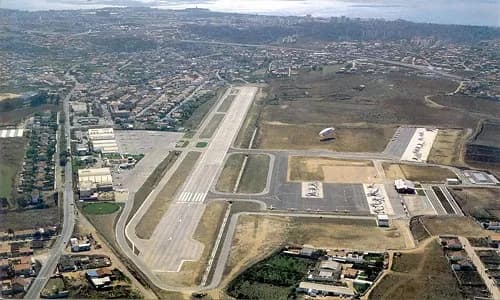
Cascais Municipal Aerodrome, also known as Lisbon Cascais-Tejo Regional Airport, is a dedicated business aviation airport located along Portugal’s Estoril coastline approximately 25 kilometres west of central Lisbon. Positioned between the seaside towns of Cascais and Estoril, the airport provides a convenient alternative to the busier Lisbon Airport for certain categories of private aviation operations.
The aerodrome operates a single runway measuring approximately 1,700 metres (5,577 feet), which supports turboprops, light jets and many midsize business jets depending on aircraft type and payload. Because of the runway length, operations by larger long-range aircraft are generally limited, meaning the airport is primarily used by smaller executive aircraft and regional private flights within Europe.
Cascais Aerodrome has developed into an important hub for business aviation, training operations and helicopter traffic along Portugal’s Atlantic coast. Its location near the coastline allows straightforward access to many of the region’s most popular destinations including Cascais, Estoril, Sintra and the western Lisbon coastline.
For private jet passengers travelling to the coastal resorts west of Lisbon, Cascais can offer shorter ground transfer times than Lisbon’s main international airport. The drive to the resort town of Cascais takes only 10 minutes, while central Lisbon can typically be reached in 30 to 40 minutes by road depending on traffic conditions.
The airport’s smaller scale, combined with its focus on executive aviation, makes Cascais a practical arrival point for travellers visiting Lisbon’s western suburbs, Atlantic surf beaches and the historic palaces of Sintra.
Handling Information
Omni Handling
Cascais Municipal Aerodrome, Avenida de Brasília, 2785-632 Tires, Cascais, Portugal
- Runway Length
- 5,500 ft
- Operating Hours
- 07:00 - 21:00
- FBO Lounge
- Available
- Ground Transfers
- Available
Frequently Asked Questions
The BLAK team answers the most common questions and covers the essentials for those thinking about flying to and from Lisbon.
Which airport do private jets typically use when flying to Lisbon?
Most private jet charter flights to and from Lisbon operate through Humberto Delgado Airport (LPPT), the city’s main international airport located about 7 kilometres from the centre of Lisbon. Despite its large commercial traffic volume, the airport supports a significant number of business aviation movements each year through dedicated executive handling facilities and FBO services.
When slot availability or parking becomes limited, Cascais Airport (LPCS) is often used as an alternative for private aviation. Located around 30 kilometres west of Lisbon near the coastal town of Cascais, the airport focuses heavily on general and business aviation operations and can offer a quieter operational environment for certain aircraft types.
Are slots required for private jet flights to Lisbon?
Yes. Lisbon Airport is a fully coordinated airport, meaning arrival and departure slots are required for all aircraft movements, including private jets. Because the airport handles a large volume of commercial airline traffic, slot availability can sometimes be limited during peak operating periods.
Private jet charter flights to and from Lisbon are therefore typically planned well in advance to secure suitable arrival and departure times. Having some flexibility with scheduling can make it easier to obtain preferred slots.
Does Lisbon Airport operate 24 hours?
Lisbon Airport operates for most of the day but is subject to night noise restrictions, which limit certain aircraft movements during late night hours.
Private jet operators planning late evening or early morning flights must consider these operational constraints and coordinate slot timings carefully to ensure compliance with local airport regulations.
Are helicopter transfers available from Lisbon Airport?
Yes. Helicopter transfers are occasionally used to connect Lisbon Airport with nearby destinations along the Portuguese coast. Flights can link Lisbon with areas such as Cascais, Comporta and other coastal estates, depending on operational permissions and landing availability.
Helicopter transfers are typically coordinated alongside private jet arrivals to minimise ground travel time.