


Private Jet Flights From London to Madrid
London to Madrid

Route Briefing
IATA: FABIATA: MAD
- Block Time
- 2h 20m
- Region
- Europe
- Distance
- 680 NM
- Charter From
- Farnborough Airport
Private flights between London and Madrid typically take around 2 hours 20 minutes, linking London’s major business aviation airports with Adolfo Suárez Madrid–Barajas Airport. A key European route connecting the UK with Spain’s capital for business travel and events.
Route Snapshot
- Departure
- Farnborough Airport
- Alternate
- Slot Requirement
- Arrival
- Madrid-Barajas Airport
- Aircraft Categories
- LightMidSuper-MidHeavy
- Status
- Customs
- Curfew ·FAB
- FBO / handling
- Restrictions
- Curfew·MAD
- Check-in lead time
Airport Information
Blackbushe Airport
Blackbushe Airport is a long-established general aviation airfield positioned on the borders of Hampshire, Surrey and Berkshire, and it serves a specific part of the wider London private jet charter market very well. Located approximately 60 kilometres southwest of central London, it is best understood as an airport for lighter charter aircraft and for travellers heading to the western and southwestern side of the capital rather than deep into central London itself.
Operating under ICAO code EGLK and IATA code BBS, Blackbushe has a runway measuring approximately 1,335 metres, which limits it to lighter categories of business aircraft and turboprops. In practical terms, that makes it more relevant for aircraft such as the Phenom 300, Citation Mustang, Citation CJ series, King Air and Pilatus PC-12 than for larger midsize or long-range jets. For shorter UK and European private charter sectors, however, it can work very well.
Blackbushe has a loyal following in private aviation because it offers a lower-key, more straightforward environment than the larger London airports. The pace is calmer, the arrival process can be simpler, and it is particularly convenient for passengers heading to Farnborough, Camberley, Ascot, Windsor, Reading, Basingstoke and the Thames Valley corporate corridor.
Journey time to central London is generally 60 to 70 minutes, depending on traffic, so it is not the first airport to consider for Mayfair or Belgravia unless aircraft type or itinerary make it the right one. Its real value lies in serving a wealthy and commercially active region southwest of London.
For travellers arranging private jet charter to or from the London area on smaller aircraft, Blackbushe can be a highly practical alternative with a more understated feel.
Handling Information
Blackbushe Aviation
Blackbushe Airport, Camberley GU17 9LQ, United Kingdom
- Runway Length
- 4,300 ft
- Operating Hours
- Upon Request
- Helicopter Transfers
- Available
- Ground Transfers
- Available
London Battersea Heliport
London Heliport in Battersea is the capital’s only licensed heliport and the central point for helicopter movements within London itself. While it is not a fixed-wing airport, it is still a very important part of the London private aviation picture because it often forms the final stage of a private jet charter journey into the city. For many travellers, especially those landing at outer airports, a helicopter transfer can dramatically reduce surface travel time into central London.
Operating under ICAO code EGLW, the heliport is built on a jetty extending into the River Thames and is designed exclusively for rotary operations. It supports helicopter transfers linking central London with airports such as Farnborough, Luton, Biggin Hill, Stansted and Oxford, as well as private estates, sporting events and regional destinations around southern England.
Its role is very different from that of the fixed-wing airports. London Heliport is about last-mile efficiency. A traveller arriving by private jet at Farnborough or Luton can switch to helicopter and reach Battersea in a fraction of the time it might take by road in heavy London traffic. Once on the ground, areas such as Chelsea, Belgravia, Knightsbridge, Westminster and Mayfair are all close at hand.
The heliport is carefully managed, movements are controlled and weather naturally plays a greater part than it does in fixed-wing scheduling, but when conditions and itinerary allow, it can be one of the fastest and most elegant ways to finish a private aviation journey into London.
For travellers arranging private jet charter to or from London who want to minimise road time into the centre, London Heliport can be a highly effective addition to the routing plan.
Handling Information
London Heliport Operations
Bridges Court Road, Battersea, London SW11 3BE, United Kingdom
- Runway Length
- -
- Operating Hours
- Upon Request
- Helicopter Transfers
- Available
- Private Lounge
- Available
London Biggin Hill Airport
London Biggin Hill Airport is one of the capital’s most recognised private aviation airports and a strong option for private jet charter flights serving South London and the southeastern side of the city. Located in the London Borough of Bromley, approximately 22 kilometres southeast of central London, Biggin Hill operates almost entirely around business aviation and is one of the few airports in the London region where private aircraft are the main focus rather than an add-on to commercial traffic.
Operating under ICAO code EGKB and IATA code BQH, Biggin Hill has a runway measuring approximately 1,820 metres, which suits a broad range of charter aircraft typically used on European sectors. Light jets, midsize jets and super midsize jets such as the Citation XLS+, Praetor 500, Challenger 350 and Legacy 500 are all well matched to the airport. It is therefore commonly used for private jet charter routes connecting London with Paris, Geneva, Zurich, Milan, Nice, Ibiza and the Mediterranean.
The airport also has real aviation heritage. Biggin Hill was one of the most important RAF fighter stations during the Battle of Britain, and that history still gives the airfield a distinct identity. Today, however, its practical value lies in its specialisation. Passengers using private jet charter services arrive through dedicated terminals, with direct vehicle access and an experience shaped around business aviation rather than airline scale throughput.
Biggin Hill is especially attractive for travellers whose final destination lies in Canary Wharf, the City, South London, Kent or Sussex, and transfer times into central London are typically 45 to 60 minutes depending on traffic.
For travellers arranging private jet charter to or from London from the south or southeast, Biggin Hill remains one of the most logical and established airports in the market.
Handling Information
Signature Flight Support
Churchill Way, Biggin Hill Airport, Westerham TN16 3BN, United Kingdom
- Runway Length
- 5,900 ft
- Operating Hours
- 06:30 - 23:00
- FBO Lounge
- Available
- Helicopter Transfers
- Available
London City Airport
London City Airport occupies a unique place in the London private aviation market because no other fixed-wing airport gets travellers closer to the capital’s financial core. Located in the Royal Docks in East London, the airport sits only minutes from Canary Wharf and within quick reach of the City of London, making it especially relevant for private jet charter passengers travelling for finance, law, banking and time-sensitive meetings in central business districts.
Operating under ICAO code EGLC and IATA code LCY, London City has a runway measuring approximately 1,508 metres and is subject to a well-known steep approach requirement over the Docklands area. That means only aircraft certified for steep approach operations can use the airport, and this naturally limits the field to a narrower group of business jets. From a charter perspective, London City is therefore more specialist than airports such as Farnborough, Luton or Stansted.
Its advantage is location rather than aircraft variety. For the right mission, London City can be exceptionally effective. Passengers landing here can often reach Canary Wharf in around 10 to 15 minutes, while the City, Mayfair and Westminster are all relatively close by London standards. That can make a meaningful difference when the priority is to minimise road time rather than maximise aircraft size or range.
Because of its operational profile, London City is usually best suited to shorter to medium-range private jet charter sectors within Europe, especially where the client values immediate access to the financial centre. It is not the natural choice for every mission, but for the right charter itinerary it can be one of the most efficient.
For travellers arranging private jet charter to London with meetings in Docklands or the Square Mile, London City is one of the sharpest airport choices available.
Handling Information
London City Airport Business Aviation Handling
Hartmann Road, Royal Docks, London E16 2PX, United Kingdom
- Runway Length
- 4,900 ft
- Operating Hours
- Upon Request
- FBO Lounge
- Available
- Ground Transfers
- Available
London Farnborough Airport
London Farnborough Airport is widely regarded as the United Kingdom’s premier airport dedicated entirely to business aviation and remains one of the most established arrival points for private jet charter flights to and from London. Located in Hampshire, approximately 65 kilometres southwest of central London, Farnborough is purpose built around private aviation, with no scheduled airline traffic and an operating environment designed specifically for passengers travelling by charter aircraft.
Operating under ICAO code EGLF and IATA code FAB, the airport has a runway measuring approximately 2,440 metres, allowing it to accommodate a broad range of business aircraft, from super midsize jets through to large cabin and ultra long-range types. Aircraft commonly chartered on routes to London, including the Praetor 600, Challenger 650, Falcon 8X, Gulfstream G650 and Bombardier Global series, are all well suited to Farnborough’s infrastructure. That makes it particularly popular for private jet charter flights arriving from Europe, the Middle East and the east coast of North America.
Farnborough’s appeal lies in how focused it is. Passengers arrive through dedicated business aviation terminals rather than a mixed commercial environment, which allows for a quieter, more controlled experience from landing to onward transfer. Customs and immigration are handled discreetly, and road transfers can be arranged directly from the terminal to destinations in Mayfair, Westminster, Kensington, Surrey, Berkshire and the Thames Valley.
For travellers arranging a private jet charter to or from London, Farnborough is often the benchmark against which the other London airports are measured. It combines serious aviation capability with a level of efficiency and privacy that suits corporate travel, family travel and high-value long-range charter itineraries alike.
Handling Information
Farnborough Airport FBO
Hampshire London, GU14 6XA United Kingdom
- Runway Length
- 8,000 ft
- Operating Hours
- Upon Request
- FBO Lounge
- Available
- Helicopter Transfers
- Available
London Gatwick Airport
London Gatwick Airport is the second-busiest airport serving the London region and an important large-scale gateway to the southeast of England. Located in West Sussex approximately 45 kilometres south of central London, Gatwick is primarily associated with scheduled airline operations, but it also supports private aviation and can be a relevant option for private jet charter flights in certain operational scenarios.
Operating under ICAO code EGKK and IATA code LGW, Gatwick has a main runway measuring approximately 3,316 metres, which gives it ample capability for the full range of private aircraft, including large cabin and ultra long-range jets. From an aircraft performance perspective, there are very few limitations. What shapes its role in the private jet market is not runway length but the scale of its commercial traffic and the fact that other London airports are more naturally oriented towards business aviation.
That said, Gatwick can still make sense for private jet charter passengers where the mission benefits from its southern position, its long-runway capability, or convenient access to Surrey, Sussex, the South Coast, Kent and parts of southwest London. It can also work for larger aircraft where an airport with shorter runway constraints may be less suitable.
Passengers travelling by private jet are handled separately from the main airline flow through dedicated facilities, allowing for a much more discreet arrival than the airport’s public-facing scale might suggest. Ground transfers into central London generally take 60 to 75 minutes, depending on traffic and destination.
For travellers arranging private jet charter to or from London, Gatwick is not the most common business aviation choice, but it remains a capable and credible option when location or aircraft type make it the right one.
Handling Information
Signature Flight Support
London Gatwick Airport, Horley, Gatwick RH6 0NP, United Kingdom
- Runway Length
- 10,800 ft
- Operating Hours
- 24/7
- FBO Lounge
- Available
- Ground Transfers
- Available
London Heathrow Airport
London Heathrow Airport is the United Kingdom’s largest airport and one of the busiest global aviation hubs anywhere in the world. Located approximately 23 kilometres west of central London, Heathrow is best known for scheduled airline traffic rather than private aviation, but it still has a role in the London private jet charter market in very specific circumstances, particularly where profile, routing or global connectivity make it the right fit.
Operating under ICAO code EGLL and IATA code LHR, Heathrow has two parallel runways measuring approximately 3,902 metres and 3,658 metres, giving it the physical capability to handle the full range of business aircraft, including the largest long-range and ultra long-range jets. From a pure runway perspective, Heathrow is exceptionally capable. The limiting factor is not infrastructure but slot availability, cost and traffic density, which is why most private jet charter passengers flying to London are usually routed through other airports.
When Heathrow is used for private aviation, it tends to be for high-profile travellers, highly specific itineraries, or missions where proximity to west London and global airline connectivity matter. The airport’s private terminal product, The Windsor by Heathrow, offers a very different arrival experience from the main commercial terminals, with private security screening, immigration processing and discreet lounge facilities.
Road transfers from Heathrow to central London typically take 35 to 50 minutes, depending on traffic, and the airport is also very well placed for Windsor, west London, Berkshire and the Thames Valley.
For travellers arranging private jet charter to or from London, Heathrow is not usually the default choice, but in the right circumstances it can be the most strategically appropriate airport in the system.
Handling Information
Universal Aviation Heathrow
London Heathrow Airport, Longford TW6, United Kingdom
- Runway Length
- 6,000 ft
- Operating Hours
- Upon Request
- FBO Lounge
- Available
- Ground Transfers
- Available
London Luton Airport
London Luton Airport is one of the busiest private aviation airports in Europe and a major gateway for private jet charter flights to and from London. Located approximately 55 kilometres northwest of central London, Luton plays a central role in the capital’s private aviation market, combining strong runway capability with one of the highest concentrations of dedicated business aviation facilities anywhere in the region.
Operating under ICAO code EGGW and IATA code LTN, the airport has a runway measuring approximately 2,160 metres, making it suitable for everything from light jets operating short European sectors to large cabin aircraft flying longer routes into London. Private jet charter flights between London and destinations such as Geneva, Nice, Milan, Ibiza, Dubai, Riyadh and New York frequently use Luton because it balances operational capability with a well-developed private terminal environment.
One of Luton’s biggest strengths is the scale of its specialist facilities. The airport is home to several major business aviation terminals, including Harrods Aviation, Signature Aviation and Jayrow, all of which are geared towards passengers travelling by private jet charter rather than scheduled airline traffic. That means fast aircraft-to-car transfers, private passenger lounges and a smoother arrival experience than would usually be found at a predominantly commercial airport.
Luton is also one of the more versatile London airports from a charter perspective. It works well for both leisure and corporate travel, and it is often chosen for missions where aircraft size, range or baggage capability rule out some of the shorter runway airports closer to the city. Road transfers into central London usually take 60 to 75 minutes, depending on traffic and the final destination.
For travellers arranging a private jet charter to or from London, Luton is one of the most practical all-round choices in the market.
Handling Information
Signature Flight Support
London Luton Airport, Airport Way, Luton LU2 9LY, United Kingdom
- Runway Length
- 7,000 ft
- Operating Hours
- 24/7
- FBO Lounge
- Available
- Ground Transfers
- Available
London Southend Airport
London Southend Airport provides an alternative point of entry to the eastern side of the Greater London region and can be useful for private jet charter passengers heading to Essex, East London and the Thames Estuary corridor. Located approximately 65 kilometres east of central London, the airport sits closer to the Essex coast than to the city centre, which gives it a different role from the more familiar private aviation gateways serving the capital.
Operating under ICAO code EGMC and IATA code SEN, Southend has a runway measuring approximately 1,856 metres, which supports a range of light, midsize and some super midsize business jets typically used on UK and European charter sectors. It is therefore suited to shorter to medium-range private jet charter flights rather than the heaviest long-haul missions.
Southend’s value lies in ease and lower intensity rather than headline prestige. It is a smaller-scale airport environment than Heathrow, Gatwick or Stansted, and that can be attractive for travellers who prefer a more straightforward arrival experience away from the larger airport ecosystem. Private aviation services are available through dedicated handling arrangements that allow passengers to move quickly from aircraft to onward transport.
Driving time into central London is usually 70 to 90 minutes, so Southend is rarely the first choice for passengers whose destination is Mayfair or Westminster. It makes more sense for travellers heading to the eastern side of the capital or to surrounding parts of Essex, where it can be operationally convenient and pleasantly uncomplicated.
For travellers arranging private jet charter to or from London who want an alternative to the busier airports and are heading east rather than west, Southend can be a sensible and efficient choice.
Handling Information
London Southend Airport Handling Services
London Southend Airport, Southend-on-Sea SS2 6YF, United Kingdom
- Runway Length
- 6,000 ft
- Operating Hours
- 24/7
- FBO Lounge
- Available
- Ground Transfers
- Available
London Stansted Airport
London Stansted Airport is one of the most important airports in the London system for long-range private jet charter flights. Situated in Essex, approximately 64 kilometres northeast of central London, Stansted combines major-airport runway capability with a substantial private aviation presence, making it a regular choice for larger aircraft and intercontinental charter itineraries.
Operating under ICAO code EGSS and IATA code STN, the airport has a runway measuring approximately 3,048 metres, which allows it to accommodate the full range of business aircraft, including ultra long-range jets such as the Gulfstream G700, Gulfstream G650ER, Bombardier Global 7500 and Dassault Falcon 10X class. This makes Stansted especially relevant for private jet charter flights linking London with New York, Los Angeles, Miami, Dubai, Doha, Riyadh and other long-haul destinations where runway margin and payload matter.
Although Stansted is a large commercial airport, it also has a serious private aviation footprint, with dedicated facilities including Harrods Aviation and other specialist handling providers. Passengers travelling by private jet are typically processed through separate terminals away from the main airline passenger flow, which allows for a more discreet and efficient experience on arrival and departure.
From a charter perspective, Stansted’s role is very clear. It is one of the strongest options when the mission involves a larger aircraft, a heavier cabin load, substantial luggage, or a nonstop long-haul sector. Travel time into central London is usually 50 to 70 minutes by car, depending on traffic and destination, while it can also work well for passengers heading to Essex, Cambridge, East London and parts of Hertfordshire.
For travellers seeking private jet charter to or from London on larger aircraft, Stansted is one of the capital’s most capable gateways.
Handling Information
Harrods Aviation
London Stansted Airport, Bassingbourn Rd, Stansted CM24 1QW, United Kingdom
- Runway Length
- 10,000 ft
- Operating Hours
- 24/7
- Rental Cars
- Available
- Ground Transfers
- Available
Blackbushe Airport
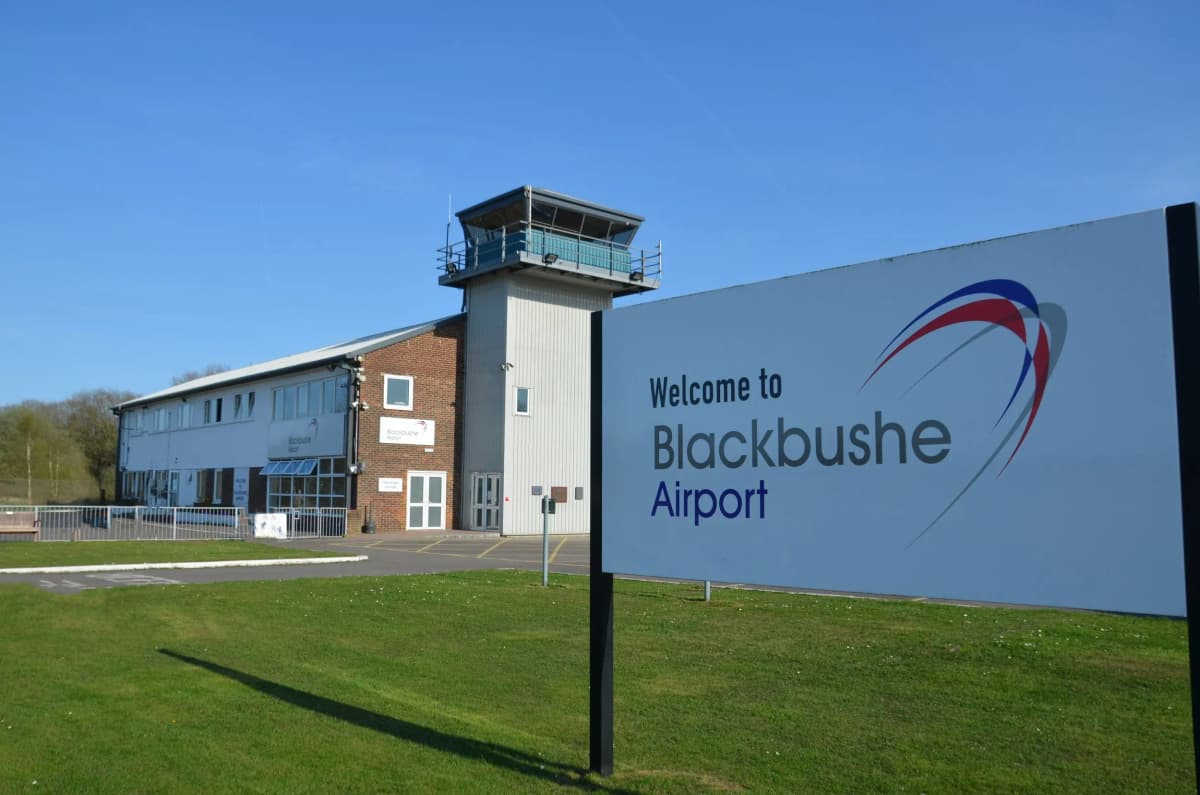
Blackbushe Airport is a long-established general aviation airfield positioned on the borders of Hampshire, Surrey and Berkshire, and it serves a specific part of the wider London private jet charter market very well. Located approximately 60 kilometres southwest of central London, it is best understood as an airport for lighter charter aircraft and for travellers heading to the western and southwestern side of the capital rather than deep into central London itself.
Operating under ICAO code EGLK and IATA code BBS, Blackbushe has a runway measuring approximately 1,335 metres, which limits it to lighter categories of business aircraft and turboprops. In practical terms, that makes it more relevant for aircraft such as the Phenom 300, Citation Mustang, Citation CJ series, King Air and Pilatus PC-12 than for larger midsize or long-range jets. For shorter UK and European private charter sectors, however, it can work very well.
Blackbushe has a loyal following in private aviation because it offers a lower-key, more straightforward environment than the larger London airports. The pace is calmer, the arrival process can be simpler, and it is particularly convenient for passengers heading to Farnborough, Camberley, Ascot, Windsor, Reading, Basingstoke and the Thames Valley corporate corridor.
Journey time to central London is generally 60 to 70 minutes, depending on traffic, so it is not the first airport to consider for Mayfair or Belgravia unless aircraft type or itinerary make it the right one. Its real value lies in serving a wealthy and commercially active region southwest of London.
For travellers arranging private jet charter to or from the London area on smaller aircraft, Blackbushe can be a highly practical alternative with a more understated feel.
Handling Information
Blackbushe Aviation
Blackbushe Airport, Camberley GU17 9LQ, United Kingdom
- Runway Length
- 4,300 ft
- Operating Hours
- Upon Request
- Helicopter Transfers
- Available
- Ground Transfers
- Available
London Battersea Heliport
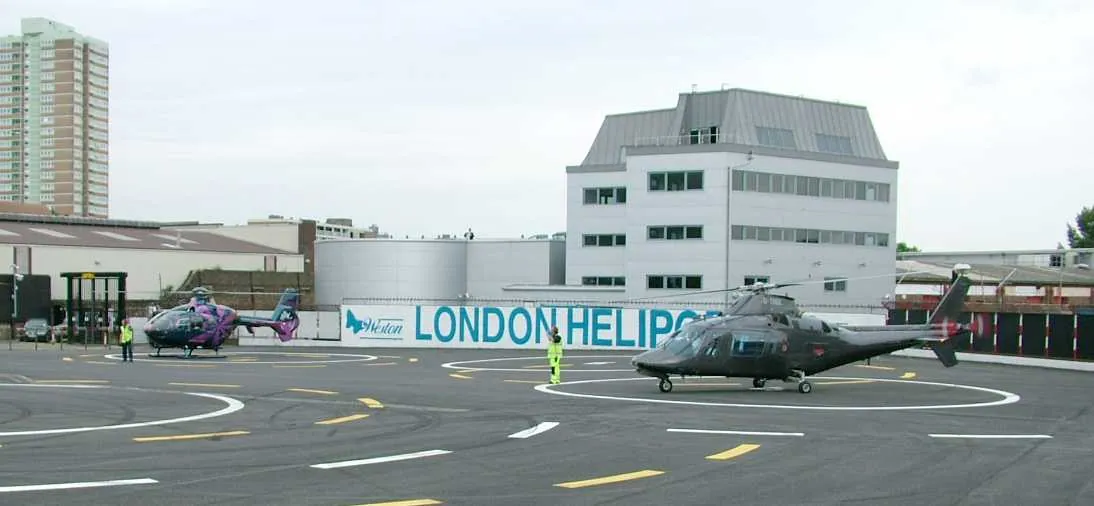
London Heliport in Battersea is the capital’s only licensed heliport and the central point for helicopter movements within London itself. While it is not a fixed-wing airport, it is still a very important part of the London private aviation picture because it often forms the final stage of a private jet charter journey into the city. For many travellers, especially those landing at outer airports, a helicopter transfer can dramatically reduce surface travel time into central London.
Operating under ICAO code EGLW, the heliport is built on a jetty extending into the River Thames and is designed exclusively for rotary operations. It supports helicopter transfers linking central London with airports such as Farnborough, Luton, Biggin Hill, Stansted and Oxford, as well as private estates, sporting events and regional destinations around southern England.
Its role is very different from that of the fixed-wing airports. London Heliport is about last-mile efficiency. A traveller arriving by private jet at Farnborough or Luton can switch to helicopter and reach Battersea in a fraction of the time it might take by road in heavy London traffic. Once on the ground, areas such as Chelsea, Belgravia, Knightsbridge, Westminster and Mayfair are all close at hand.
The heliport is carefully managed, movements are controlled and weather naturally plays a greater part than it does in fixed-wing scheduling, but when conditions and itinerary allow, it can be one of the fastest and most elegant ways to finish a private aviation journey into London.
For travellers arranging private jet charter to or from London who want to minimise road time into the centre, London Heliport can be a highly effective addition to the routing plan.
Handling Information
London Heliport Operations
Bridges Court Road, Battersea, London SW11 3BE, United Kingdom
- Runway Length
- -
- Operating Hours
- Upon Request
- Helicopter Transfers
- Available
- Private Lounge
- Available
London Biggin Hill Airport
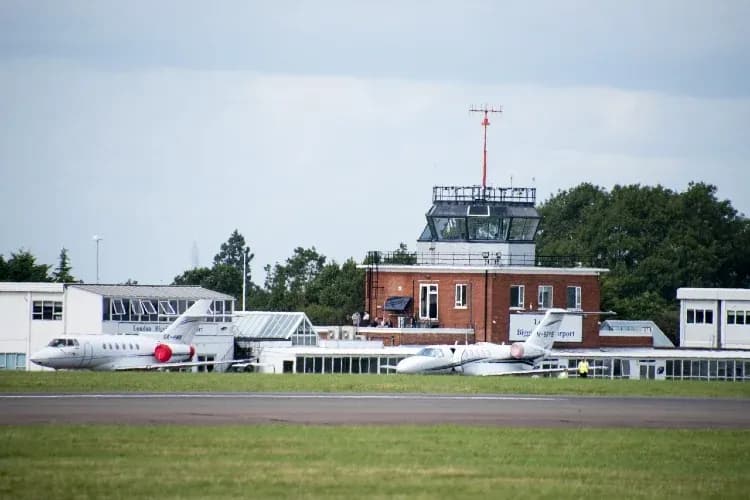
London Biggin Hill Airport is one of the capital’s most recognised private aviation airports and a strong option for private jet charter flights serving South London and the southeastern side of the city. Located in the London Borough of Bromley, approximately 22 kilometres southeast of central London, Biggin Hill operates almost entirely around business aviation and is one of the few airports in the London region where private aircraft are the main focus rather than an add-on to commercial traffic.
Operating under ICAO code EGKB and IATA code BQH, Biggin Hill has a runway measuring approximately 1,820 metres, which suits a broad range of charter aircraft typically used on European sectors. Light jets, midsize jets and super midsize jets such as the Citation XLS+, Praetor 500, Challenger 350 and Legacy 500 are all well matched to the airport. It is therefore commonly used for private jet charter routes connecting London with Paris, Geneva, Zurich, Milan, Nice, Ibiza and the Mediterranean.
The airport also has real aviation heritage. Biggin Hill was one of the most important RAF fighter stations during the Battle of Britain, and that history still gives the airfield a distinct identity. Today, however, its practical value lies in its specialisation. Passengers using private jet charter services arrive through dedicated terminals, with direct vehicle access and an experience shaped around business aviation rather than airline scale throughput.
Biggin Hill is especially attractive for travellers whose final destination lies in Canary Wharf, the City, South London, Kent or Sussex, and transfer times into central London are typically 45 to 60 minutes depending on traffic.
For travellers arranging private jet charter to or from London from the south or southeast, Biggin Hill remains one of the most logical and established airports in the market.
Handling Information
Signature Flight Support
Churchill Way, Biggin Hill Airport, Westerham TN16 3BN, United Kingdom
- Runway Length
- 5,900 ft
- Operating Hours
- 06:30 - 23:00
- FBO Lounge
- Available
- Helicopter Transfers
- Available
London City Airport
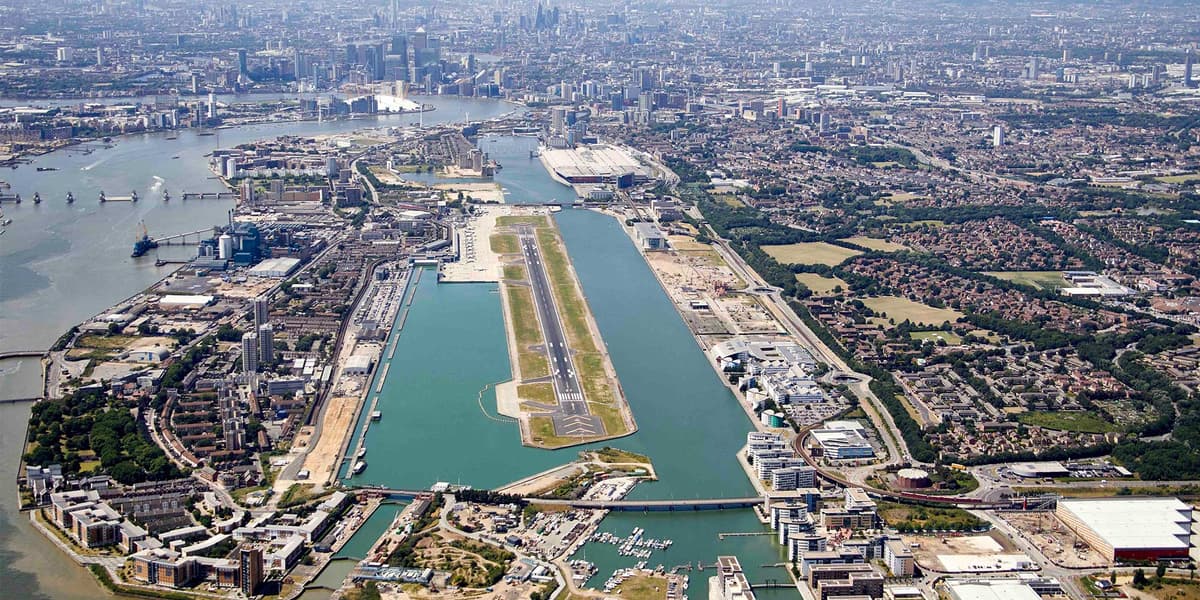
London City Airport occupies a unique place in the London private aviation market because no other fixed-wing airport gets travellers closer to the capital’s financial core. Located in the Royal Docks in East London, the airport sits only minutes from Canary Wharf and within quick reach of the City of London, making it especially relevant for private jet charter passengers travelling for finance, law, banking and time-sensitive meetings in central business districts.
Operating under ICAO code EGLC and IATA code LCY, London City has a runway measuring approximately 1,508 metres and is subject to a well-known steep approach requirement over the Docklands area. That means only aircraft certified for steep approach operations can use the airport, and this naturally limits the field to a narrower group of business jets. From a charter perspective, London City is therefore more specialist than airports such as Farnborough, Luton or Stansted.
Its advantage is location rather than aircraft variety. For the right mission, London City can be exceptionally effective. Passengers landing here can often reach Canary Wharf in around 10 to 15 minutes, while the City, Mayfair and Westminster are all relatively close by London standards. That can make a meaningful difference when the priority is to minimise road time rather than maximise aircraft size or range.
Because of its operational profile, London City is usually best suited to shorter to medium-range private jet charter sectors within Europe, especially where the client values immediate access to the financial centre. It is not the natural choice for every mission, but for the right charter itinerary it can be one of the most efficient.
For travellers arranging private jet charter to London with meetings in Docklands or the Square Mile, London City is one of the sharpest airport choices available.
Handling Information
London City Airport Business Aviation Handling
Hartmann Road, Royal Docks, London E16 2PX, United Kingdom
- Runway Length
- 4,900 ft
- Operating Hours
- Upon Request
- FBO Lounge
- Available
- Ground Transfers
- Available
London Farnborough Airport
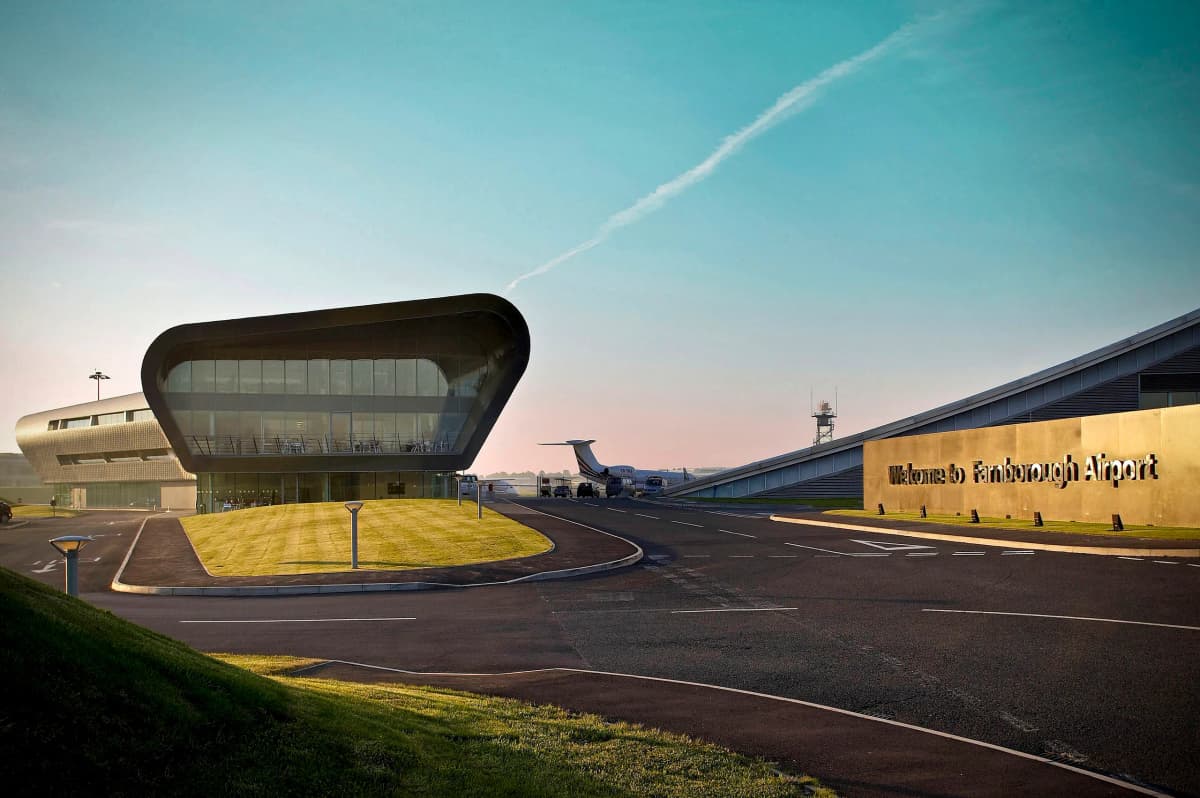
London Farnborough Airport is widely regarded as the United Kingdom’s premier airport dedicated entirely to business aviation and remains one of the most established arrival points for private jet charter flights to and from London. Located in Hampshire, approximately 65 kilometres southwest of central London, Farnborough is purpose built around private aviation, with no scheduled airline traffic and an operating environment designed specifically for passengers travelling by charter aircraft.
Operating under ICAO code EGLF and IATA code FAB, the airport has a runway measuring approximately 2,440 metres, allowing it to accommodate a broad range of business aircraft, from super midsize jets through to large cabin and ultra long-range types. Aircraft commonly chartered on routes to London, including the Praetor 600, Challenger 650, Falcon 8X, Gulfstream G650 and Bombardier Global series, are all well suited to Farnborough’s infrastructure. That makes it particularly popular for private jet charter flights arriving from Europe, the Middle East and the east coast of North America.
Farnborough’s appeal lies in how focused it is. Passengers arrive through dedicated business aviation terminals rather than a mixed commercial environment, which allows for a quieter, more controlled experience from landing to onward transfer. Customs and immigration are handled discreetly, and road transfers can be arranged directly from the terminal to destinations in Mayfair, Westminster, Kensington, Surrey, Berkshire and the Thames Valley.
For travellers arranging a private jet charter to or from London, Farnborough is often the benchmark against which the other London airports are measured. It combines serious aviation capability with a level of efficiency and privacy that suits corporate travel, family travel and high-value long-range charter itineraries alike.
Handling Information
Farnborough Airport FBO
Hampshire London, GU14 6XA United Kingdom
- Runway Length
- 8,000 ft
- Operating Hours
- Upon Request
- FBO Lounge
- Available
- Helicopter Transfers
- Available
London Gatwick Airport
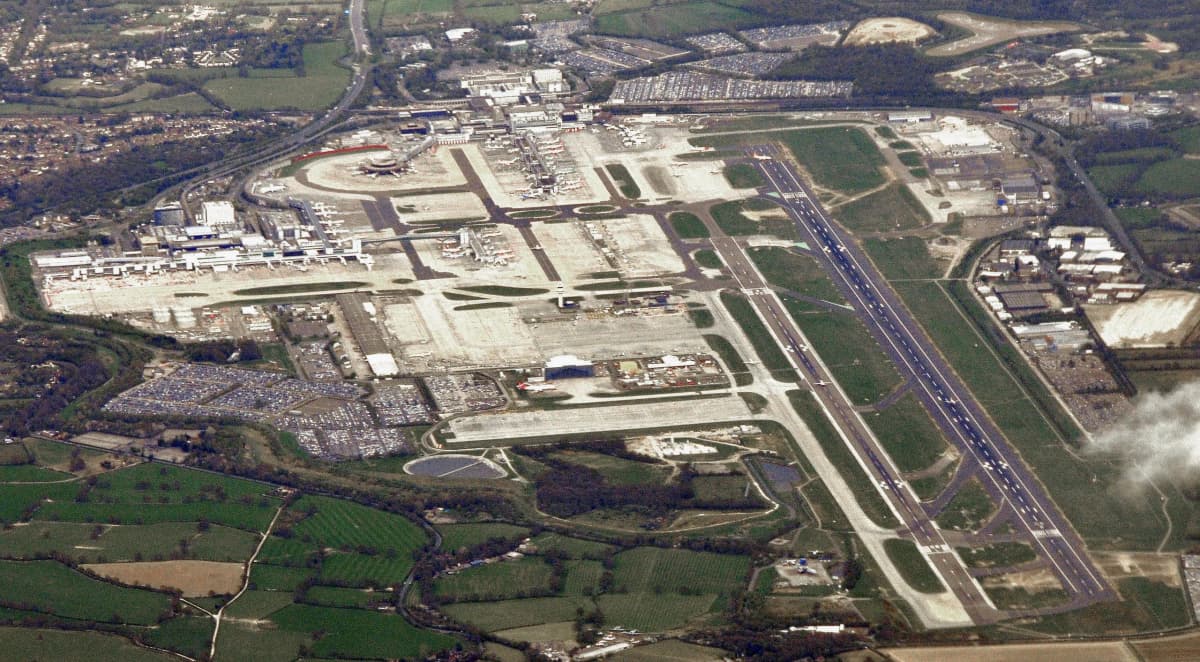
London Gatwick Airport is the second-busiest airport serving the London region and an important large-scale gateway to the southeast of England. Located in West Sussex approximately 45 kilometres south of central London, Gatwick is primarily associated with scheduled airline operations, but it also supports private aviation and can be a relevant option for private jet charter flights in certain operational scenarios.
Operating under ICAO code EGKK and IATA code LGW, Gatwick has a main runway measuring approximately 3,316 metres, which gives it ample capability for the full range of private aircraft, including large cabin and ultra long-range jets. From an aircraft performance perspective, there are very few limitations. What shapes its role in the private jet market is not runway length but the scale of its commercial traffic and the fact that other London airports are more naturally oriented towards business aviation.
That said, Gatwick can still make sense for private jet charter passengers where the mission benefits from its southern position, its long-runway capability, or convenient access to Surrey, Sussex, the South Coast, Kent and parts of southwest London. It can also work for larger aircraft where an airport with shorter runway constraints may be less suitable.
Passengers travelling by private jet are handled separately from the main airline flow through dedicated facilities, allowing for a much more discreet arrival than the airport’s public-facing scale might suggest. Ground transfers into central London generally take 60 to 75 minutes, depending on traffic and destination.
For travellers arranging private jet charter to or from London, Gatwick is not the most common business aviation choice, but it remains a capable and credible option when location or aircraft type make it the right one.
Handling Information
Signature Flight Support
London Gatwick Airport, Horley, Gatwick RH6 0NP, United Kingdom
- Runway Length
- 10,800 ft
- Operating Hours
- 24/7
- FBO Lounge
- Available
- Ground Transfers
- Available
London Heathrow Airport
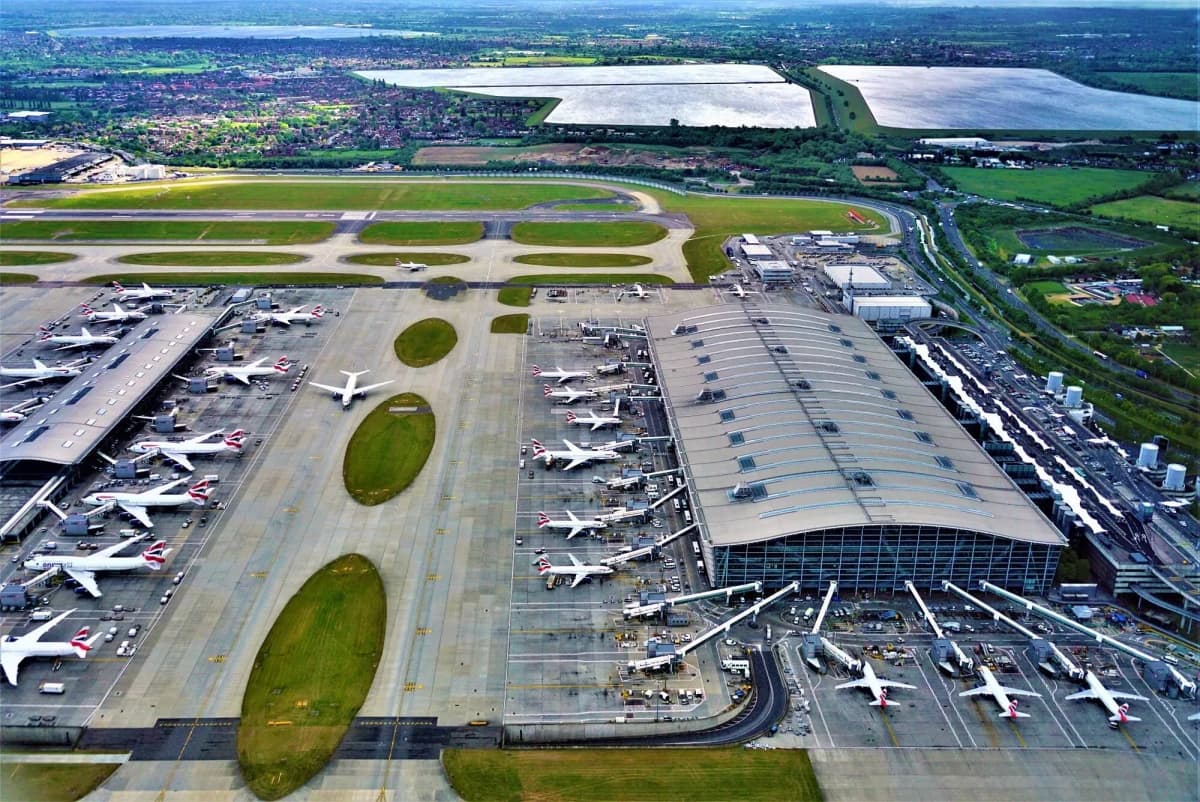
London Heathrow Airport is the United Kingdom’s largest airport and one of the busiest global aviation hubs anywhere in the world. Located approximately 23 kilometres west of central London, Heathrow is best known for scheduled airline traffic rather than private aviation, but it still has a role in the London private jet charter market in very specific circumstances, particularly where profile, routing or global connectivity make it the right fit.
Operating under ICAO code EGLL and IATA code LHR, Heathrow has two parallel runways measuring approximately 3,902 metres and 3,658 metres, giving it the physical capability to handle the full range of business aircraft, including the largest long-range and ultra long-range jets. From a pure runway perspective, Heathrow is exceptionally capable. The limiting factor is not infrastructure but slot availability, cost and traffic density, which is why most private jet charter passengers flying to London are usually routed through other airports.
When Heathrow is used for private aviation, it tends to be for high-profile travellers, highly specific itineraries, or missions where proximity to west London and global airline connectivity matter. The airport’s private terminal product, The Windsor by Heathrow, offers a very different arrival experience from the main commercial terminals, with private security screening, immigration processing and discreet lounge facilities.
Road transfers from Heathrow to central London typically take 35 to 50 minutes, depending on traffic, and the airport is also very well placed for Windsor, west London, Berkshire and the Thames Valley.
For travellers arranging private jet charter to or from London, Heathrow is not usually the default choice, but in the right circumstances it can be the most strategically appropriate airport in the system.
Handling Information
Universal Aviation Heathrow
London Heathrow Airport, Longford TW6, United Kingdom
- Runway Length
- 6,000 ft
- Operating Hours
- Upon Request
- FBO Lounge
- Available
- Ground Transfers
- Available
London Luton Airport
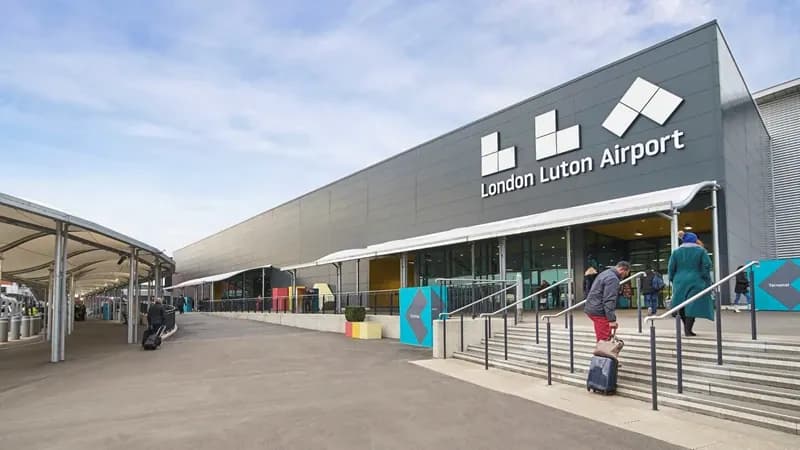
London Luton Airport is one of the busiest private aviation airports in Europe and a major gateway for private jet charter flights to and from London. Located approximately 55 kilometres northwest of central London, Luton plays a central role in the capital’s private aviation market, combining strong runway capability with one of the highest concentrations of dedicated business aviation facilities anywhere in the region.
Operating under ICAO code EGGW and IATA code LTN, the airport has a runway measuring approximately 2,160 metres, making it suitable for everything from light jets operating short European sectors to large cabin aircraft flying longer routes into London. Private jet charter flights between London and destinations such as Geneva, Nice, Milan, Ibiza, Dubai, Riyadh and New York frequently use Luton because it balances operational capability with a well-developed private terminal environment.
One of Luton’s biggest strengths is the scale of its specialist facilities. The airport is home to several major business aviation terminals, including Harrods Aviation, Signature Aviation and Jayrow, all of which are geared towards passengers travelling by private jet charter rather than scheduled airline traffic. That means fast aircraft-to-car transfers, private passenger lounges and a smoother arrival experience than would usually be found at a predominantly commercial airport.
Luton is also one of the more versatile London airports from a charter perspective. It works well for both leisure and corporate travel, and it is often chosen for missions where aircraft size, range or baggage capability rule out some of the shorter runway airports closer to the city. Road transfers into central London usually take 60 to 75 minutes, depending on traffic and the final destination.
For travellers arranging a private jet charter to or from London, Luton is one of the most practical all-round choices in the market.
Handling Information
Signature Flight Support
London Luton Airport, Airport Way, Luton LU2 9LY, United Kingdom
- Runway Length
- 7,000 ft
- Operating Hours
- 24/7
- FBO Lounge
- Available
- Ground Transfers
- Available
London Southend Airport
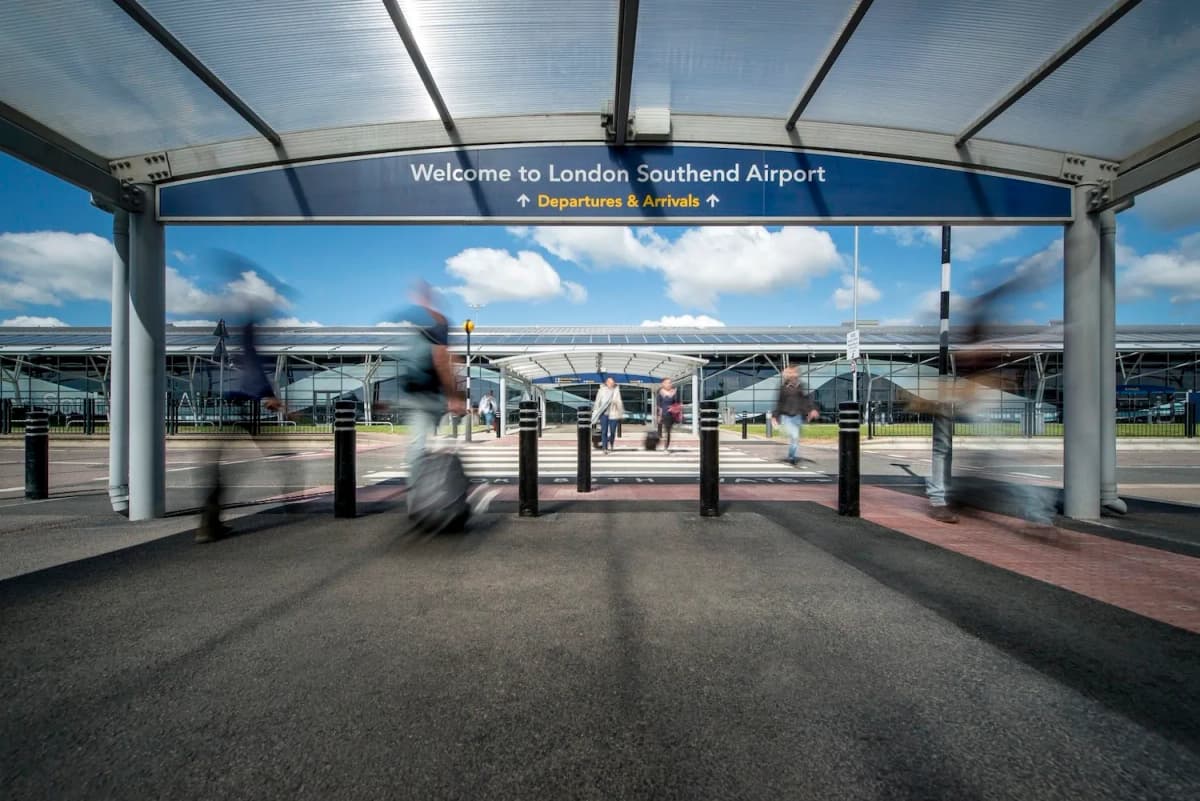
London Southend Airport provides an alternative point of entry to the eastern side of the Greater London region and can be useful for private jet charter passengers heading to Essex, East London and the Thames Estuary corridor. Located approximately 65 kilometres east of central London, the airport sits closer to the Essex coast than to the city centre, which gives it a different role from the more familiar private aviation gateways serving the capital.
Operating under ICAO code EGMC and IATA code SEN, Southend has a runway measuring approximately 1,856 metres, which supports a range of light, midsize and some super midsize business jets typically used on UK and European charter sectors. It is therefore suited to shorter to medium-range private jet charter flights rather than the heaviest long-haul missions.
Southend’s value lies in ease and lower intensity rather than headline prestige. It is a smaller-scale airport environment than Heathrow, Gatwick or Stansted, and that can be attractive for travellers who prefer a more straightforward arrival experience away from the larger airport ecosystem. Private aviation services are available through dedicated handling arrangements that allow passengers to move quickly from aircraft to onward transport.
Driving time into central London is usually 70 to 90 minutes, so Southend is rarely the first choice for passengers whose destination is Mayfair or Westminster. It makes more sense for travellers heading to the eastern side of the capital or to surrounding parts of Essex, where it can be operationally convenient and pleasantly uncomplicated.
For travellers arranging private jet charter to or from London who want an alternative to the busier airports and are heading east rather than west, Southend can be a sensible and efficient choice.
Handling Information
London Southend Airport Handling Services
London Southend Airport, Southend-on-Sea SS2 6YF, United Kingdom
- Runway Length
- 6,000 ft
- Operating Hours
- 24/7
- FBO Lounge
- Available
- Ground Transfers
- Available
London Stansted Airport
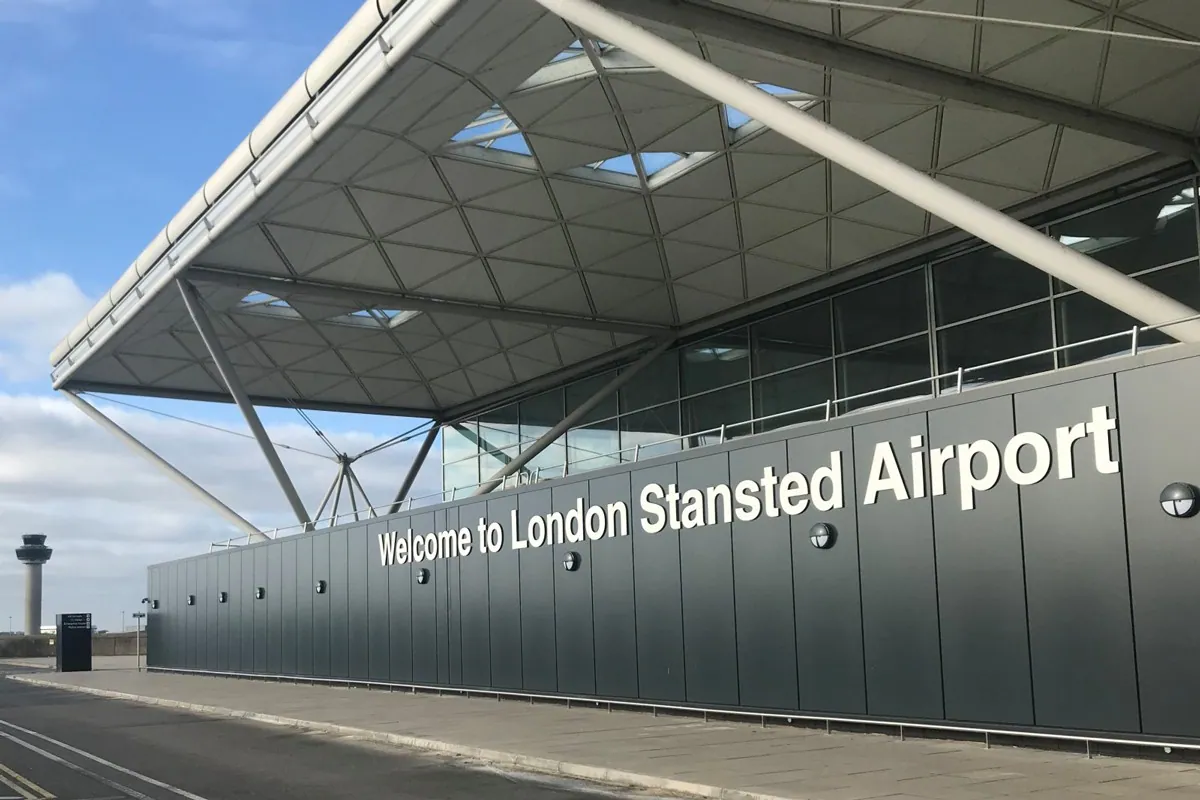
London Stansted Airport is one of the most important airports in the London system for long-range private jet charter flights. Situated in Essex, approximately 64 kilometres northeast of central London, Stansted combines major-airport runway capability with a substantial private aviation presence, making it a regular choice for larger aircraft and intercontinental charter itineraries.
Operating under ICAO code EGSS and IATA code STN, the airport has a runway measuring approximately 3,048 metres, which allows it to accommodate the full range of business aircraft, including ultra long-range jets such as the Gulfstream G700, Gulfstream G650ER, Bombardier Global 7500 and Dassault Falcon 10X class. This makes Stansted especially relevant for private jet charter flights linking London with New York, Los Angeles, Miami, Dubai, Doha, Riyadh and other long-haul destinations where runway margin and payload matter.
Although Stansted is a large commercial airport, it also has a serious private aviation footprint, with dedicated facilities including Harrods Aviation and other specialist handling providers. Passengers travelling by private jet are typically processed through separate terminals away from the main airline passenger flow, which allows for a more discreet and efficient experience on arrival and departure.
From a charter perspective, Stansted’s role is very clear. It is one of the strongest options when the mission involves a larger aircraft, a heavier cabin load, substantial luggage, or a nonstop long-haul sector. Travel time into central London is usually 50 to 70 minutes by car, depending on traffic and destination, while it can also work well for passengers heading to Essex, Cambridge, East London and parts of Hertfordshire.
For travellers seeking private jet charter to or from London on larger aircraft, Stansted is one of the capital’s most capable gateways.
Handling Information
Harrods Aviation
London Stansted Airport, Bassingbourn Rd, Stansted CM24 1QW, United Kingdom
- Runway Length
- 10,000 ft
- Operating Hours
- 24/7
- Rental Cars
- Available
- Ground Transfers
- Available
Madrid Barajas International Airport
Adolfo Suárez Madrid–Barajas Airport is the primary international gateway to Spain’s capital and one of the most important aviation hubs in Europe. Located approximately 12 kilometres northeast of central Madrid, the airport handles tens of millions of passengers annually and serves as a major connection point between Europe, the Americas and the wider Mediterranean region.
For private aviation, Madrid–Barajas offers extensive infrastructure capable of supporting the full range of business aircraft. Multiple long runways exceeding 3,000 metres allow operations for everything from turboprops and light jets to large long-range aircraft such as Gulfstream and Global Express class jets arriving from intercontinental destinations.
Private jet passengers operate through dedicated executive aviation facilities separate from the main commercial terminals. These specialised handling areas provide discreet passenger processing and efficient ground operations designed specifically for business aviation travellers. Services typically include private lounges, coordinated ground handling, aircraft parking, fuelling and expedited customs and immigration procedures.
Madrid’s position as Spain’s political and financial centre means the airport supports a steady flow of private aviation traffic throughout the year. Charter flights frequently operate between Madrid and major European cities including London, Paris, Geneva, Milan and Zurich, while long-range aircraft regularly connect the city with destinations across the Middle East and North America.
Despite the airport’s scale, transfers into central Madrid remain relatively quick. In light traffic, road journeys from the airport to districts such as Salamanca, Chamberí and the historic city centre usually take around 20 to 25 minutes, making Madrid–Barajas a convenient entry point for travellers arriving or departing by private aircraft.
Private jet charter flights to and from Madrid–Barajas Airport allow passengers to travel on their own schedule while benefiting from the airport’s extensive aviation infrastructure and global connectivity.
Handling Information
Sky Valet Madrid
Adolfo Suárez Madrid–Barajas Airport, Avenida de la Hispanidad s/n, 28042 Madrid, Spain
- Runway Length
- 13,700 ft
- Operating Hours
- 24/7
- FBO Lounge
- Available
- Ground Transfers
- Available
Madrid Cuatro Vientos Airport
Madrid–Cuatro Vientos Airport is a historic airfield located approximately 8 kilometres southwest of central Madrid and is widely recognised as the oldest operating airport in Spain. Established in 1911, the airport has played a significant role in Spanish aviation history and today primarily supports general aviation, helicopter operations and smaller private aircraft movements.
Due to operational limitations and its runway configuration, Madrid–Cuatro Vientos is generally suitable for helicopters, turboprops and smaller business aircraft operating under visual flight rules (VFR). Larger business jets typically operate through other airports serving the capital, such as Adolfo Suárez Madrid–Barajas Airport or Madrid–Torrejón Airport, which provide longer runways and greater infrastructure for business aviation.
The airport’s main advantage is its proximity to the city centre. Located closer to central Madrid than the capital’s larger airports, transfers into the city typically take around 20 to 25 minutes in light traffic, providing a convenient option for travellers arriving on smaller aircraft or helicopter transfers.
Madrid–Cuatro Vientos remains an active general aviation hub with facilities supporting private aviation movements, including aircraft parking, handling services and passenger support areas. Because of its operational characteristics, the airport is most often used by smaller aircraft conducting short regional flights within Spain or nearby European destinations.
Private aviation movements to and from Madrid–Cuatro Vientos Airport are typically limited to smaller aircraft categories, but its historic character and proximity to central Madrid make it a unique aviation gateway within the Spanish capital.
Handling Information
Gestair Handling
Aeropuerto de Cuatro Vientos, Avenida de la Aviación s/n, 28054 Madrid, Spain
- Runway Length
- 4,900 ft
- Operating Hours
- Upon Request
- Helicopter Transfers
- Available
- Ground Transfers
- Available
Madrid Torrejón Airport
Madrid–Torrejón Airport is a joint-use airport located approximately 25 kilometres northeast of central Madrid. The airfield is shared between the Spanish Air and Space Force and civilian aviation authorities, with the civilian section primarily dedicated to executive and private aviation operations.
For private jet travellers, Madrid–Torrejón offers a quieter and more discreet operating environment compared with larger commercial airports. Because the airport focuses heavily on business aviation activity, it is frequently used for charter flights arriving in or departing from Madrid, particularly for passengers seeking efficient ground handling and reduced congestion.
The airport features a runway of approximately 2,500 metres, allowing it to accommodate a wide range of aircraft including turboprops, light jets, midsize business jets and many large-cabin aircraft depending on operational conditions. Dedicated private aviation facilities support executive travellers with services such as passenger lounges, aircraft handling, fuelling, hangar space and coordinated passenger assistance.
Passengers arriving by private aircraft benefit from streamlined procedures designed to minimise time spent at the airport. Handling providers coordinate passenger processing, security procedures and ground transportation directly from the aircraft, allowing travellers to depart the airport quickly and discreetly.
Madrid–Torrejón’s location provides convenient access to the Spanish capital while avoiding the heavier traffic associated with larger commercial airports. In light traffic conditions, transfers into central Madrid typically take around 25 to 30 minutes, connecting passengers with the city’s financial districts, hotels and cultural landmarks.
Private jet charter flights to and from Madrid–Torrejón Airport regularly operate between Madrid and major European destinations while also supporting aircraft departures for travellers leaving Spain. For private aviation in the Spanish capital, Torrejón offers an efficient alternative gateway alongside the larger Madrid–Barajas Airport.
Handling Information
ExecuJet Spain - Madrid–Torrejón Airport
Carretera de Ajalvir s/n, 28850 Torrejón de Ardoz, Madrid, Spain
- Runway Length
- 12,000 ft
- Operating Hours
- Upon Request
- Helicopter Transfers
- Available
- Ground Transfers
- Available
Madrid Barajas International Airport
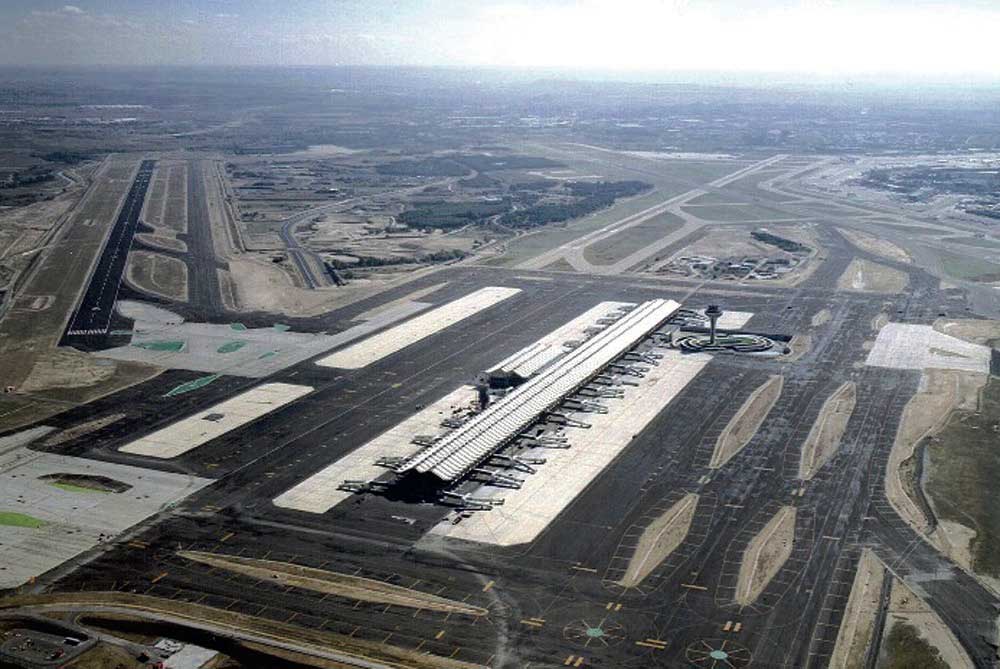
Adolfo Suárez Madrid–Barajas Airport is the primary international gateway to Spain’s capital and one of the most important aviation hubs in Europe. Located approximately 12 kilometres northeast of central Madrid, the airport handles tens of millions of passengers annually and serves as a major connection point between Europe, the Americas and the wider Mediterranean region.
For private aviation, Madrid–Barajas offers extensive infrastructure capable of supporting the full range of business aircraft. Multiple long runways exceeding 3,000 metres allow operations for everything from turboprops and light jets to large long-range aircraft such as Gulfstream and Global Express class jets arriving from intercontinental destinations.
Private jet passengers operate through dedicated executive aviation facilities separate from the main commercial terminals. These specialised handling areas provide discreet passenger processing and efficient ground operations designed specifically for business aviation travellers. Services typically include private lounges, coordinated ground handling, aircraft parking, fuelling and expedited customs and immigration procedures.
Madrid’s position as Spain’s political and financial centre means the airport supports a steady flow of private aviation traffic throughout the year. Charter flights frequently operate between Madrid and major European cities including London, Paris, Geneva, Milan and Zurich, while long-range aircraft regularly connect the city with destinations across the Middle East and North America.
Despite the airport’s scale, transfers into central Madrid remain relatively quick. In light traffic, road journeys from the airport to districts such as Salamanca, Chamberí and the historic city centre usually take around 20 to 25 minutes, making Madrid–Barajas a convenient entry point for travellers arriving or departing by private aircraft.
Private jet charter flights to and from Madrid–Barajas Airport allow passengers to travel on their own schedule while benefiting from the airport’s extensive aviation infrastructure and global connectivity.
Handling Information
Sky Valet Madrid
Adolfo Suárez Madrid–Barajas Airport, Avenida de la Hispanidad s/n, 28042 Madrid, Spain
- Runway Length
- 13,700 ft
- Operating Hours
- 24/7
- FBO Lounge
- Available
- Ground Transfers
- Available
Madrid Cuatro Vientos Airport
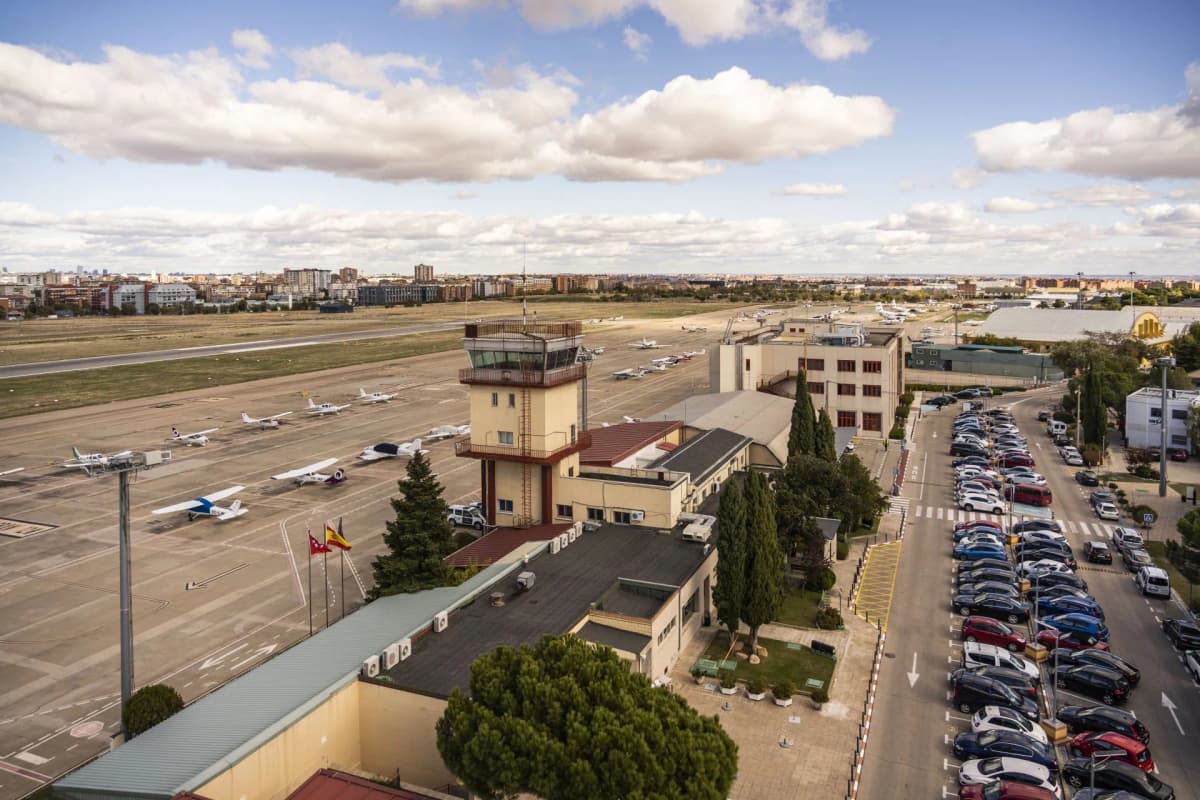
Madrid–Cuatro Vientos Airport is a historic airfield located approximately 8 kilometres southwest of central Madrid and is widely recognised as the oldest operating airport in Spain. Established in 1911, the airport has played a significant role in Spanish aviation history and today primarily supports general aviation, helicopter operations and smaller private aircraft movements.
Due to operational limitations and its runway configuration, Madrid–Cuatro Vientos is generally suitable for helicopters, turboprops and smaller business aircraft operating under visual flight rules (VFR). Larger business jets typically operate through other airports serving the capital, such as Adolfo Suárez Madrid–Barajas Airport or Madrid–Torrejón Airport, which provide longer runways and greater infrastructure for business aviation.
The airport’s main advantage is its proximity to the city centre. Located closer to central Madrid than the capital’s larger airports, transfers into the city typically take around 20 to 25 minutes in light traffic, providing a convenient option for travellers arriving on smaller aircraft or helicopter transfers.
Madrid–Cuatro Vientos remains an active general aviation hub with facilities supporting private aviation movements, including aircraft parking, handling services and passenger support areas. Because of its operational characteristics, the airport is most often used by smaller aircraft conducting short regional flights within Spain or nearby European destinations.
Private aviation movements to and from Madrid–Cuatro Vientos Airport are typically limited to smaller aircraft categories, but its historic character and proximity to central Madrid make it a unique aviation gateway within the Spanish capital.
Handling Information
Gestair Handling
Aeropuerto de Cuatro Vientos, Avenida de la Aviación s/n, 28054 Madrid, Spain
- Runway Length
- 4,900 ft
- Operating Hours
- Upon Request
- Helicopter Transfers
- Available
- Ground Transfers
- Available
Madrid Torrejón Airport
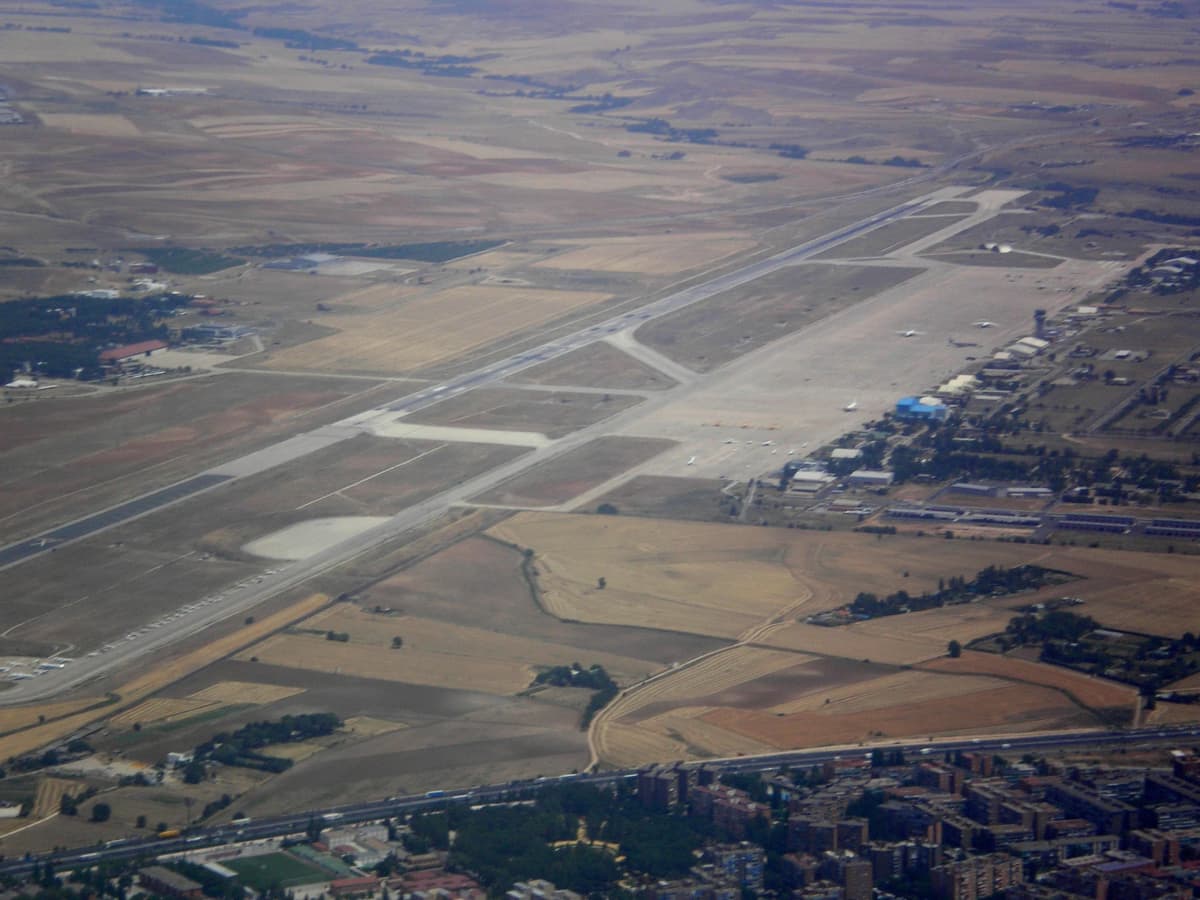
Madrid–Torrejón Airport is a joint-use airport located approximately 25 kilometres northeast of central Madrid. The airfield is shared between the Spanish Air and Space Force and civilian aviation authorities, with the civilian section primarily dedicated to executive and private aviation operations.
For private jet travellers, Madrid–Torrejón offers a quieter and more discreet operating environment compared with larger commercial airports. Because the airport focuses heavily on business aviation activity, it is frequently used for charter flights arriving in or departing from Madrid, particularly for passengers seeking efficient ground handling and reduced congestion.
The airport features a runway of approximately 2,500 metres, allowing it to accommodate a wide range of aircraft including turboprops, light jets, midsize business jets and many large-cabin aircraft depending on operational conditions. Dedicated private aviation facilities support executive travellers with services such as passenger lounges, aircraft handling, fuelling, hangar space and coordinated passenger assistance.
Passengers arriving by private aircraft benefit from streamlined procedures designed to minimise time spent at the airport. Handling providers coordinate passenger processing, security procedures and ground transportation directly from the aircraft, allowing travellers to depart the airport quickly and discreetly.
Madrid–Torrejón’s location provides convenient access to the Spanish capital while avoiding the heavier traffic associated with larger commercial airports. In light traffic conditions, transfers into central Madrid typically take around 25 to 30 minutes, connecting passengers with the city’s financial districts, hotels and cultural landmarks.
Private jet charter flights to and from Madrid–Torrejón Airport regularly operate between Madrid and major European destinations while also supporting aircraft departures for travellers leaving Spain. For private aviation in the Spanish capital, Torrejón offers an efficient alternative gateway alongside the larger Madrid–Barajas Airport.
Handling Information
ExecuJet Spain - Madrid–Torrejón Airport
Carretera de Ajalvir s/n, 28850 Torrejón de Ardoz, Madrid, Spain
- Runway Length
- 12,000 ft
- Operating Hours
- Upon Request
- Helicopter Transfers
- Available
- Ground Transfers
- Available
Frequently Asked Questions
The BLAK team answers the most common questions and covers the essentials for those thinking about flying to and from Madrid.
Which airport do private jets typically use when flying to Madrid?
Most private jet charter flights to and from Madrid operate through Adolfo Suárez Madrid–Barajas Airport (LEMD). The airport is one of the largest aviation hubs in Europe and features dedicated business aviation facilities, multiple FBOs and handling agents capable of supporting aircraft ranging from light jets to long-range aircraft such as the Gulfstream G700 or Bombardier Global series.
Despite its large commercial traffic volume, Barajas is well equipped for private aviation operations. Private jet passengers are typically handled through dedicated executive terminals or FBO facilities separate from the main commercial terminals, allowing for faster arrivals, private security processing and direct aircraft access.
Are slots required for private jet flights to Madrid?
Yes. Madrid–Barajas is a fully coordinated airport, meaning arrival and departure slots are required for both commercial and private aviation movements. Slot availability is generally manageable, but during peak travel periods, major sporting events, or international conferences, preferred timings can become more limited.
For private jet charter flights to and from Madrid, operators typically request slots in advance through the Spanish airport coordination system. With proper planning, most private aircraft movements can be accommodated without difficulty, but flexibility around departure or arrival times can sometimes be required.
Are night flights allowed for private jets in Madrid?
Yes. Madrid–Barajas Airport operates 24 hours a day, and private jet flights can generally operate throughout the night. However, as with most major European airports, certain runway usage patterns and noise procedures apply during late night and early morning periods.
Private jet operators typically plan arrivals and departures carefully to comply with local noise abatement procedures and slot coordination requirements. In practice, Madrid remains one of the more flexible major European capitals for private aviation night operations compared with airports that operate strict curfews.
Is Madrid–Torrejón Airport used by private jets?
Yes, although Madrid–Torrejón Airport (LETO) primarily serves Spanish military and government operations. It occasionally accommodates certain private aviation movements, particularly diplomatic, state or special operations flights.
Because of its restricted status, access is far more limited than Madrid–Barajas, and private charter flights normally operate through Barajas unless specific permissions are granted. For most private jet travellers flying to and from Madrid, Barajas remains the primary and most practical airport.