

Private Jet Flights From Madrid to Canary Islands
Madrid to Canary Islands

Route Briefing
IATA: MADIATA: TFS
- Block Time
- 2h 45m
- Region
- Europe
- Distance
- 920 NM
- Charter From
- Madrid-Barajas Airport
Private flights between Madrid and the Canary Islands typically take around 2 hours 45 minutes, linking Madrid’s major business aviation airports with airports including Tenerife, Gran Canaria and Lanzarote. A popular domestic route for direct access to Atlantic resorts.
Route Snapshot
- Departure
- Madrid-Barajas Airport
- Alternate
- Slot Requirement
- Arrival
- Tenerife South Airport
- Aircraft Categories
- LightMidSuper-MidHeavy
- Status
- Customs
- Curfew ·MAD
- FBO / handling
- Restrictions
- Curfew·TFS
- Check-in lead time
Airport Information
Madrid Barajas International Airport
Adolfo Suárez Madrid–Barajas Airport is the primary international gateway to Spain’s capital and one of the most important aviation hubs in Europe. Located approximately 12 kilometres northeast of central Madrid, the airport handles tens of millions of passengers annually and serves as a major connection point between Europe, the Americas and the wider Mediterranean region.
For private aviation, Madrid–Barajas offers extensive infrastructure capable of supporting the full range of business aircraft. Multiple long runways exceeding 3,000 metres allow operations for everything from turboprops and light jets to large long-range aircraft such as Gulfstream and Global Express class jets arriving from intercontinental destinations.
Private jet passengers operate through dedicated executive aviation facilities separate from the main commercial terminals. These specialised handling areas provide discreet passenger processing and efficient ground operations designed specifically for business aviation travellers. Services typically include private lounges, coordinated ground handling, aircraft parking, fuelling and expedited customs and immigration procedures.
Madrid’s position as Spain’s political and financial centre means the airport supports a steady flow of private aviation traffic throughout the year. Charter flights frequently operate between Madrid and major European cities including London, Paris, Geneva, Milan and Zurich, while long-range aircraft regularly connect the city with destinations across the Middle East and North America.
Despite the airport’s scale, transfers into central Madrid remain relatively quick. In light traffic, road journeys from the airport to districts such as Salamanca, Chamberí and the historic city centre usually take around 20 to 25 minutes, making Madrid–Barajas a convenient entry point for travellers arriving or departing by private aircraft.
Private jet charter flights to and from Madrid–Barajas Airport allow passengers to travel on their own schedule while benefiting from the airport’s extensive aviation infrastructure and global connectivity.
Handling Information
Sky Valet Madrid
Adolfo Suárez Madrid–Barajas Airport, Avenida de la Hispanidad s/n, 28042 Madrid, Spain
- Runway Length
- 13,700 ft
- Operating Hours
- 24/7
- FBO Lounge
- Available
- Ground Transfers
- Available
Madrid Cuatro Vientos Airport
Madrid–Cuatro Vientos Airport is a historic airfield located approximately 8 kilometres southwest of central Madrid and is widely recognised as the oldest operating airport in Spain. Established in 1911, the airport has played a significant role in Spanish aviation history and today primarily supports general aviation, helicopter operations and smaller private aircraft movements.
Due to operational limitations and its runway configuration, Madrid–Cuatro Vientos is generally suitable for helicopters, turboprops and smaller business aircraft operating under visual flight rules (VFR). Larger business jets typically operate through other airports serving the capital, such as Adolfo Suárez Madrid–Barajas Airport or Madrid–Torrejón Airport, which provide longer runways and greater infrastructure for business aviation.
The airport’s main advantage is its proximity to the city centre. Located closer to central Madrid than the capital’s larger airports, transfers into the city typically take around 20 to 25 minutes in light traffic, providing a convenient option for travellers arriving on smaller aircraft or helicopter transfers.
Madrid–Cuatro Vientos remains an active general aviation hub with facilities supporting private aviation movements, including aircraft parking, handling services and passenger support areas. Because of its operational characteristics, the airport is most often used by smaller aircraft conducting short regional flights within Spain or nearby European destinations.
Private aviation movements to and from Madrid–Cuatro Vientos Airport are typically limited to smaller aircraft categories, but its historic character and proximity to central Madrid make it a unique aviation gateway within the Spanish capital.
Handling Information
Gestair Handling
Aeropuerto de Cuatro Vientos, Avenida de la Aviación s/n, 28054 Madrid, Spain
- Runway Length
- 4,900 ft
- Operating Hours
- Upon Request
- Helicopter Transfers
- Available
- Ground Transfers
- Available
Madrid Torrejón Airport
Madrid–Torrejón Airport is a joint-use airport located approximately 25 kilometres northeast of central Madrid. The airfield is shared between the Spanish Air and Space Force and civilian aviation authorities, with the civilian section primarily dedicated to executive and private aviation operations.
For private jet travellers, Madrid–Torrejón offers a quieter and more discreet operating environment compared with larger commercial airports. Because the airport focuses heavily on business aviation activity, it is frequently used for charter flights arriving in or departing from Madrid, particularly for passengers seeking efficient ground handling and reduced congestion.
The airport features a runway of approximately 2,500 metres, allowing it to accommodate a wide range of aircraft including turboprops, light jets, midsize business jets and many large-cabin aircraft depending on operational conditions. Dedicated private aviation facilities support executive travellers with services such as passenger lounges, aircraft handling, fuelling, hangar space and coordinated passenger assistance.
Passengers arriving by private aircraft benefit from streamlined procedures designed to minimise time spent at the airport. Handling providers coordinate passenger processing, security procedures and ground transportation directly from the aircraft, allowing travellers to depart the airport quickly and discreetly.
Madrid–Torrejón’s location provides convenient access to the Spanish capital while avoiding the heavier traffic associated with larger commercial airports. In light traffic conditions, transfers into central Madrid typically take around 25 to 30 minutes, connecting passengers with the city’s financial districts, hotels and cultural landmarks.
Private jet charter flights to and from Madrid–Torrejón Airport regularly operate between Madrid and major European destinations while also supporting aircraft departures for travellers leaving Spain. For private aviation in the Spanish capital, Torrejón offers an efficient alternative gateway alongside the larger Madrid–Barajas Airport.
Handling Information
ExecuJet Spain - Madrid–Torrejón Airport
Carretera de Ajalvir s/n, 28850 Torrejón de Ardoz, Madrid, Spain
- Runway Length
- 12,000 ft
- Operating Hours
- Upon Request
- Helicopter Transfers
- Available
- Ground Transfers
- Available
Madrid Barajas International Airport
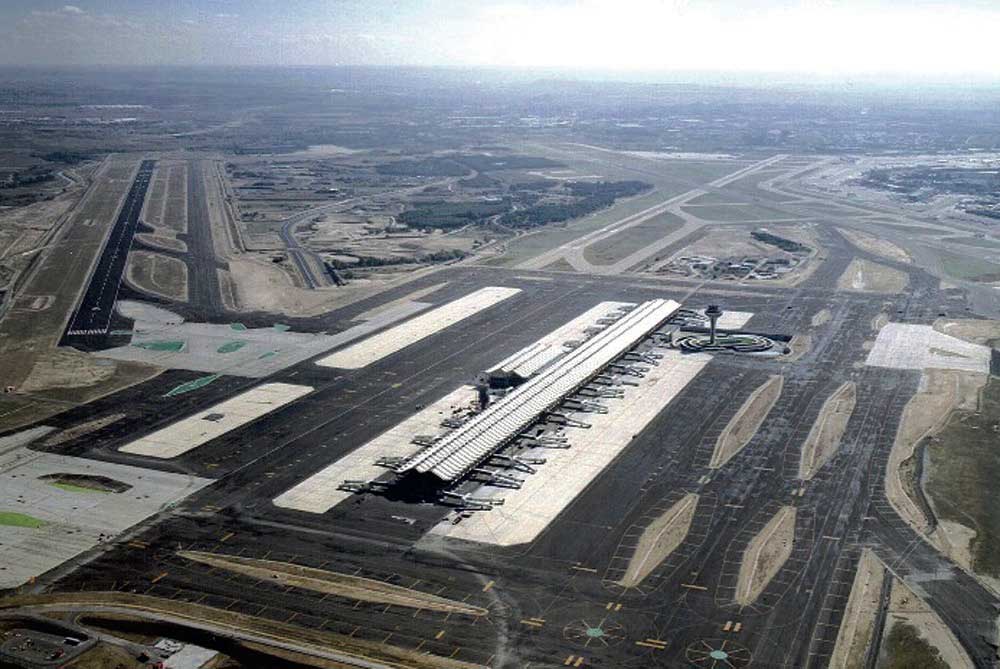
Adolfo Suárez Madrid–Barajas Airport is the primary international gateway to Spain’s capital and one of the most important aviation hubs in Europe. Located approximately 12 kilometres northeast of central Madrid, the airport handles tens of millions of passengers annually and serves as a major connection point between Europe, the Americas and the wider Mediterranean region.
For private aviation, Madrid–Barajas offers extensive infrastructure capable of supporting the full range of business aircraft. Multiple long runways exceeding 3,000 metres allow operations for everything from turboprops and light jets to large long-range aircraft such as Gulfstream and Global Express class jets arriving from intercontinental destinations.
Private jet passengers operate through dedicated executive aviation facilities separate from the main commercial terminals. These specialised handling areas provide discreet passenger processing and efficient ground operations designed specifically for business aviation travellers. Services typically include private lounges, coordinated ground handling, aircraft parking, fuelling and expedited customs and immigration procedures.
Madrid’s position as Spain’s political and financial centre means the airport supports a steady flow of private aviation traffic throughout the year. Charter flights frequently operate between Madrid and major European cities including London, Paris, Geneva, Milan and Zurich, while long-range aircraft regularly connect the city with destinations across the Middle East and North America.
Despite the airport’s scale, transfers into central Madrid remain relatively quick. In light traffic, road journeys from the airport to districts such as Salamanca, Chamberí and the historic city centre usually take around 20 to 25 minutes, making Madrid–Barajas a convenient entry point for travellers arriving or departing by private aircraft.
Private jet charter flights to and from Madrid–Barajas Airport allow passengers to travel on their own schedule while benefiting from the airport’s extensive aviation infrastructure and global connectivity.
Handling Information
Sky Valet Madrid
Adolfo Suárez Madrid–Barajas Airport, Avenida de la Hispanidad s/n, 28042 Madrid, Spain
- Runway Length
- 13,700 ft
- Operating Hours
- 24/7
- FBO Lounge
- Available
- Ground Transfers
- Available
Madrid Cuatro Vientos Airport
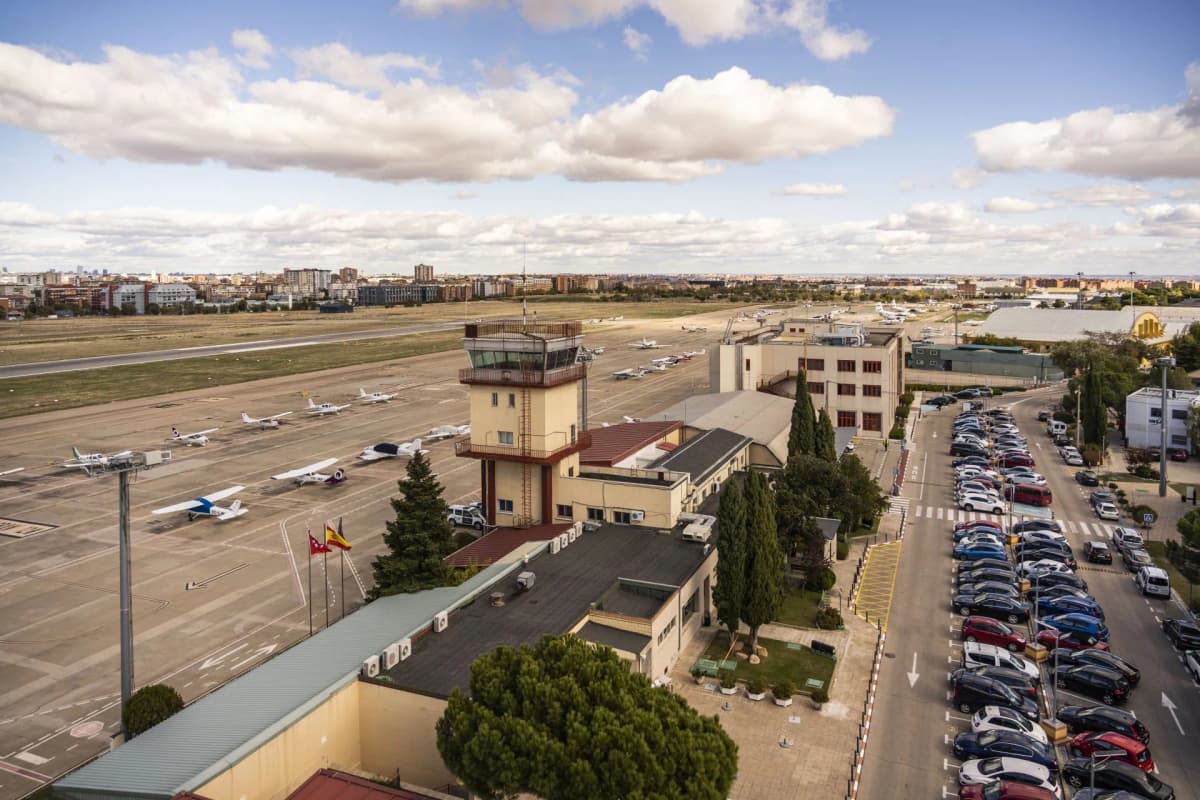
Madrid–Cuatro Vientos Airport is a historic airfield located approximately 8 kilometres southwest of central Madrid and is widely recognised as the oldest operating airport in Spain. Established in 1911, the airport has played a significant role in Spanish aviation history and today primarily supports general aviation, helicopter operations and smaller private aircraft movements.
Due to operational limitations and its runway configuration, Madrid–Cuatro Vientos is generally suitable for helicopters, turboprops and smaller business aircraft operating under visual flight rules (VFR). Larger business jets typically operate through other airports serving the capital, such as Adolfo Suárez Madrid–Barajas Airport or Madrid–Torrejón Airport, which provide longer runways and greater infrastructure for business aviation.
The airport’s main advantage is its proximity to the city centre. Located closer to central Madrid than the capital’s larger airports, transfers into the city typically take around 20 to 25 minutes in light traffic, providing a convenient option for travellers arriving on smaller aircraft or helicopter transfers.
Madrid–Cuatro Vientos remains an active general aviation hub with facilities supporting private aviation movements, including aircraft parking, handling services and passenger support areas. Because of its operational characteristics, the airport is most often used by smaller aircraft conducting short regional flights within Spain or nearby European destinations.
Private aviation movements to and from Madrid–Cuatro Vientos Airport are typically limited to smaller aircraft categories, but its historic character and proximity to central Madrid make it a unique aviation gateway within the Spanish capital.
Handling Information
Gestair Handling
Aeropuerto de Cuatro Vientos, Avenida de la Aviación s/n, 28054 Madrid, Spain
- Runway Length
- 4,900 ft
- Operating Hours
- Upon Request
- Helicopter Transfers
- Available
- Ground Transfers
- Available
Madrid Torrejón Airport
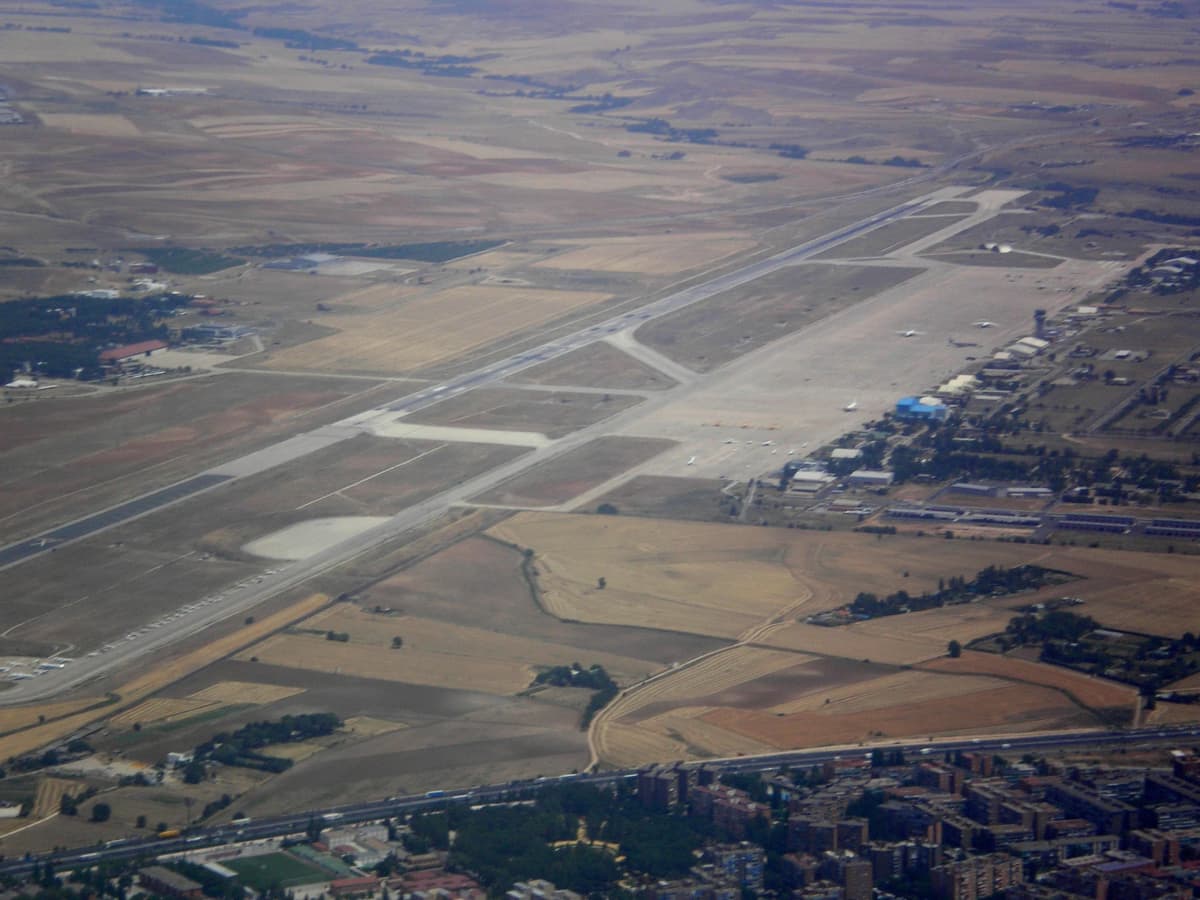
Madrid–Torrejón Airport is a joint-use airport located approximately 25 kilometres northeast of central Madrid. The airfield is shared between the Spanish Air and Space Force and civilian aviation authorities, with the civilian section primarily dedicated to executive and private aviation operations.
For private jet travellers, Madrid–Torrejón offers a quieter and more discreet operating environment compared with larger commercial airports. Because the airport focuses heavily on business aviation activity, it is frequently used for charter flights arriving in or departing from Madrid, particularly for passengers seeking efficient ground handling and reduced congestion.
The airport features a runway of approximately 2,500 metres, allowing it to accommodate a wide range of aircraft including turboprops, light jets, midsize business jets and many large-cabin aircraft depending on operational conditions. Dedicated private aviation facilities support executive travellers with services such as passenger lounges, aircraft handling, fuelling, hangar space and coordinated passenger assistance.
Passengers arriving by private aircraft benefit from streamlined procedures designed to minimise time spent at the airport. Handling providers coordinate passenger processing, security procedures and ground transportation directly from the aircraft, allowing travellers to depart the airport quickly and discreetly.
Madrid–Torrejón’s location provides convenient access to the Spanish capital while avoiding the heavier traffic associated with larger commercial airports. In light traffic conditions, transfers into central Madrid typically take around 25 to 30 minutes, connecting passengers with the city’s financial districts, hotels and cultural landmarks.
Private jet charter flights to and from Madrid–Torrejón Airport regularly operate between Madrid and major European destinations while also supporting aircraft departures for travellers leaving Spain. For private aviation in the Spanish capital, Torrejón offers an efficient alternative gateway alongside the larger Madrid–Barajas Airport.
Handling Information
ExecuJet Spain - Madrid–Torrejón Airport
Carretera de Ajalvir s/n, 28850 Torrejón de Ardoz, Madrid, Spain
- Runway Length
- 12,000 ft
- Operating Hours
- Upon Request
- Helicopter Transfers
- Available
- Ground Transfers
- Available
César Manrique–Lanzarote Airport
Private jet charter flights to and from César Manrique–Lanzarote Airport provide convenient access to one of the Canary Islands’ most visually striking and architecturally distinctive destinations. Located on the island’s eastern coast just outside the capital, César Manrique–Lanzarote Airport (IATA: ACE, ICAO: GCRR) serves as the primary aviation gateway to Lanzarote and handles millions of passengers each year.
The airport is named after the influential Lanzarote-born artist and architect César Manrique, whose work helped shape the island’s unique architectural identity. Lanzarote is famous for its dramatic volcanic landscapes, whitewashed villages and carefully protected development policies that preserve the island’s natural character.
César Manrique–Lanzarote Airport is well equipped to support a variety of aviation operations, including private aircraft movements. Its runway infrastructure allows operations by a wide range of aircraft types, from regional turboprops and midsize business jets to larger long-range aircraft arriving from major European cities.
Private jet passengers benefit from efficient ground handling services and streamlined airport procedures that enable quick transfers between aircraft and ground transport. The airport’s compact layout and efficient operations make arrivals and departures relatively straightforward compared with larger international airports.
The airport sits only a few kilometres from Arrecife, Lanzarote’s capital, and offers excellent road access via the LZ-1 and LZ-2 highways, allowing travellers to reach many of the island’s major destinations quickly. Popular areas such as Puerto del Carmen, Costa Teguise and Playa Blanca are typically within 10 to 35 minutes by road depending on location.
For travellers exploring the Canary Islands, Lanzarote also serves as a convenient starting point for regional flights linking nearby islands such as Fuerteventura, Gran Canaria and Tenerife, allowing private aviation travellers to combine multiple islands during a single journey.
Handling Information
Sky Valet Lanzarote
César Manrique–Lanzarote Airport, Carretera Arrecife–Yaiza Km 5, 35509 San Bartolomé, Lanzarote, Canary Islands, Spain
- Runway Length
- 7,800 ft
- Operating Hours
- Upon Request
- Wi-Fi
- Available
- Ground Transfers
- Available
El Hierro Airport
Private jet charter flights to and from El Hierro Airport provide access to one of the most remote and untouched islands in the Canary Islands. Located near the coastal town of Valverde, El Hierro Airport (IATA: VDE, ICAO: GCHI) serves as the island’s primary aviation gateway and connects El Hierro with neighbouring Canary Islands.
El Hierro is the smallest and least developed of the main Canary Islands, widely recognised for its exceptional natural environment. The island has been designated a UNESCO Biosphere Reserve, reflecting its commitment to protecting its volcanic landscapes, forests and marine ecosystems. Its rugged cliffs, lava fields and crystal-clear waters attract visitors seeking nature-focused travel experiences such as hiking, diving and wildlife exploration.
The airport sits along the island’s northeastern coastline and provides convenient access to the capital Valverde, which can be reached in around 15 minutes by road. The harbour town of La Restinga, a well-known destination for scuba diving due to its rich marine life and volcanic seabed, lies roughly 40 minutes to the south.
El Hierro Airport operates with a relatively short runway and primarily supports regional turboprop aircraft and small aviation operations linking the island with Tenerife and other Canary Islands. Due to these limitations, larger private jets typically operate into nearby airports such as Tenerife before travellers continue to El Hierro via short regional flights or helicopter transfers.
Despite its modest scale, El Hierro Airport plays a vital role in connecting the island with the wider Canary Islands network, enabling visitors to explore one of the most peaceful and ecologically preserved destinations in the Atlantic.
For travellers seeking dramatic landscapes, quiet villages and pristine natural environments, private jet charter to and from El Hierro Airport provides access to one of the Canary Islands’ most authentic and untouched islands.
Handling Information
AENA Handling
El Hierro Airport, Carretera del Aeropuerto s/n, 38910 Valverde, El Hierro, Canary Islands, Spain
- Runway Length
- 4,000 ft
- Operating Hours
- Upon Request
- Helicopter Transfers
- Not Available
- Taxi Services
- Upon Request
Fuerteventura Airport (El Matorral Airport)
Private jet charter flights to and from Fuerteventura Airport provide access to one of the Canary Islands’ most celebrated beach destinations. Located on the island’s eastern coast near the capital, Fuerteventura Airport (IATA: FUE, ICAO: GCFV) serves as the primary aviation gateway to Fuerteventura and connects the island with mainland Spain and major European cities.
Fuerteventura is the second-largest island in the Canary Islands and is renowned for its expansive beaches, clear Atlantic waters and year-round warm climate. Much of the island has been designated a UNESCO Biosphere Reserve, reflecting the importance of preserving its natural landscapes and coastal ecosystems.
Fuerteventura Airport sits approximately 5 kilometres south of Puerto del Rosario, the island’s capital and main commercial centre. The airport’s location provides convenient access to many of the island’s most popular destinations. The resort areas along the central and northern coasts can be reached within 20 to 40 minutes, while the beaches and marinas of Morro Jable and the Jandía Peninsula on the southern coast are typically around one hour by road.
The airport’s runway infrastructure allows operations by a wide range of aircraft types, including regional aircraft, midsize business jets and larger private aircraft operating international flights. Private aviation travellers benefit from dedicated ground handling services and efficient airport procedures that allow quick movement between aircraft and ground transport.
Fuerteventura Airport also serves as a useful regional gateway within the Canary Islands. Short flights connect the island with nearby destinations such as Lanzarote, Gran Canaria and Tenerife, allowing travellers to explore multiple islands during a single trip.
For travellers arranging private jet charter to or from Fuerteventura, the airport offers a convenient and well-connected entry point to an island known for its long beaches, Atlantic surf and relaxed island atmosphere.
Handling Information
Sky Valet Fuerteventura
Fuerteventura Airport, Carretera del Aeropuerto s/n, 35610 El Matorral, Puerto del Rosario, Canary Islands, Spain
- Runway Length
- 11,100 ft
- Operating Hours
- Upon Request
- Wi-Fi
- Available
- Ground Transfers
- Available
Gran Canaria Airport (Gando Airport)
Private jet charter flights to and from Gran Canaria Airport provide access to one of the Canary Islands’ most important aviation gateways. Located on the island’s eastern coastline between Las Palmas and the southern resort areas, Gran Canaria Airport (IATA: LPA, ICAO: GCLP) is the busiest airport in the Canary Islands and one of Spain’s largest aviation hubs.
Gran Canaria Airport plays a central role in connecting the archipelago with mainland Spain and the wider European aviation network. The airport handles millions of passengers each year and supports both scheduled airline traffic and private aviation movements. Its infrastructure allows it to accommodate a wide range of aircraft, from regional turboprops and light business jets to large long-range private aircraft operating international flights.
Private jet passengers benefit from efficient ground handling services and streamlined arrival procedures, allowing travellers to move quickly between aircraft and ground transport. The airport’s modern facilities and long runway make it a practical and reliable arrival point for travellers visiting the island or connecting onward within the Canary Islands.
Gran Canaria Airport is well positioned for reaching the island’s key destinations. The capital Las Palmas de Gran Canaria lies approximately 20 minutes by road in light traffic, while the southern resort areas, including Maspalomas, Meloneras and Playa del Inglés, can typically be reached within 25 to 30 minutes depending on traffic conditions.
The airport also serves as a useful hub for travellers exploring the wider Canary Islands archipelago. Short regional flights connect Gran Canaria with neighbouring islands such as Tenerife, Fuerteventura, Lanzarote and La Palma, making it possible to combine multiple destinations during a single trip.
For travellers arranging private jet charter to or from Gran Canaria, Gran Canaria Airport offers a well-connected and efficient aviation gateway to one of the Canary Islands’ most diverse and dynamic destinations.
Handling Information
Sky Valet Gran Canaria
Gran Canaria Airport, Autopista GC-1 Km 16.5, 35230 Telde, Las Palmas, Canary Islands, Spain
- Runway Length
- 10,100 ft
- Operating Hours
- 24/7
- Wi-Fi
- Available
- Ground Transfers
- Available
La Gomera Airport
Private jet charter flights to and from La Gomera Airport provide access to one of the most tranquil and naturally spectacular islands in the Canary Islands. Located on the island’s southern coast near the town of Playa Santiago, La Gomera Airport (IATA: GMZ, ICAO: GCGM) serves as the island’s primary aviation gateway and connects La Gomera with neighbouring Canary Islands.
La Gomera is widely known for its dramatic landscapes and preserved natural environments. The island’s centre is dominated by Garajonay National Park, a UNESCO World Heritage Site famous for its ancient laurel forests, mist-covered mountains and extensive hiking trails. These forests are among the last remaining examples of subtropical cloud forest ecosystems that once covered much of southern Europe.
The airport’s location along the southern coastline places travellers within easy reach of Playa Santiago, one of the island’s main coastal towns, while the capital San Sebastián de La Gomera can typically be reached in around 40 minutes by road. The island’s rugged terrain, deep valleys and winding mountain roads make aerial access particularly valuable for visitors exploring La Gomera.
La Gomera Airport operates with a relatively short runway and therefore supports regional aircraft and smaller aviation operations rather than large commercial or long-range aircraft. Because of these limitations, travellers arriving by private jet typically land first at larger Canary Islands airports such as Tenerife and then continue to La Gomera via helicopter transfer or short regional flight.
Despite its modest scale, the airport plays an important role in linking La Gomera to the rest of the archipelago. Short flights connect the island with Tenerife and other nearby islands, allowing travellers to explore multiple Canary Islands destinations within a single journey.
For visitors seeking dramatic landscapes, quiet coastal villages and some of the best hiking terrain in the Canary Islands, private jet charter to and from La Gomera Airport provides an efficient route into one of the archipelago’s most peaceful and naturally preserved islands.
Handling Information
AENA Handling
Aeropuerto de La Gomera, Carretera del Aeropuerto s/n, 38811 Alajeró, La Gomera, Canary Islands, Spain
- Runway Length
- 4,900 ft
- Operating Hours
- Upon Request
- Wi-Fi
- Available
- Ground Transfers
- Available
La Palma Airport
Private jet charter flights to and from La Palma Airport provide direct access to one of the most spectacular and unspoiled islands in the Canary Islands. Located just a few kilometres south of the island’s capital, La Palma Airport (IATA: SPC, ICAO: GCLA) serves as the primary aviation gateway to La Palma, connecting the island with mainland Spain and other Canary Islands destinations.
Often referred to as La Isla Bonita, La Palma is renowned for its dramatic volcanic landscapes, dense forests and exceptional natural beauty. The island is home to the vast Caldera de Taburiente National Park, a massive volcanic crater surrounded by rugged peaks and deep ravines. These landscapes make La Palma a popular destination for hiking, nature exploration and astronomy, with some of the world’s most advanced observatories located high in the island’s mountains.
La Palma Airport is positioned on the island’s eastern coast, placing travellers within easy reach of the historic harbour town of Santa Cruz de La Palma, which can typically be reached in around 10 minutes by road. The airport’s location also allows convenient access to the island’s volcanic coastline, traditional villages and mountain landscapes.
Despite its relatively small size, the airport offers modern facilities and supports a range of aircraft types, including regional aircraft and smaller business jets commonly used for flights within the Canary Islands and mainland Spain. Private aviation travellers can benefit from dedicated ground handling services and efficient procedures that allow quick transitions between aircraft and ground transport.
For travellers exploring the Canary Islands by private aircraft, La Palma Airport also serves as a convenient starting point for island-hopping routes linking Tenerife, Gran Canaria, La Gomera and El Hierro. These short flights allow visitors to experience the remarkable diversity of landscapes across the archipelago.
Whether arriving for nature, astronomy or a peaceful island escape, private jet charter to and from La Palma Airport offers a seamless entry point to one of the Canary Islands’ most dramatic and beautiful destinations.
Handling Information
Sky Valet La Palma
La Palma Airport, Carretera del Aeropuerto s/n, 38738 Villa de Mazo, Santa Cruz de Tenerife, Canary Islands, Spain
- Runway Length
- 7,200 ft
- Operating Hours
- Upon Request
- Wi-Fi
- Available
- Rental Cars
- Available
Tenerife North–Ciudad de La Laguna Airport
Private jet charter flights to and from Tenerife North–Ciudad de La Laguna Airport provide convenient access to the northern side of Tenerife and the historic cities of the island. Located near the UNESCO-listed town of La Laguna, Tenerife North–Ciudad de La Laguna Airport (IATA: TFN, ICAO: GCXO) is the smaller of Tenerife’s two airports but remains an important aviation gateway within the Canary Islands.
The airport primarily serves domestic and regional routes connecting Tenerife with mainland Spain and neighbouring islands such as Gran Canaria, La Palma, La Gomera and El Hierro. Its strategic location near the northern coast makes it particularly convenient for travellers visiting Santa Cruz de Tenerife, the island’s capital, and the historic city of San Cristóbal de La Laguna, a UNESCO World Heritage Site.
Tenerife North Airport is situated approximately 11 kilometres from Santa Cruz de Tenerife and around 25 minutes by road from the coastal town of Puerto de la Cruz, known for its volcanic black-sand beaches and botanical gardens. This positioning makes the airport an efficient entry point for travellers exploring Tenerife’s northern landscapes, which differ significantly from the island’s southern resort regions.
While the airport’s runway and surrounding terrain impose certain operational considerations, it remains capable of accommodating a range of aircraft types, including turboprops, regional aircraft and some smaller business jets commonly used for inter-island or domestic flights.
For travellers arriving by larger private jets, operations are often handled through Tenerife South Airport, which offers longer runways and broader international connectivity. From there, visitors can continue their journey across the island by road or helicopter transfer.
For those exploring the Canary Islands by private aircraft, private jet charter to and from Tenerife North Airport provides a useful regional hub linking Tenerife with the rest of the archipelago while offering convenient access to the island’s historic northern cities and dramatic volcanic landscapes.
Handling Information
Sky Valet Tenerife North
Tenerife North–Ciudad de La Laguna Airport, Carretera del Aeropuerto s/n, 38297 San Cristóbal de La Laguna, Tenerife, Canary Islands, Spain
- Runway Length
- 11,100 ft
- Operating Hours
- Upon Request
- Wi-Fi
- Available
- Ground Transfers
- Available
Tenerife South Airport
Private jet charter flights to and from Tenerife South–Reina Sofía Airport provide the main aviation gateway to the southern half of Tenerife and many of the island’s most popular coastal destinations. Located near the town of Granadilla de Abona on Tenerife’s southern coast, Tenerife South–Reina Sofía Airport (IATA: TFS, ICAO: GCTS) is the island’s principal international airport and one of the busiest aviation hubs in the Canary Islands.
The airport serves millions of passengers each year and plays a central role in connecting Tenerife with major European cities and international destinations. Its long runway and modern infrastructure allow it to accommodate a wide range of aircraft, including turboprops, midsize business jets and large long-range private aircraft operating international charter flights.
Private aviation travellers benefit from efficient ground handling services and streamlined arrival procedures that allow passengers to move quickly from aircraft to ground transport. Dedicated handling services ensure a discreet and efficient experience for private jet passengers arriving on the island.
Tenerife South Airport is particularly convenient for reaching the island’s most famous resort areas. The coastal destinations of Los Cristianos, Playa de las Américas and Costa Adeje are typically 10 to 20 minutes by road from the airport, placing travellers quickly within reach of beaches, marinas, luxury hotels and golf resorts.
The airport also serves as an excellent starting point for exploring Tenerife’s wider landscapes, including the volcanic terrain of Teide National Park, the dramatic cliffs of Los Gigantes and the historic towns of the island’s interior.
For travellers exploring the Canary Islands, Tenerife South Airport also offers convenient regional connections to other islands such as Gran Canaria, La Palma and Lanzarote, allowing private aviation travellers to combine several destinations within the archipelago.
Handling Information
Sky Valet Tenerife South
Tenerife South–Reina Sofía Airport, Autopista del Sur TF-1 Km 59, 38610 Granadilla de Abona, Tenerife, Canary Islands, Spain
- Runway Length
- 10,400 ft
- Operating Hours
- 24/7
- Wi-Fi
- Available
- Ground Transfers
- Available
César Manrique–Lanzarote Airport
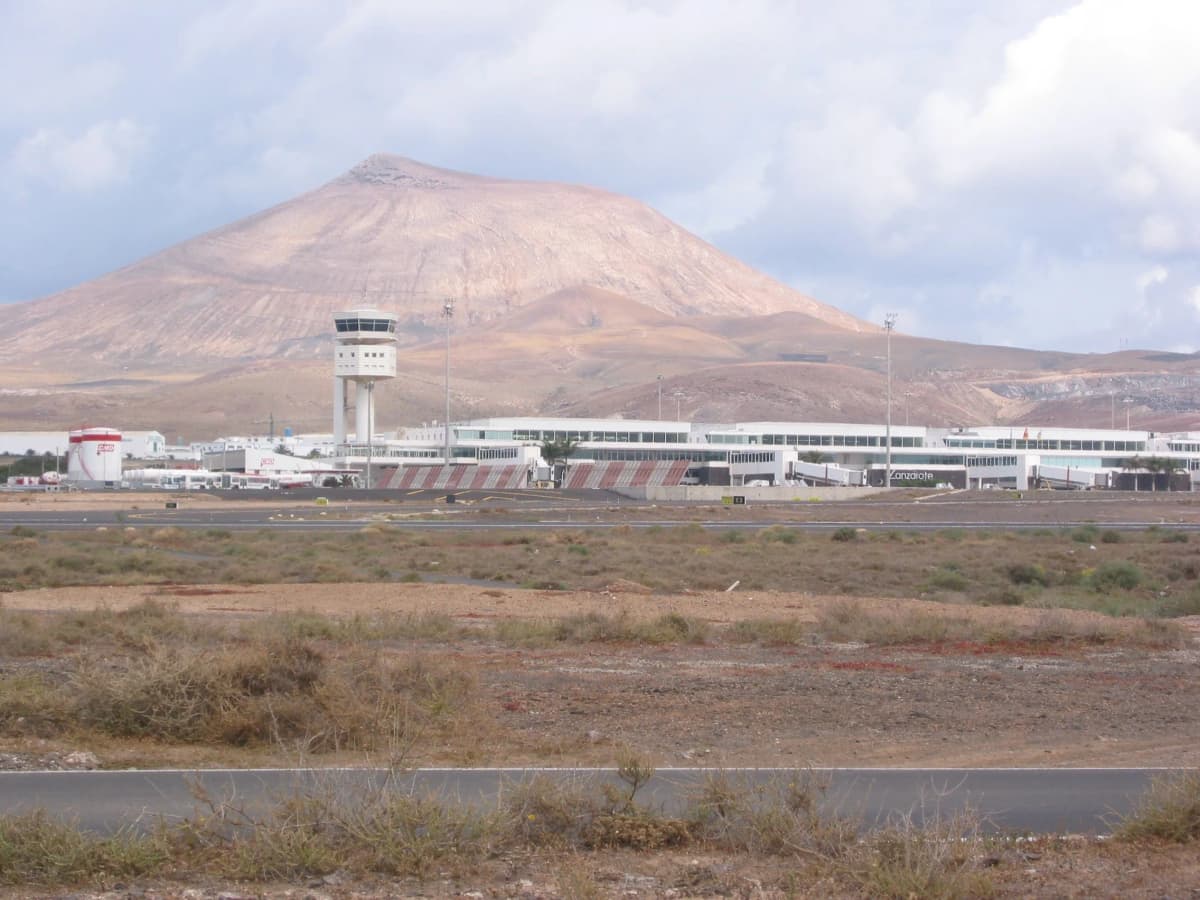
Private jet charter flights to and from César Manrique–Lanzarote Airport provide convenient access to one of the Canary Islands’ most visually striking and architecturally distinctive destinations. Located on the island’s eastern coast just outside the capital, César Manrique–Lanzarote Airport (IATA: ACE, ICAO: GCRR) serves as the primary aviation gateway to Lanzarote and handles millions of passengers each year.
The airport is named after the influential Lanzarote-born artist and architect César Manrique, whose work helped shape the island’s unique architectural identity. Lanzarote is famous for its dramatic volcanic landscapes, whitewashed villages and carefully protected development policies that preserve the island’s natural character.
César Manrique–Lanzarote Airport is well equipped to support a variety of aviation operations, including private aircraft movements. Its runway infrastructure allows operations by a wide range of aircraft types, from regional turboprops and midsize business jets to larger long-range aircraft arriving from major European cities.
Private jet passengers benefit from efficient ground handling services and streamlined airport procedures that enable quick transfers between aircraft and ground transport. The airport’s compact layout and efficient operations make arrivals and departures relatively straightforward compared with larger international airports.
The airport sits only a few kilometres from Arrecife, Lanzarote’s capital, and offers excellent road access via the LZ-1 and LZ-2 highways, allowing travellers to reach many of the island’s major destinations quickly. Popular areas such as Puerto del Carmen, Costa Teguise and Playa Blanca are typically within 10 to 35 minutes by road depending on location.
For travellers exploring the Canary Islands, Lanzarote also serves as a convenient starting point for regional flights linking nearby islands such as Fuerteventura, Gran Canaria and Tenerife, allowing private aviation travellers to combine multiple islands during a single journey.
Handling Information
Sky Valet Lanzarote
César Manrique–Lanzarote Airport, Carretera Arrecife–Yaiza Km 5, 35509 San Bartolomé, Lanzarote, Canary Islands, Spain
- Runway Length
- 7,800 ft
- Operating Hours
- Upon Request
- Wi-Fi
- Available
- Ground Transfers
- Available
El Hierro Airport
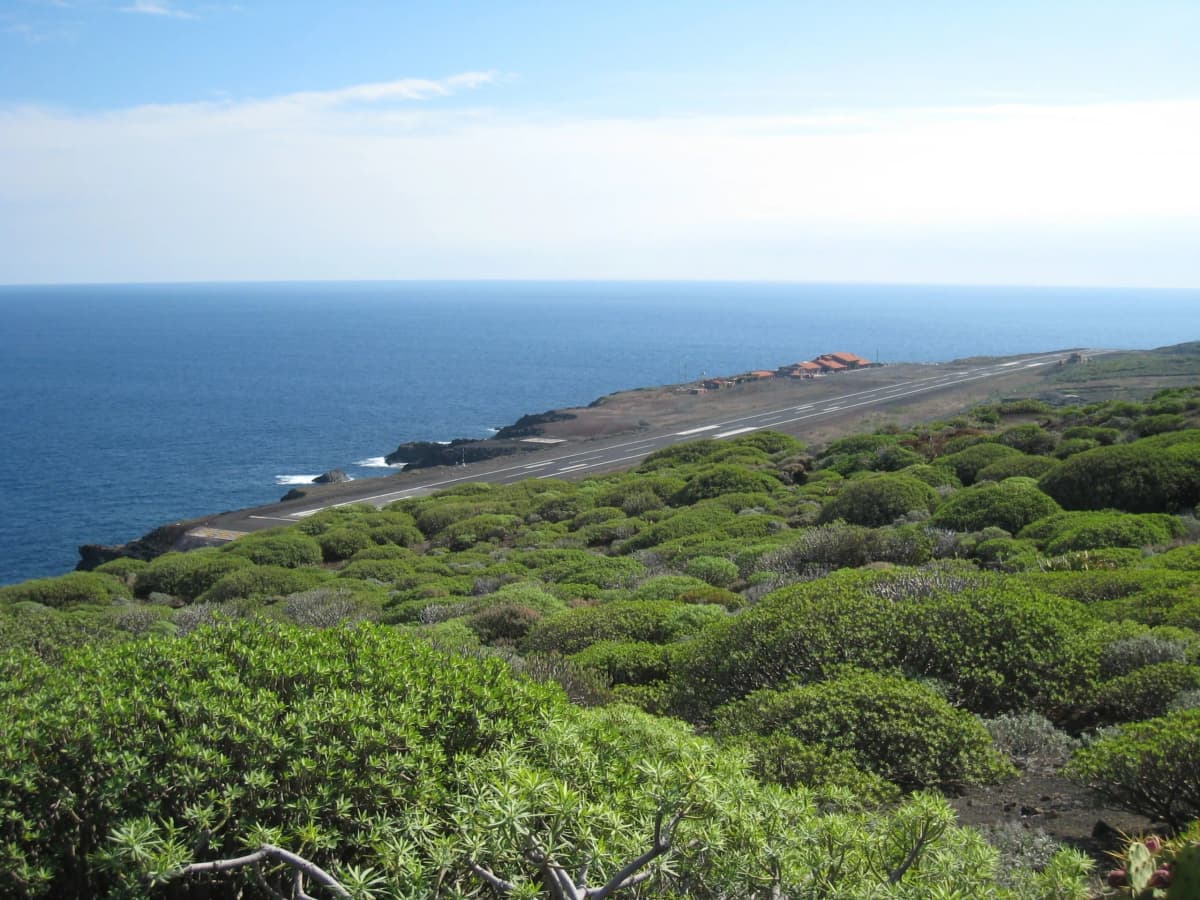
Private jet charter flights to and from El Hierro Airport provide access to one of the most remote and untouched islands in the Canary Islands. Located near the coastal town of Valverde, El Hierro Airport (IATA: VDE, ICAO: GCHI) serves as the island’s primary aviation gateway and connects El Hierro with neighbouring Canary Islands.
El Hierro is the smallest and least developed of the main Canary Islands, widely recognised for its exceptional natural environment. The island has been designated a UNESCO Biosphere Reserve, reflecting its commitment to protecting its volcanic landscapes, forests and marine ecosystems. Its rugged cliffs, lava fields and crystal-clear waters attract visitors seeking nature-focused travel experiences such as hiking, diving and wildlife exploration.
The airport sits along the island’s northeastern coastline and provides convenient access to the capital Valverde, which can be reached in around 15 minutes by road. The harbour town of La Restinga, a well-known destination for scuba diving due to its rich marine life and volcanic seabed, lies roughly 40 minutes to the south.
El Hierro Airport operates with a relatively short runway and primarily supports regional turboprop aircraft and small aviation operations linking the island with Tenerife and other Canary Islands. Due to these limitations, larger private jets typically operate into nearby airports such as Tenerife before travellers continue to El Hierro via short regional flights or helicopter transfers.
Despite its modest scale, El Hierro Airport plays a vital role in connecting the island with the wider Canary Islands network, enabling visitors to explore one of the most peaceful and ecologically preserved destinations in the Atlantic.
For travellers seeking dramatic landscapes, quiet villages and pristine natural environments, private jet charter to and from El Hierro Airport provides access to one of the Canary Islands’ most authentic and untouched islands.
Handling Information
AENA Handling
El Hierro Airport, Carretera del Aeropuerto s/n, 38910 Valverde, El Hierro, Canary Islands, Spain
- Runway Length
- 4,000 ft
- Operating Hours
- Upon Request
- Helicopter Transfers
- Not Available
- Taxi Services
- Upon Request
Fuerteventura Airport (El Matorral Airport)
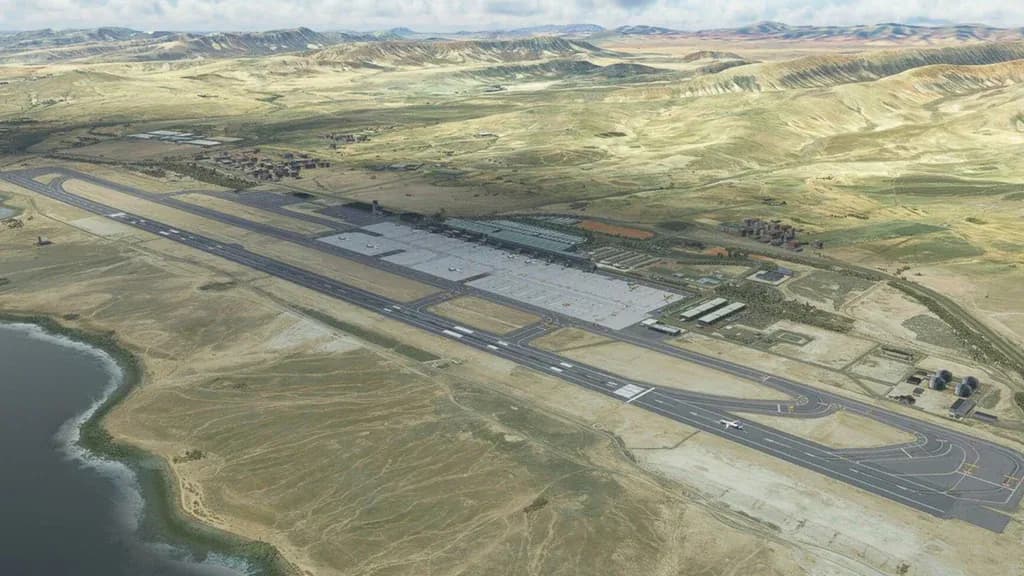
Private jet charter flights to and from Fuerteventura Airport provide access to one of the Canary Islands’ most celebrated beach destinations. Located on the island’s eastern coast near the capital, Fuerteventura Airport (IATA: FUE, ICAO: GCFV) serves as the primary aviation gateway to Fuerteventura and connects the island with mainland Spain and major European cities.
Fuerteventura is the second-largest island in the Canary Islands and is renowned for its expansive beaches, clear Atlantic waters and year-round warm climate. Much of the island has been designated a UNESCO Biosphere Reserve, reflecting the importance of preserving its natural landscapes and coastal ecosystems.
Fuerteventura Airport sits approximately 5 kilometres south of Puerto del Rosario, the island’s capital and main commercial centre. The airport’s location provides convenient access to many of the island’s most popular destinations. The resort areas along the central and northern coasts can be reached within 20 to 40 minutes, while the beaches and marinas of Morro Jable and the Jandía Peninsula on the southern coast are typically around one hour by road.
The airport’s runway infrastructure allows operations by a wide range of aircraft types, including regional aircraft, midsize business jets and larger private aircraft operating international flights. Private aviation travellers benefit from dedicated ground handling services and efficient airport procedures that allow quick movement between aircraft and ground transport.
Fuerteventura Airport also serves as a useful regional gateway within the Canary Islands. Short flights connect the island with nearby destinations such as Lanzarote, Gran Canaria and Tenerife, allowing travellers to explore multiple islands during a single trip.
For travellers arranging private jet charter to or from Fuerteventura, the airport offers a convenient and well-connected entry point to an island known for its long beaches, Atlantic surf and relaxed island atmosphere.
Handling Information
Sky Valet Fuerteventura
Fuerteventura Airport, Carretera del Aeropuerto s/n, 35610 El Matorral, Puerto del Rosario, Canary Islands, Spain
- Runway Length
- 11,100 ft
- Operating Hours
- Upon Request
- Wi-Fi
- Available
- Ground Transfers
- Available
Gran Canaria Airport (Gando Airport)
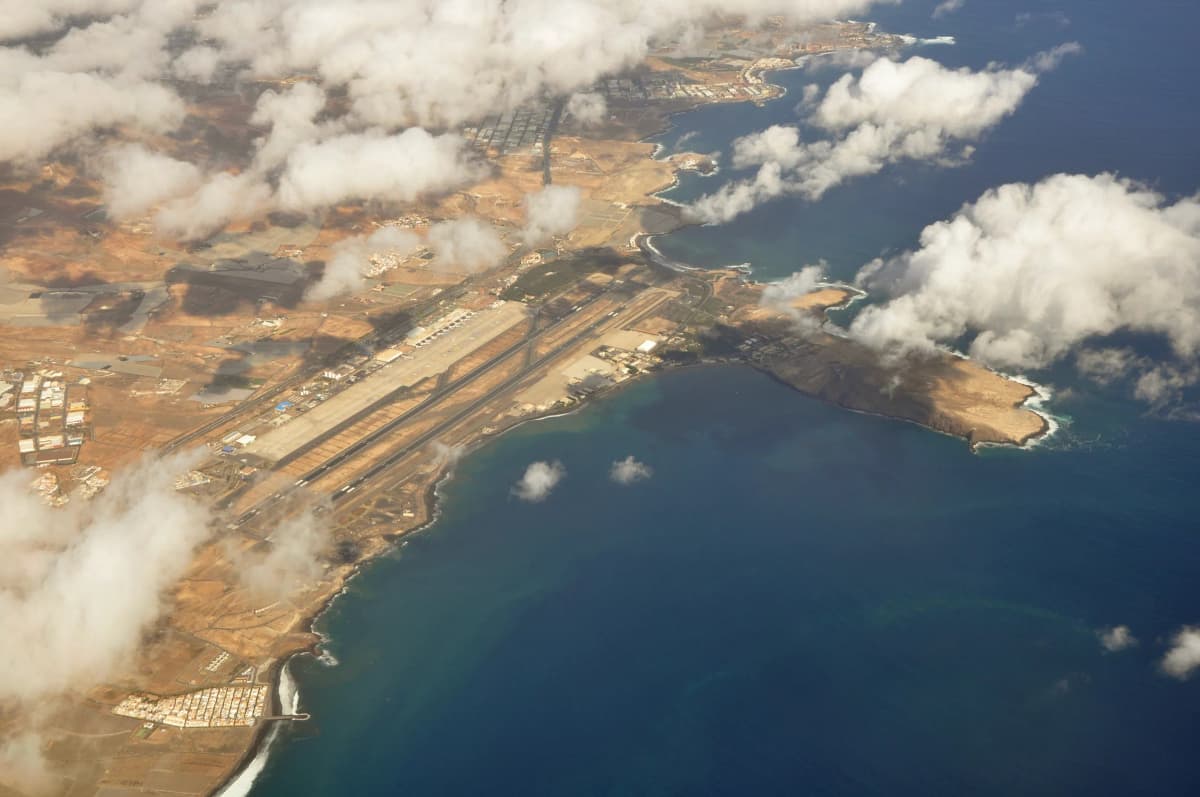
Private jet charter flights to and from Gran Canaria Airport provide access to one of the Canary Islands’ most important aviation gateways. Located on the island’s eastern coastline between Las Palmas and the southern resort areas, Gran Canaria Airport (IATA: LPA, ICAO: GCLP) is the busiest airport in the Canary Islands and one of Spain’s largest aviation hubs.
Gran Canaria Airport plays a central role in connecting the archipelago with mainland Spain and the wider European aviation network. The airport handles millions of passengers each year and supports both scheduled airline traffic and private aviation movements. Its infrastructure allows it to accommodate a wide range of aircraft, from regional turboprops and light business jets to large long-range private aircraft operating international flights.
Private jet passengers benefit from efficient ground handling services and streamlined arrival procedures, allowing travellers to move quickly between aircraft and ground transport. The airport’s modern facilities and long runway make it a practical and reliable arrival point for travellers visiting the island or connecting onward within the Canary Islands.
Gran Canaria Airport is well positioned for reaching the island’s key destinations. The capital Las Palmas de Gran Canaria lies approximately 20 minutes by road in light traffic, while the southern resort areas, including Maspalomas, Meloneras and Playa del Inglés, can typically be reached within 25 to 30 minutes depending on traffic conditions.
The airport also serves as a useful hub for travellers exploring the wider Canary Islands archipelago. Short regional flights connect Gran Canaria with neighbouring islands such as Tenerife, Fuerteventura, Lanzarote and La Palma, making it possible to combine multiple destinations during a single trip.
For travellers arranging private jet charter to or from Gran Canaria, Gran Canaria Airport offers a well-connected and efficient aviation gateway to one of the Canary Islands’ most diverse and dynamic destinations.
Handling Information
Sky Valet Gran Canaria
Gran Canaria Airport, Autopista GC-1 Km 16.5, 35230 Telde, Las Palmas, Canary Islands, Spain
- Runway Length
- 10,100 ft
- Operating Hours
- 24/7
- Wi-Fi
- Available
- Ground Transfers
- Available
La Gomera Airport
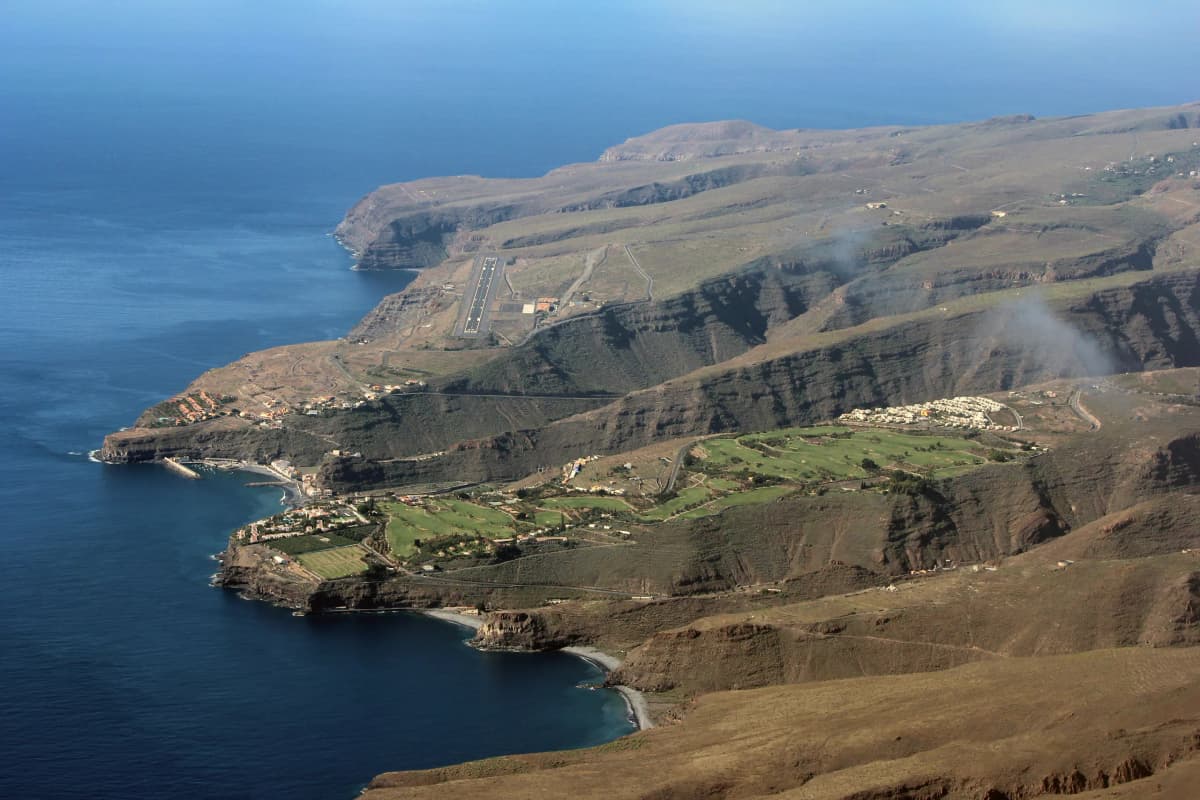
Private jet charter flights to and from La Gomera Airport provide access to one of the most tranquil and naturally spectacular islands in the Canary Islands. Located on the island’s southern coast near the town of Playa Santiago, La Gomera Airport (IATA: GMZ, ICAO: GCGM) serves as the island’s primary aviation gateway and connects La Gomera with neighbouring Canary Islands.
La Gomera is widely known for its dramatic landscapes and preserved natural environments. The island’s centre is dominated by Garajonay National Park, a UNESCO World Heritage Site famous for its ancient laurel forests, mist-covered mountains and extensive hiking trails. These forests are among the last remaining examples of subtropical cloud forest ecosystems that once covered much of southern Europe.
The airport’s location along the southern coastline places travellers within easy reach of Playa Santiago, one of the island’s main coastal towns, while the capital San Sebastián de La Gomera can typically be reached in around 40 minutes by road. The island’s rugged terrain, deep valleys and winding mountain roads make aerial access particularly valuable for visitors exploring La Gomera.
La Gomera Airport operates with a relatively short runway and therefore supports regional aircraft and smaller aviation operations rather than large commercial or long-range aircraft. Because of these limitations, travellers arriving by private jet typically land first at larger Canary Islands airports such as Tenerife and then continue to La Gomera via helicopter transfer or short regional flight.
Despite its modest scale, the airport plays an important role in linking La Gomera to the rest of the archipelago. Short flights connect the island with Tenerife and other nearby islands, allowing travellers to explore multiple Canary Islands destinations within a single journey.
For visitors seeking dramatic landscapes, quiet coastal villages and some of the best hiking terrain in the Canary Islands, private jet charter to and from La Gomera Airport provides an efficient route into one of the archipelago’s most peaceful and naturally preserved islands.
Handling Information
AENA Handling
Aeropuerto de La Gomera, Carretera del Aeropuerto s/n, 38811 Alajeró, La Gomera, Canary Islands, Spain
- Runway Length
- 4,900 ft
- Operating Hours
- Upon Request
- Wi-Fi
- Available
- Ground Transfers
- Available
La Palma Airport
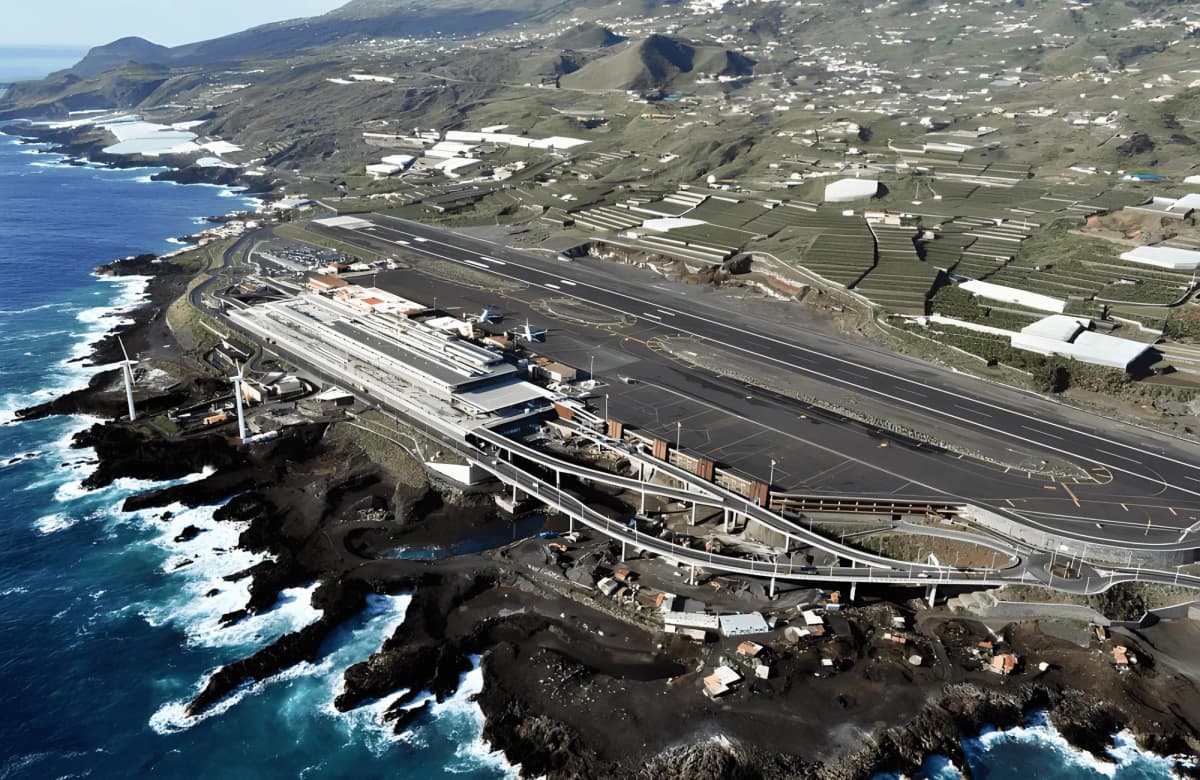
Private jet charter flights to and from La Palma Airport provide direct access to one of the most spectacular and unspoiled islands in the Canary Islands. Located just a few kilometres south of the island’s capital, La Palma Airport (IATA: SPC, ICAO: GCLA) serves as the primary aviation gateway to La Palma, connecting the island with mainland Spain and other Canary Islands destinations.
Often referred to as La Isla Bonita, La Palma is renowned for its dramatic volcanic landscapes, dense forests and exceptional natural beauty. The island is home to the vast Caldera de Taburiente National Park, a massive volcanic crater surrounded by rugged peaks and deep ravines. These landscapes make La Palma a popular destination for hiking, nature exploration and astronomy, with some of the world’s most advanced observatories located high in the island’s mountains.
La Palma Airport is positioned on the island’s eastern coast, placing travellers within easy reach of the historic harbour town of Santa Cruz de La Palma, which can typically be reached in around 10 minutes by road. The airport’s location also allows convenient access to the island’s volcanic coastline, traditional villages and mountain landscapes.
Despite its relatively small size, the airport offers modern facilities and supports a range of aircraft types, including regional aircraft and smaller business jets commonly used for flights within the Canary Islands and mainland Spain. Private aviation travellers can benefit from dedicated ground handling services and efficient procedures that allow quick transitions between aircraft and ground transport.
For travellers exploring the Canary Islands by private aircraft, La Palma Airport also serves as a convenient starting point for island-hopping routes linking Tenerife, Gran Canaria, La Gomera and El Hierro. These short flights allow visitors to experience the remarkable diversity of landscapes across the archipelago.
Whether arriving for nature, astronomy or a peaceful island escape, private jet charter to and from La Palma Airport offers a seamless entry point to one of the Canary Islands’ most dramatic and beautiful destinations.
Handling Information
Sky Valet La Palma
La Palma Airport, Carretera del Aeropuerto s/n, 38738 Villa de Mazo, Santa Cruz de Tenerife, Canary Islands, Spain
- Runway Length
- 7,200 ft
- Operating Hours
- Upon Request
- Wi-Fi
- Available
- Rental Cars
- Available
Tenerife North–Ciudad de La Laguna Airport
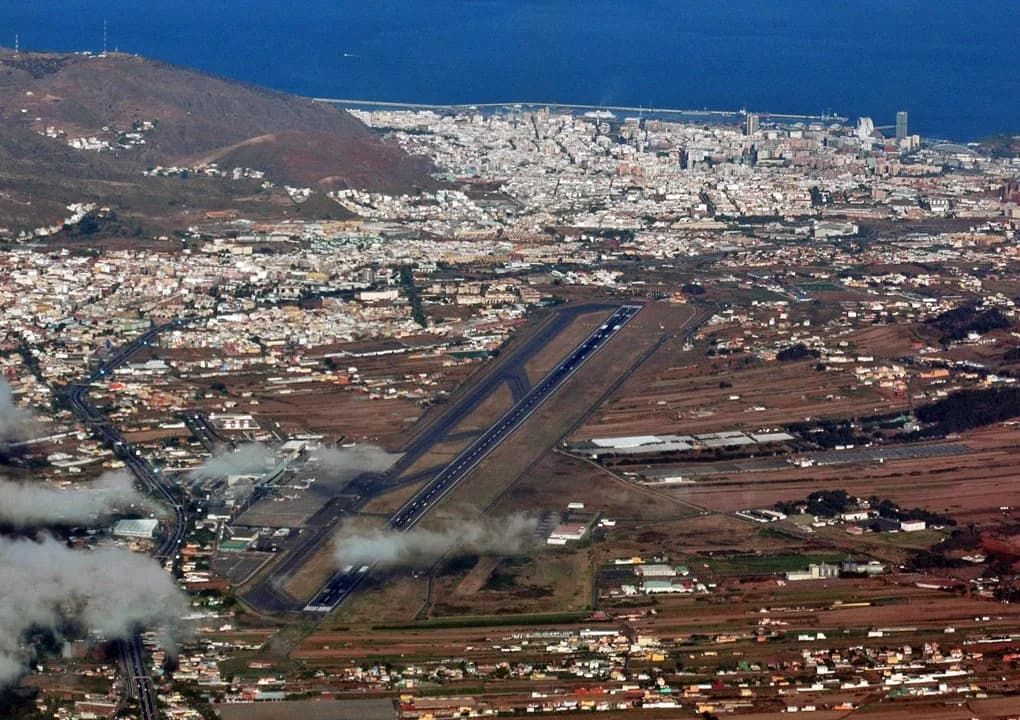
Private jet charter flights to and from Tenerife North–Ciudad de La Laguna Airport provide convenient access to the northern side of Tenerife and the historic cities of the island. Located near the UNESCO-listed town of La Laguna, Tenerife North–Ciudad de La Laguna Airport (IATA: TFN, ICAO: GCXO) is the smaller of Tenerife’s two airports but remains an important aviation gateway within the Canary Islands.
The airport primarily serves domestic and regional routes connecting Tenerife with mainland Spain and neighbouring islands such as Gran Canaria, La Palma, La Gomera and El Hierro. Its strategic location near the northern coast makes it particularly convenient for travellers visiting Santa Cruz de Tenerife, the island’s capital, and the historic city of San Cristóbal de La Laguna, a UNESCO World Heritage Site.
Tenerife North Airport is situated approximately 11 kilometres from Santa Cruz de Tenerife and around 25 minutes by road from the coastal town of Puerto de la Cruz, known for its volcanic black-sand beaches and botanical gardens. This positioning makes the airport an efficient entry point for travellers exploring Tenerife’s northern landscapes, which differ significantly from the island’s southern resort regions.
While the airport’s runway and surrounding terrain impose certain operational considerations, it remains capable of accommodating a range of aircraft types, including turboprops, regional aircraft and some smaller business jets commonly used for inter-island or domestic flights.
For travellers arriving by larger private jets, operations are often handled through Tenerife South Airport, which offers longer runways and broader international connectivity. From there, visitors can continue their journey across the island by road or helicopter transfer.
For those exploring the Canary Islands by private aircraft, private jet charter to and from Tenerife North Airport provides a useful regional hub linking Tenerife with the rest of the archipelago while offering convenient access to the island’s historic northern cities and dramatic volcanic landscapes.
Handling Information
Sky Valet Tenerife North
Tenerife North–Ciudad de La Laguna Airport, Carretera del Aeropuerto s/n, 38297 San Cristóbal de La Laguna, Tenerife, Canary Islands, Spain
- Runway Length
- 11,100 ft
- Operating Hours
- Upon Request
- Wi-Fi
- Available
- Ground Transfers
- Available
Tenerife South Airport
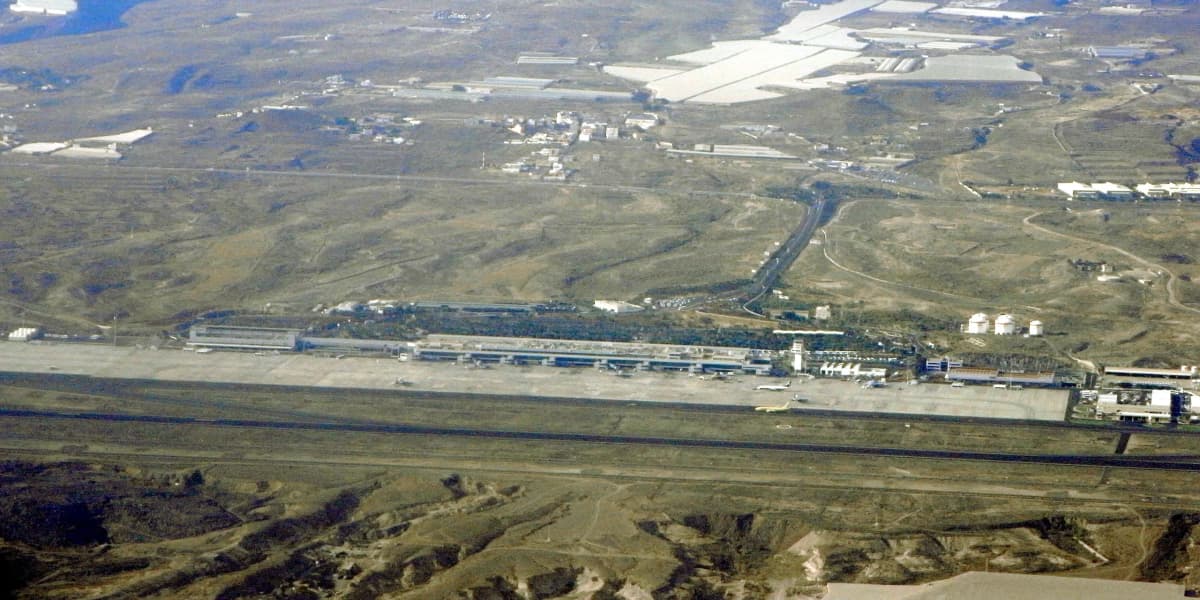
Private jet charter flights to and from Tenerife South–Reina Sofía Airport provide the main aviation gateway to the southern half of Tenerife and many of the island’s most popular coastal destinations. Located near the town of Granadilla de Abona on Tenerife’s southern coast, Tenerife South–Reina Sofía Airport (IATA: TFS, ICAO: GCTS) is the island’s principal international airport and one of the busiest aviation hubs in the Canary Islands.
The airport serves millions of passengers each year and plays a central role in connecting Tenerife with major European cities and international destinations. Its long runway and modern infrastructure allow it to accommodate a wide range of aircraft, including turboprops, midsize business jets and large long-range private aircraft operating international charter flights.
Private aviation travellers benefit from efficient ground handling services and streamlined arrival procedures that allow passengers to move quickly from aircraft to ground transport. Dedicated handling services ensure a discreet and efficient experience for private jet passengers arriving on the island.
Tenerife South Airport is particularly convenient for reaching the island’s most famous resort areas. The coastal destinations of Los Cristianos, Playa de las Américas and Costa Adeje are typically 10 to 20 minutes by road from the airport, placing travellers quickly within reach of beaches, marinas, luxury hotels and golf resorts.
The airport also serves as an excellent starting point for exploring Tenerife’s wider landscapes, including the volcanic terrain of Teide National Park, the dramatic cliffs of Los Gigantes and the historic towns of the island’s interior.
For travellers exploring the Canary Islands, Tenerife South Airport also offers convenient regional connections to other islands such as Gran Canaria, La Palma and Lanzarote, allowing private aviation travellers to combine several destinations within the archipelago.
Handling Information
Sky Valet Tenerife South
Tenerife South–Reina Sofía Airport, Autopista del Sur TF-1 Km 59, 38610 Granadilla de Abona, Tenerife, Canary Islands, Spain
- Runway Length
- 10,400 ft
- Operating Hours
- 24/7
- Wi-Fi
- Available
- Ground Transfers
- Available
Frequently Asked Questions
The BLAK team answers the most common questions and covers the essentials for those thinking about flying to and from the Canary Islands.
Which airports do private jets typically use in the Canary Islands?
Private jets commonly operate through the archipelago’s main international airports, including Tenerife South, Gran Canaria, Lanzarote, Fuerteventura and La Palma. These airports have the runway length and infrastructure required to accommodate a wide range of business jet aircraft arriving from mainland Europe.
Do all Canary Islands airports accept private jets?
Not all airports across the archipelago are suitable for larger business jets. Some airports, such as those on smaller islands, operate shorter runways designed primarily for regional aircraft and turboprops. Larger aircraft usually operate into the bigger international airports before passengers continue onward.
Can travellers visit multiple Canary Islands during one trip by private aircraft?
Yes. Many visitors combine several islands during a single journey. Short regional flights between islands allow travellers to experience the diverse landscapes of the archipelago, from the volcanic terrain of Lanzarote to the beaches of Fuerteventura and the forests of La Palma.
What aircraft types are commonly used for flights to the Canary Islands?
Flights from mainland Europe often use midsize and long-range business jets such as the Citation XLS+, Challenger series and Falcon aircraft. Shorter inter-island flights are typically operated by turboprop aircraft.