

Private Jet Flights From Munich to Split
Munich to Split

Route Briefing
IATA: MUCIATA: SPU
- Block Time
- 1h 10m
- Region
- Europe
- Distance
- 390 NM
- Charter From
- Munich Airport
Private flights between Munich and Split typically take around 1 hour 10 minutes, linking Munich’s major business aviation airport with Split Airport on Croatia’s Dalmatian coast. A convenient route for direct access to island resorts, marinas and the Adriatic coastline.
Route Snapshot
- Departure
- Munich Airport
- Alternate
- Slot Requirement
- Arrival
- Split Airport
- Aircraft Categories
- LightMidSuper-MidHeavy
- Status
- Customs
- Curfew ·MUC
- FBO / handling
- Restrictions
- Curfew·SPU
- Check-in lead time
Airport Information
Munich Munchen Airport
Munich (Munchen) Airport serves as the primary gateway for private jet charter to and from Munich and the wider Bavarian region. Located approximately 28 kilometres north-east of the city centre, the airport is Germany’s second busiest aviation hub after Frankfurt and handles a substantial mix of long-haul international traffic, European airline operations and business aviation movements.
From an operational perspective, Munich Airport is capable of accommodating the full range of business aviation aircraft. The airport operates two parallel runways and supports aircraft ranging from turboprops and light business jets through to large cabin and ultra long-range aircraft operating intercontinental routes.
Munich is also a slot coordinated airport, meaning arrival and departure slots must be requested in advance for both commercial and private aircraft movements. Despite this coordination requirement, the airport’s scale and infrastructure generally allow private aviation traffic to be handled efficiently throughout the year.
The airport operates 24 hours a day, although stricter noise regulations apply during the night period between 22:00 and 06:00. These restrictions can influence aircraft selection and scheduling for late evening arrivals or early morning departures.
Dedicated general aviation handling services support private jet operations separate from the main airline terminals, providing discreet passenger processing and crew services.
Munich Airport is widely used by private jet travellers visiting southern Germany and the Bavarian Alps. Destinations such as Garmisch-Partenkirchen, the Zugspitze and the ski resorts of the Austrian Tyrol can all be reached within a relatively short ground transfer from the airport, while transfers to central Munich typically take around 30 to 40 minutes depending on traffic.
Handling Information
ExecuJet FBO Services
General Aviation Terminal, 85356 Munich-Airport, Germany
- Runway Length
- 13,100 ft
- Operating Hours
- 24/7
- FBO Lounge
- Available
- Ground Transfers
- Available
Oberpfaffenhofen Airport
Munich Executive Airport at Oberpfaffenhofen is one of Germany’s most important business aviation airports and serves as a secondary gateway for private jet travel to and from Munich. Located approximately 22 kilometres west of the city centre near Weßling, the airport operates primarily as a base for corporate aviation, research aircraft and specialised aerospace operations.
Unlike Munich Airport, which functions as a major international airline hub, Oberpfaffenhofen is focused largely on business aviation activity. The airport’s runway allows operations by turboprops, light jets and midsize business aircraft commonly used for corporate travel within Germany and across Europe, while larger long-range jets typically use Munich Airport.
Oberpfaffenhofen sits within the wider aerospace campus that hosts organisations including the German Aerospace Center (DLR) and Airbus Defence and Space. This environment has made the airport a long-established centre for research aviation and corporate flight operations in southern Germany.
The airport operates primarily between 06:00 and 22:00 local time and is classified as a special airport, meaning many movements are approved individually rather than operating under unrestricted commercial access. For private aviation operators familiar with the region, Oberpfaffenhofen can provide a quieter and efficient alternative to the main airline hub.
Road transfers to central Munich typically take around 25 to 35 minutes depending on traffic and final destination within the city.
Handling Information
Rheinland Air Service GmbH
Munich Executive Airport, Claude-Dornier-Straße 1, Wessling, 82234, Germany
- Runway Length
- 7,500 ft
- Operating Hours
- 06:00 - 22:00
- FBO Lounge
- Available
- Ground Transfers
- Available
Munich Munchen Airport
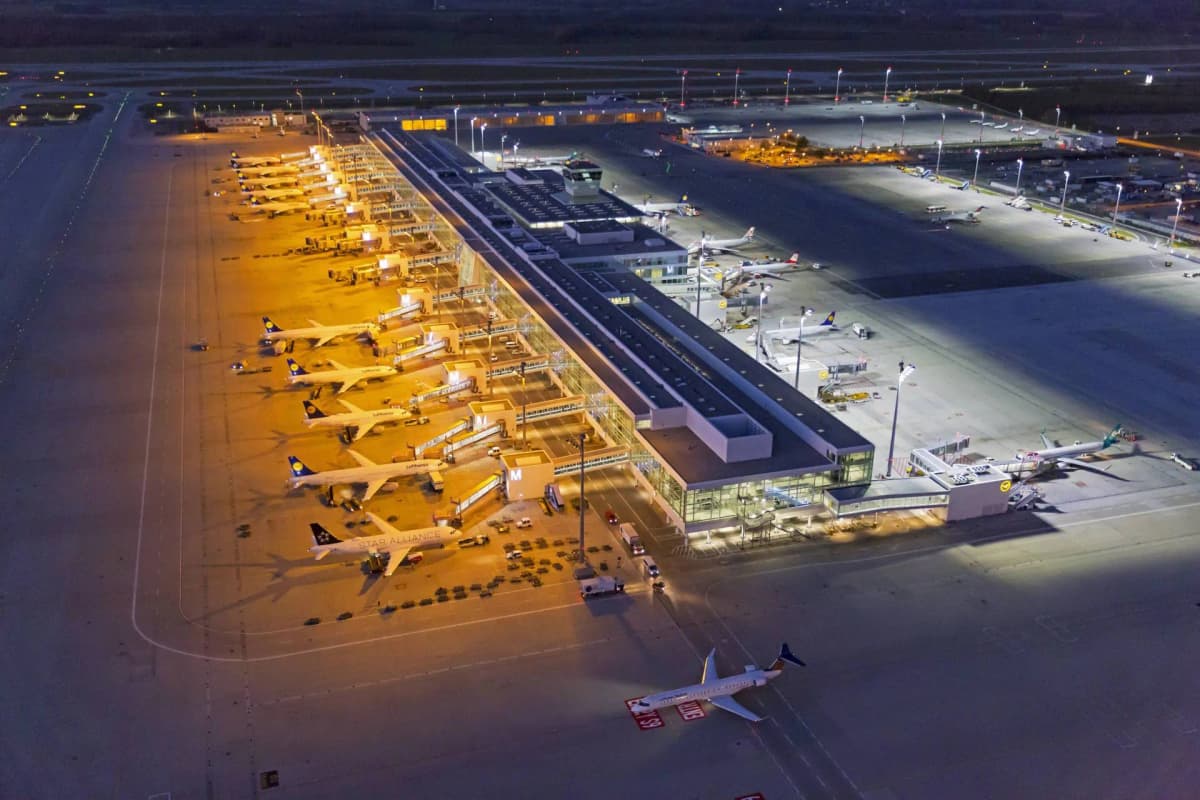
Munich (Munchen) Airport serves as the primary gateway for private jet charter to and from Munich and the wider Bavarian region. Located approximately 28 kilometres north-east of the city centre, the airport is Germany’s second busiest aviation hub after Frankfurt and handles a substantial mix of long-haul international traffic, European airline operations and business aviation movements.
From an operational perspective, Munich Airport is capable of accommodating the full range of business aviation aircraft. The airport operates two parallel runways and supports aircraft ranging from turboprops and light business jets through to large cabin and ultra long-range aircraft operating intercontinental routes.
Munich is also a slot coordinated airport, meaning arrival and departure slots must be requested in advance for both commercial and private aircraft movements. Despite this coordination requirement, the airport’s scale and infrastructure generally allow private aviation traffic to be handled efficiently throughout the year.
The airport operates 24 hours a day, although stricter noise regulations apply during the night period between 22:00 and 06:00. These restrictions can influence aircraft selection and scheduling for late evening arrivals or early morning departures.
Dedicated general aviation handling services support private jet operations separate from the main airline terminals, providing discreet passenger processing and crew services.
Munich Airport is widely used by private jet travellers visiting southern Germany and the Bavarian Alps. Destinations such as Garmisch-Partenkirchen, the Zugspitze and the ski resorts of the Austrian Tyrol can all be reached within a relatively short ground transfer from the airport, while transfers to central Munich typically take around 30 to 40 minutes depending on traffic.
Handling Information
ExecuJet FBO Services
General Aviation Terminal, 85356 Munich-Airport, Germany
- Runway Length
- 13,100 ft
- Operating Hours
- 24/7
- FBO Lounge
- Available
- Ground Transfers
- Available
Oberpfaffenhofen Airport
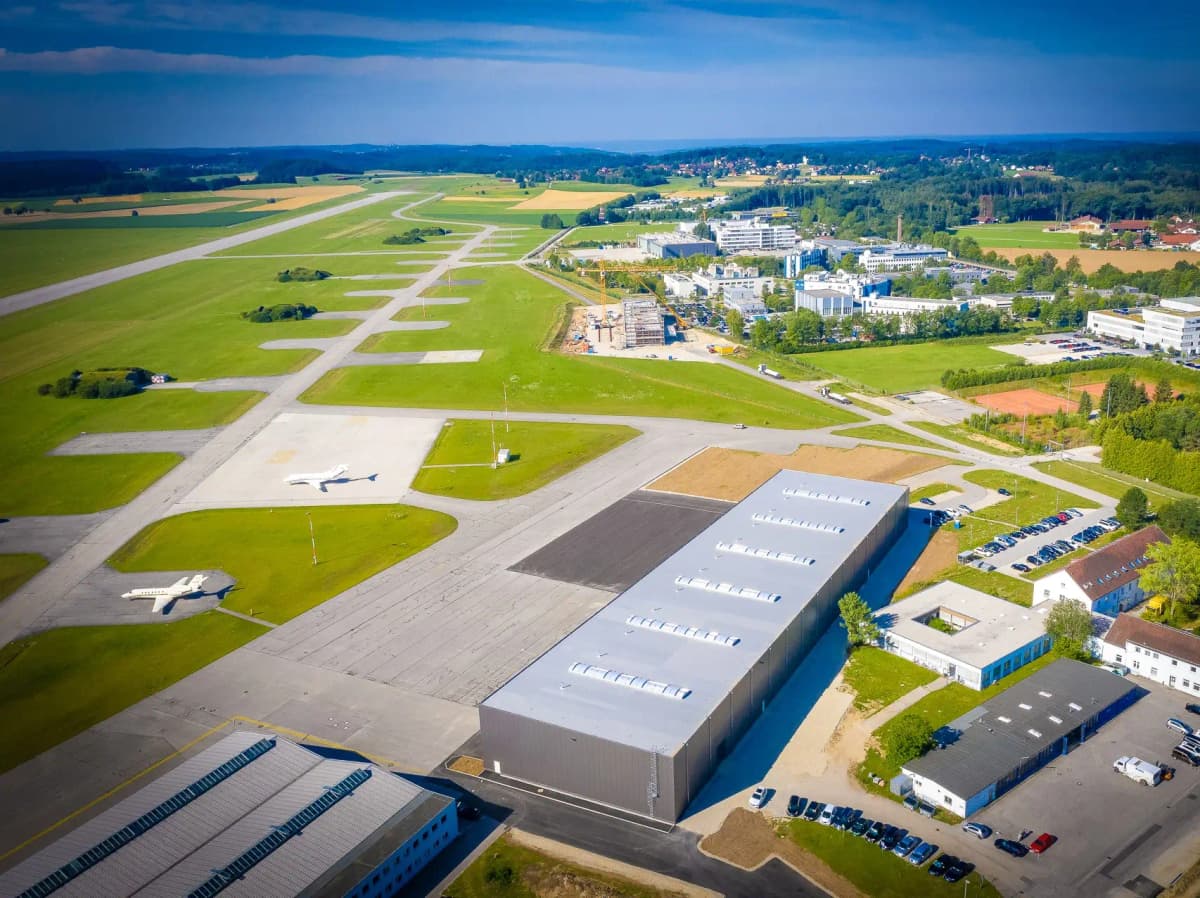
Munich Executive Airport at Oberpfaffenhofen is one of Germany’s most important business aviation airports and serves as a secondary gateway for private jet travel to and from Munich. Located approximately 22 kilometres west of the city centre near Weßling, the airport operates primarily as a base for corporate aviation, research aircraft and specialised aerospace operations.
Unlike Munich Airport, which functions as a major international airline hub, Oberpfaffenhofen is focused largely on business aviation activity. The airport’s runway allows operations by turboprops, light jets and midsize business aircraft commonly used for corporate travel within Germany and across Europe, while larger long-range jets typically use Munich Airport.
Oberpfaffenhofen sits within the wider aerospace campus that hosts organisations including the German Aerospace Center (DLR) and Airbus Defence and Space. This environment has made the airport a long-established centre for research aviation and corporate flight operations in southern Germany.
The airport operates primarily between 06:00 and 22:00 local time and is classified as a special airport, meaning many movements are approved individually rather than operating under unrestricted commercial access. For private aviation operators familiar with the region, Oberpfaffenhofen can provide a quieter and efficient alternative to the main airline hub.
Road transfers to central Munich typically take around 25 to 35 minutes depending on traffic and final destination within the city.
Handling Information
Rheinland Air Service GmbH
Munich Executive Airport, Claude-Dornier-Straße 1, Wessling, 82234, Germany
- Runway Length
- 7,500 ft
- Operating Hours
- 06:00 - 22:00
- FBO Lounge
- Available
- Ground Transfers
- Available
Brac Airport
Another aviation option for travellers flying by private jet to Split and the central Dalmatian islands is Brač Airport (BWK / LDSB), located on the island of Brač near the coastal town of Bol. Although smaller than Split Airport, Brač Airport is capable of accommodating a range of light and midsize business jets, making it a useful alternative gateway during the busy summer season along the Adriatic.
Because Split Airport can become heavily slot restricted during peak months, private jet operators sometimes use Brač Airport as a secondary entry point when aircraft performance and passenger itineraries allow. From Brač, travellers can quickly continue onward by helicopter transfer or private yacht to nearby destinations including Hvar, Vis and Korčula, all of which lie within a short distance across the central Dalmatian archipelago.
For private aviation itineraries along Croatia’s coastline, private jet flights to Brač are often paired with arrivals into Split, creating flexible routing options for accessing the Dalmatian islands while avoiding congestion at the region’s primary airport.
Handling Information
Euro Jet
Brac Airport Terminal, Hvarska ul. 8, Supetar, 21400, Croatia
- Runway Length
- 5,700 ft
- Operating Hours
- Upon Request
- Helicopter Transfers
- Available
- Boat Transfers
- Available
Hvar Airfield
Travellers flying by private jet to Split often continue onward to the nearby island of Hvar, one of the most popular destinations along Croatia’s Dalmatian coast. While Hvar does have a small local airstrip, private jets cannot operate into Hvar Airfield due to its short grass runway and non-instrument operational limitations, which restrict it to light recreational aircraft only.
As a result, most private aviation travellers access the island via Split Airport (SPU / LDSP), which functions as the primary gateway for private jet charter flights serving Hvar and the surrounding Dalmatian islands. From Split, onward connections to Hvar are typically arranged by helicopter transfer or private boat, both of which are commonly used by travellers arriving by private jet.
Helicopter transfers from Split Airport to Hvar Town usually take around 20 minutes, offering the fastest route to the island’s marinas, luxury villas and yacht anchorages. This connection between private jet arrivals in Split and helicopter transfers to Hvar has become one of the most common private aviation itineraries along the Adriatic during the summer season.
Handling Information
Main Terminal Building
Hvar Airfield, Hvar, Croatia
- Runway Length
- 2,400 ft (Unsealed)
- Operating Hours
- Upon Request
- Helicopter Transfers
- Available
- Boat Transfers
- Available
Split International Airport
Private jet flights to and from Split operate through Split Airport (SPU / LDSP), located at Resnik on the western side of Kaštela Bay, approximately 24 kilometres from Split’s historic city centre. As the largest airport in Croatia’s Dalmatian region, Split Airport serves both commercial airlines and a significant volume of seasonal private aviation traffic along the Adriatic coast.
The airport features a 2,550-metre runway, allowing it to accommodate a wide range of aircraft used for private jet charter across Europe, including light jets, midsize business jets and larger long-range aircraft operating Mediterranean routes. Ground handling services are available for private aviation arrivals and departures, including passenger assistance, aircraft parking, refuelling coordination and ground transport arrangements.
During the peak summer season, Split Airport becomes one of the busiest airports in the Adriatic and is heavily slot restricted, with arrival and departure slots carefully managed due to the high volume of commercial and private aviation traffic. As a result, private jet charter flights to and from Split typically require advance slot coordination, particularly during the peak yachting and holiday months.
For private aviation travellers, Split Airport functions as one of the principal gateways to central Dalmatia and Croatia’s island archipelagos. From the airport, travellers can connect quickly onward to destinations including Hvar, Brač, Vis and Šolta, either by road transfer to Split’s marina or by helicopter transfers to nearby islands.
Handling Information
Flystar Flight Support
Split Airport, Cesta Dr. Franje Tudmana, Kastel Stafilic, 21216, Croatia
- Runway Length
- 8,300 ft
- Operating Hours
- 24/7 - Slot Restricted
- Wi-Fi
- Available
- Ground Transfers
- Available
Brac Airport
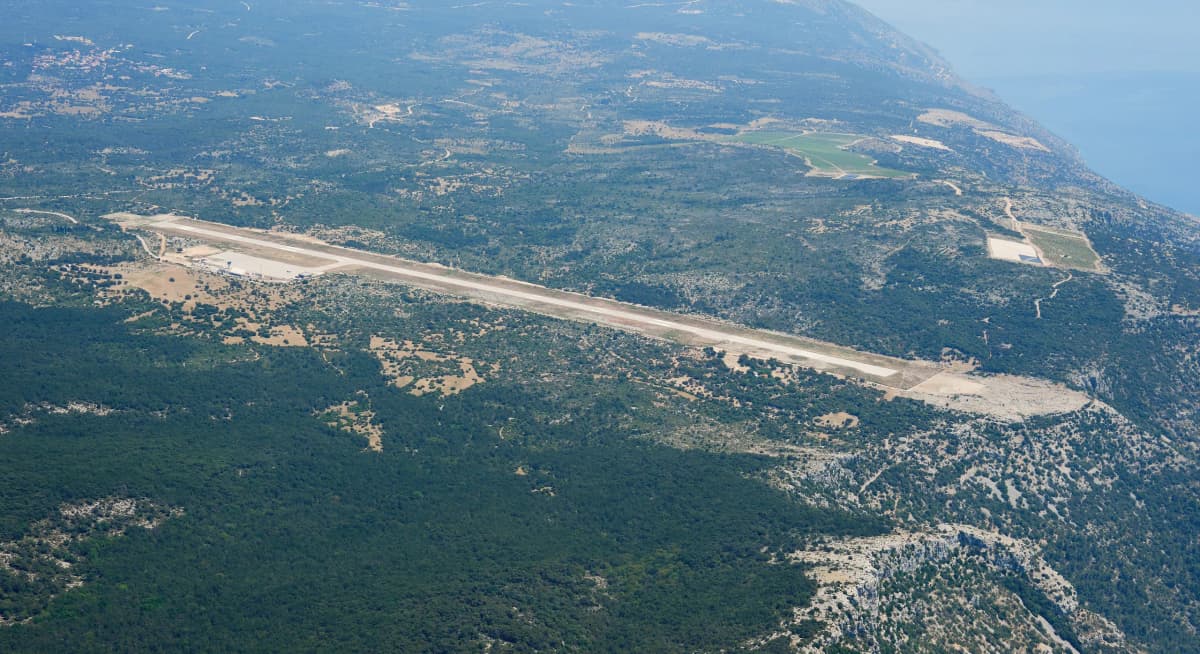
Another aviation option for travellers flying by private jet to Split and the central Dalmatian islands is Brač Airport (BWK / LDSB), located on the island of Brač near the coastal town of Bol. Although smaller than Split Airport, Brač Airport is capable of accommodating a range of light and midsize business jets, making it a useful alternative gateway during the busy summer season along the Adriatic.
Because Split Airport can become heavily slot restricted during peak months, private jet operators sometimes use Brač Airport as a secondary entry point when aircraft performance and passenger itineraries allow. From Brač, travellers can quickly continue onward by helicopter transfer or private yacht to nearby destinations including Hvar, Vis and Korčula, all of which lie within a short distance across the central Dalmatian archipelago.
For private aviation itineraries along Croatia’s coastline, private jet flights to Brač are often paired with arrivals into Split, creating flexible routing options for accessing the Dalmatian islands while avoiding congestion at the region’s primary airport.
Handling Information
Euro Jet
Brac Airport Terminal, Hvarska ul. 8, Supetar, 21400, Croatia
- Runway Length
- 5,700 ft
- Operating Hours
- Upon Request
- Helicopter Transfers
- Available
- Boat Transfers
- Available
Hvar Airfield
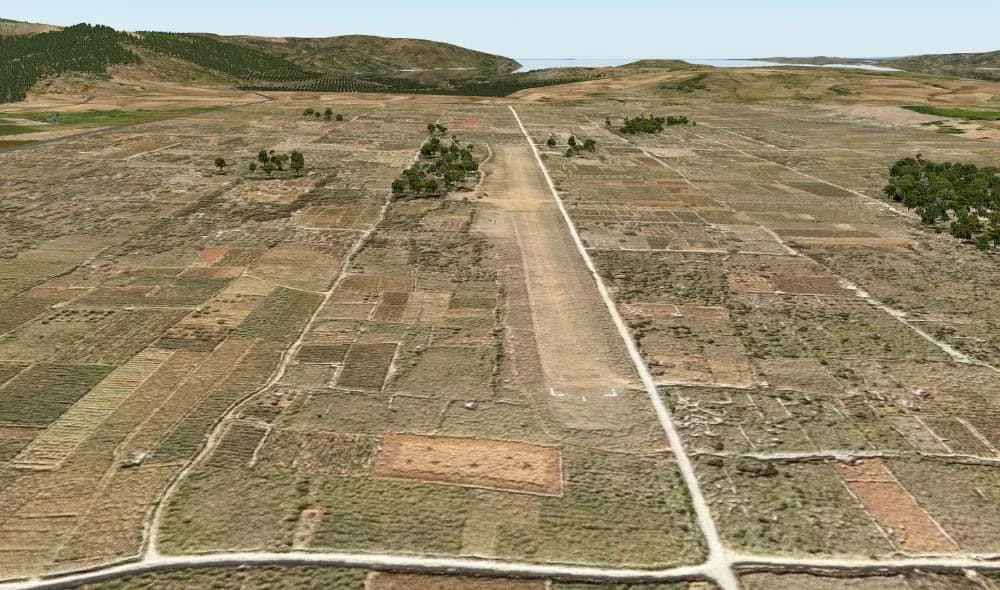
Travellers flying by private jet to Split often continue onward to the nearby island of Hvar, one of the most popular destinations along Croatia’s Dalmatian coast. While Hvar does have a small local airstrip, private jets cannot operate into Hvar Airfield due to its short grass runway and non-instrument operational limitations, which restrict it to light recreational aircraft only.
As a result, most private aviation travellers access the island via Split Airport (SPU / LDSP), which functions as the primary gateway for private jet charter flights serving Hvar and the surrounding Dalmatian islands. From Split, onward connections to Hvar are typically arranged by helicopter transfer or private boat, both of which are commonly used by travellers arriving by private jet.
Helicopter transfers from Split Airport to Hvar Town usually take around 20 minutes, offering the fastest route to the island’s marinas, luxury villas and yacht anchorages. This connection between private jet arrivals in Split and helicopter transfers to Hvar has become one of the most common private aviation itineraries along the Adriatic during the summer season.
Handling Information
Main Terminal Building
Hvar Airfield, Hvar, Croatia
- Runway Length
- 2,400 ft (Unsealed)
- Operating Hours
- Upon Request
- Helicopter Transfers
- Available
- Boat Transfers
- Available
Split International Airport
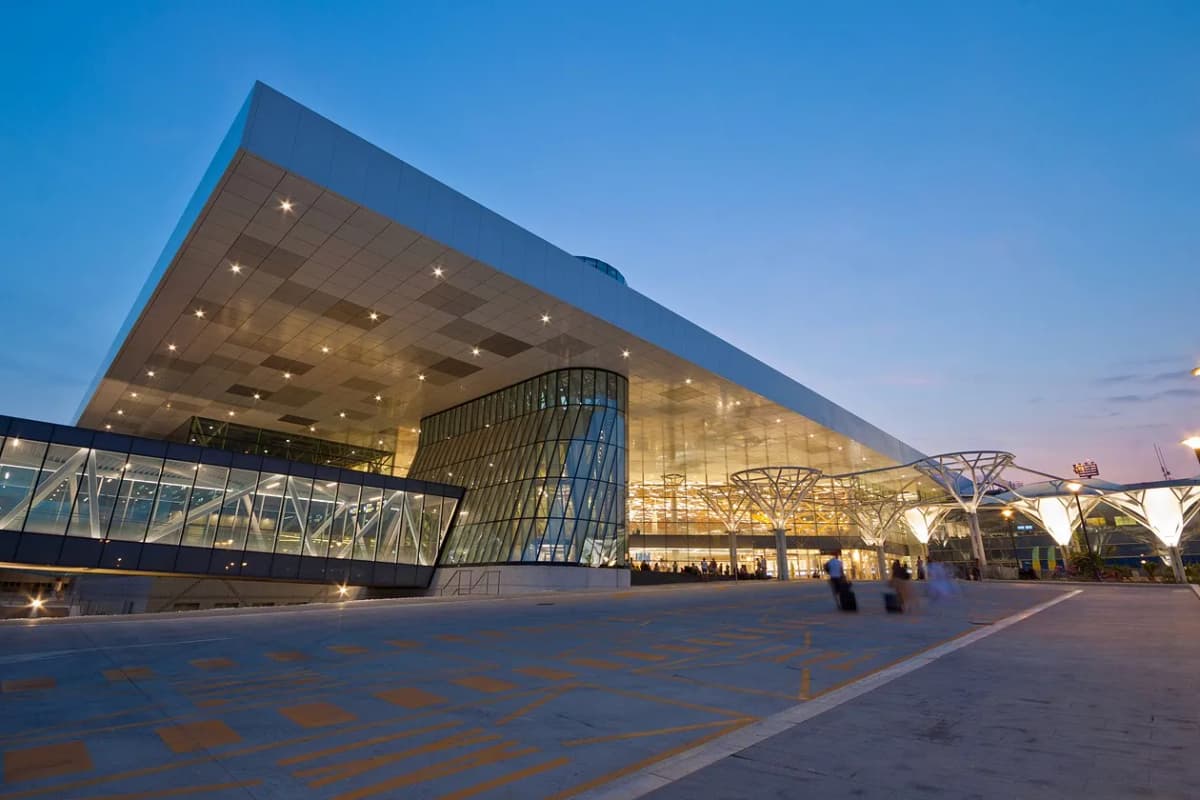
Private jet flights to and from Split operate through Split Airport (SPU / LDSP), located at Resnik on the western side of Kaštela Bay, approximately 24 kilometres from Split’s historic city centre. As the largest airport in Croatia’s Dalmatian region, Split Airport serves both commercial airlines and a significant volume of seasonal private aviation traffic along the Adriatic coast.
The airport features a 2,550-metre runway, allowing it to accommodate a wide range of aircraft used for private jet charter across Europe, including light jets, midsize business jets and larger long-range aircraft operating Mediterranean routes. Ground handling services are available for private aviation arrivals and departures, including passenger assistance, aircraft parking, refuelling coordination and ground transport arrangements.
During the peak summer season, Split Airport becomes one of the busiest airports in the Adriatic and is heavily slot restricted, with arrival and departure slots carefully managed due to the high volume of commercial and private aviation traffic. As a result, private jet charter flights to and from Split typically require advance slot coordination, particularly during the peak yachting and holiday months.
For private aviation travellers, Split Airport functions as one of the principal gateways to central Dalmatia and Croatia’s island archipelagos. From the airport, travellers can connect quickly onward to destinations including Hvar, Brač, Vis and Šolta, either by road transfer to Split’s marina or by helicopter transfers to nearby islands.
Handling Information
Flystar Flight Support
Split Airport, Cesta Dr. Franje Tudmana, Kastel Stafilic, 21216, Croatia
- Runway Length
- 8,300 ft
- Operating Hours
- 24/7 - Slot Restricted
- Wi-Fi
- Available
- Ground Transfers
- Available
Frequently Asked Questions
The BLAK team answers the most common questions and covers the essentials for those thinking about flying to and from Split.
Why is Split Airport heavily slot restricted during the summer?
Split becomes one of the busiest aviation gateways in the Adriatic during the peak summer months due to the high number of commercial flights, private jets and charter traffic arriving for the Dalmatian islands. As a result, arrival and departure slots are tightly managed, and private jet flights to and from Split often require advance planning and slot coordination.
Can private jets land directly on the Dalmatian islands such as Hvar or Vis?
In most cases, no. Many of Croatia’s Dalmatian islands either have very small airstrips or none at all, which means private jets typically operate into Split Airport (SPU). From there, travellers commonly continue onward to islands such as Hvar, Vis or Korčula by helicopter transfer or private yacht, often reaching their final destination within 20–30 minutes.
Is Brač Airport a useful alternative to Split for private jets?
Yes, depending on aircraft type. Brač Airport (BWK) can accommodate light and midsize business jets and is sometimes used as an alternative entry point when Split Airport is congested or when travellers are heading directly to nearby islands. From Brač, helicopter transfers and short yacht crossings provide quick access to destinations across the central Dalmatian archipelago.
Which private jets are most commonly used for flights to Split?
Flights to and from Split are typically operated by light and midsize business jets such as the Citation CJ series, Embraer Phenom 300 and Citation XLS, as well as larger aircraft like the Challenger 350 or Falcon 2000 operating regional European routes. These aircraft offer the range and performance needed to connect Split with major aviation centres across Europe while remaining efficient for Mediterranean charter itineraries.