


Private Jet Flights From Zurich to Nis
Zurich to Nis

Route Briefing
IATA: ZRHIATA: INI
- Block Time
- 1h 50m
- Region
- Europe
- Distance
- 610 NM
- Charter From
- Zurich Airport
Private flights between Zurich and Niš typically take around 1 hour 50 minutes, linking Zurich Airport with Niš Constantine the Great Airport in southern Serbia. A convenient route for business and cultural access to Serbia’s third-largest city.
Route Snapshot
- Departure
- Zurich Airport
- Alternate
- Slot Requirement
- Arrival
- Nis Constantine the Great Airport
- Aircraft Categories
- LightMidSuper-MidHeavy
- Status
- Customs
- Curfew ·ZRH
- FBO / handling
- Restrictions
- Curfew·INI
- Check-in lead time
Airport Information
Zurich International Airport
Zurich Airport is the primary international aviation gateway to Switzerland and one of the most important private jet hubs in Central Europe. Located approximately 13 kilometres north of Zurich’s city centre, the airport handles a large volume of corporate, diplomatic and leisure private aviation traffic throughout the year. Private jet travellers chartering flights to Zurich benefit from world-class airport infrastructure, efficient ground handling and direct access to one of Europe’s most stable financial capitals.
Operating under ICAO code LSZH and IATA code ZRH, Zurich Airport features three runways measuring 3,700 metres, 3,300 metres and 2,500 metres, allowing it to accommodate the full spectrum of private aircraft. These range from light jets such as the Citation CJ series through to large cabin and ultra long-range aircraft including the Gulfstream G700, Bombardier Global 7500 and Dassault Falcon 10X. The airport’s long runways and advanced navigation systems make it well suited to both regional European charters and intercontinental private jet flights arriving from North America, the Middle East and Asia.
For private aviation passengers, Zurich Airport offers dedicated General Aviation Terminal (GAT) facilities separate from the main commercial terminals. These facilities allow passengers to clear customs and immigration quickly and discreetly before transferring directly to ground transport. The airport’s proximity to central Zurich means transfer times are typically 15 to 20 minutes by car, making it one of the most convenient international gateways for private jet travellers visiting Switzerland.
Zurich Airport is also an important operational gateway for travellers heading beyond the city itself. Private jet passengers frequently arrive here before continuing to alpine destinations such as St Moritz, Davos, Andermatt and the Engadin Valley, either by helicopter transfer or luxury ground transport. During the winter ski season the airport experiences a notable increase in private aviation traffic as travellers fly into Switzerland for access to the country’s major ski resorts.
The airport operates under strict Swiss air traffic management procedures and coordinated slot allocation during peak hours, reflecting its status as a major European aviation hub. Despite the high traffic levels, Zurich remains one of the most efficient airports in the region for private aviation operations thanks to its strong infrastructure, modern navigation systems and experienced ground handling services.
Handling Information
ExecuJet Aviation Switzerland AG
General Aviation Centre, Zurich Airport, 8058 Zurich, Switzerland
- Runway Length
- 12,100 ft
- Operating Hours
- 24/7
- FBO Lounge
- Available
- Helicopter Transfers
- Available
Zurich International Airport
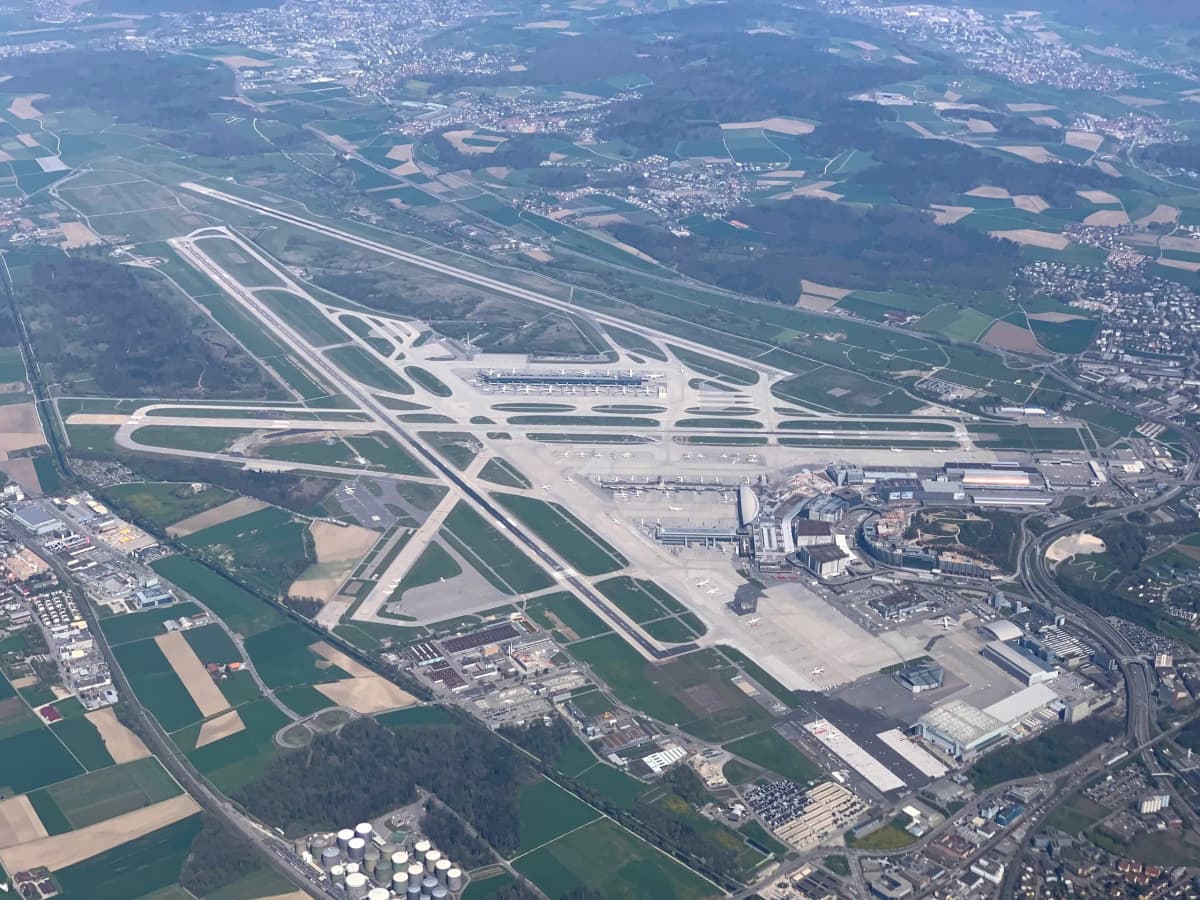
Zurich Airport is the primary international aviation gateway to Switzerland and one of the most important private jet hubs in Central Europe. Located approximately 13 kilometres north of Zurich’s city centre, the airport handles a large volume of corporate, diplomatic and leisure private aviation traffic throughout the year. Private jet travellers chartering flights to Zurich benefit from world-class airport infrastructure, efficient ground handling and direct access to one of Europe’s most stable financial capitals.
Operating under ICAO code LSZH and IATA code ZRH, Zurich Airport features three runways measuring 3,700 metres, 3,300 metres and 2,500 metres, allowing it to accommodate the full spectrum of private aircraft. These range from light jets such as the Citation CJ series through to large cabin and ultra long-range aircraft including the Gulfstream G700, Bombardier Global 7500 and Dassault Falcon 10X. The airport’s long runways and advanced navigation systems make it well suited to both regional European charters and intercontinental private jet flights arriving from North America, the Middle East and Asia.
For private aviation passengers, Zurich Airport offers dedicated General Aviation Terminal (GAT) facilities separate from the main commercial terminals. These facilities allow passengers to clear customs and immigration quickly and discreetly before transferring directly to ground transport. The airport’s proximity to central Zurich means transfer times are typically 15 to 20 minutes by car, making it one of the most convenient international gateways for private jet travellers visiting Switzerland.
Zurich Airport is also an important operational gateway for travellers heading beyond the city itself. Private jet passengers frequently arrive here before continuing to alpine destinations such as St Moritz, Davos, Andermatt and the Engadin Valley, either by helicopter transfer or luxury ground transport. During the winter ski season the airport experiences a notable increase in private aviation traffic as travellers fly into Switzerland for access to the country’s major ski resorts.
The airport operates under strict Swiss air traffic management procedures and coordinated slot allocation during peak hours, reflecting its status as a major European aviation hub. Despite the high traffic levels, Zurich remains one of the most efficient airports in the region for private aviation operations thanks to its strong infrastructure, modern navigation systems and experienced ground handling services.
Handling Information
ExecuJet Aviation Switzerland AG
General Aviation Centre, Zurich Airport, 8058 Zurich, Switzerland
- Runway Length
- 12,100 ft
- Operating Hours
- 24/7
- FBO Lounge
- Available
- Helicopter Transfers
- Available
Frequently Asked Questions
The BLAK team answers the most common questions and covers the essentials for those thinking about flying to and from Niš.
How long is the runway at Niš Constantine the Great Airport and what does that mean for business jets?
Niš Constantine the Great Airport has a runway measuring approximately 2,500 metres, which is more than sufficient for the majority of European business aviation traffic. Aircraft such as the Citation XLS+, Praetor 500, Challenger 350 and Falcon 2000 can comfortably operate into Niš under normal conditions. For private jet travellers this means the airport is capable of supporting a wide range of regional and medium-range missions across Europe and the Middle East without operational limitations that smaller Balkan airfields sometimes impose.
Are there curfews or major slot restrictions at Niš Airport?
Niš generally offers more operational flexibility than many larger European airports. While standard airport operating procedures still apply, the airport typically experiences far fewer slot restrictions or congestion issues compared with busy regional hubs. This can make it attractive for late-evening arrivals or early morning departures.
What type of missions typically bring private jets to Niš?
Private aviation into Niš tends to fall into three categories. First are regional business trips, particularly connected to southern Serbia’s manufacturing and technology sectors. Second are government and diplomatic movements, as the city plays an important administrative role in the region. Third are leisure travellers exploring eastern Serbia, including the mountains around Stara Planina and cross-border travel toward Bulgaria.
Why do some operators prefer Niš over larger airports in the region?
In private aviation, efficiency often matters more than scale. Niš offers short taxi times, manageable traffic levels, and a central location within the Balkans, all of which can simplify operational planning. For many operators flying regional routes, the airport strikes a balance between infrastructure capability and operational convenience.